Hedda in a loveless void – Attractive, gifted, and lonely
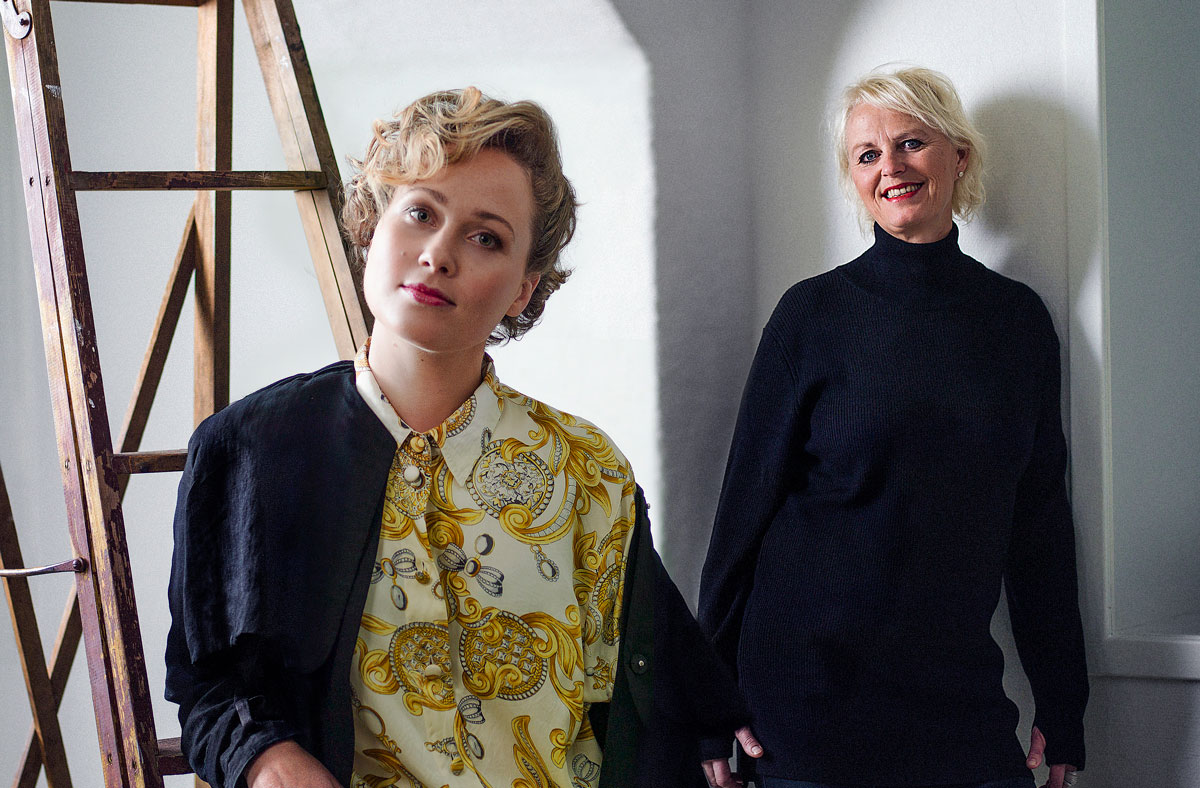
Rebekka Nystabakk (front) plays Hedda Gabler, directed by Ingrid Forthun (back).[ult_buttons btn_title="BUY TICKET" btn_link="url:https%3A%2F%2Fkilden2020.wpengine.com%2Fforestilling%2Fhedda-gabler%2F%23billett|||" btn_title_color="#ffffff" btn_bg_color="#7a3434" btn_bg_color_hover="#5e5e5e" btn_title_color_hover="#ffffff" btn_icon_pos="ubtn-sep-icon-at-left" notification=""]
Ibsen created an attractive woman who was the absolute center of the stage, just as she was in the social world into which he drew her. Director Ingrid Forthun takes a deep breath, before she delivers her description of the woman she is about to show Kilden's audience: "Hedda Gabler is one of the characters in world literature that carries the most power, the most passion, the most talent - and the most destructiveness and contradiction.
The former theater manager at Kilden elaborates:
- Hedda Gabler has married Jørgen Tesman - a man she does not love. They are returning from a six-month honeymoon, during which she has discovered and experienced that they are on two different planets. He's researching crafts in the Duchy of Brabant in the Middle Ages, and she couldn't care less. They have nothing to talk about that matters. There isn't even a deep friendship between them, a fellowship of souls. So Hedda is the bearer of an enormous betrayal of herself. Hedda Tesman becomes like a mask she puts on; a mask that represents a seemingly comfortable social life, rather than the dreams and goals she carries deep down, but is not in touch with.
Those of us who watch Hedda from the other side of the stage ask ourselves: Why did she marry Jørgen Tesman anyway?
Ingrid Forthun answers with a counter-question:
- Why do we make the choices we make now? For me, there are no big or small choices in life. There are only conscious or unconscious choices. When we're as far away from ourselves as possible, we sometimes make very bad choices for our lives, and because we've made those choices, we think that's how it has to be for the rest of our lives. For Hedda, I feel that marriage is a kind of self-imposed prison. It's not an option for her to say to Jørgen "You know what Jørgen, I don't think this will work, our relationship is a big mistake. Let's get a divorce before it gets ugly". She doesn't choose to get out of this relationship - she chooses to get out of life.
Henrik Ibsen also gives us this existential crisis in a highly compressed version. During an hour and a half on stage, we follow the protagonists for just two days of their lives - albeit two fateful days.
- Every situation on stage is intense and condensed, where Hedda repeatedly makes very destructive choices, both for herself and the people in her circle. She is deeply vulnerable, deeply lonely, but she creates this herself. Hedda herself destroys all relationships, cutting the umbilical cord to all the people who could have made her happy. In many ways, she is a walking disaster," reflects Ingrid Forthun, who has placed Hedda in a timeless scenography - recognizable through the eyes of both the present and the past.
- The theme of "Hedda Gabler" is about life choices; love, the facade, the direction of life - what should I do with my life? Life crises in a human life are a law of nature. Most people experience one or more crises in the course of their lives, whether it's because they've made the wrong choice of profession or in their search for happiness. For me, "the greatest of all is love", declares Ingrid Forthun.
Director Ingrid Forthun, leading actress Rebekka Nystabakk and set designer Katja Ebbel Frederiksen, sparring ideas for photo expressions.Ibsen also explains that Hedda used to have a boyfriend. But instead of love, she chose to marry the future professor Tesman?
- Yes, she has an ex-boyfriend. In Ibsen's text his name is Eilert Løvborg. In our version, her name is Ella Løvborg. Such a reinterpretation of Ibsen
in relation to gender has been done in several stage versions in Europe, and is thus not a radical move. But for me, this move is aggravating when we translate Hedda to the present day, in order to be able to respond fundamentally to who Hedda cannot be. If it's difficult for Hedda to show the world who she loves, perhaps it's easier for us to understand her. For me, it's not about whether she loves a man or a woman, but about the courage it takes to meet the great love, to dare to choose. About life themes that affect us all: Who am I? Who can I be in the world, and who can I not be?
You've made the story timeless, and you've changed the gender of Hedda's great love. Are you telling us something different in your story than Ibsen did?
- No, I don't. Not at all. For me, it's important to stay true to Ibsen's universe and language, even if "assessor" has become "lawyer" or "judge", and other linguistic adaptations are necessarily made. But the battle for Hedda's soul is the same. Ibsen was considered radical in his time, but still affects us today in an eternal way. For me, "Hedda Gabler" first and foremost clarifies what the basic existential themes are in every human life.
When we're as far away from ourselves as possible, we sometimes make very bad choices for our lives Ingrid Forthun, director
Be true to yourself?
- Yes, be true, be honest. When we are not honest with ourselves, we compromise our own integrity. And in Hedda's case, not listening to this honesty is disastrous. She longs for freedom, but takes her own life. She is actually seeking security, and has chosen the comfortable bourgeois life. But she discovers that for her it is an empty shell, that she finds herself in a loveless void. And the attractive, powerful and talented Hedda gradually appears to be a coward. Most of us can relate to the denial of reality and the excuses we create to avoid acting, either out of convenience and cowardice - or because deep down we don't believe we deserve a good life or are worth loving. Perhaps it is precisely the latter that is Hedda's basic existential theme," says Forthun, drilling further into the heart of the play:
- In "Hedda Gabler", Ibsen thematizes the concepts of resurrection, to rebuild oneself, to be reborn. I think this is central. All people make mistakes or let themselves down in the course of their lives and have to "rebuild themselves". That's why "Hedda Gabler" is an existential drama about life choices, with an inherent and challenging question for us all: What does it mean to take one hundred percent responsibility for your own life?
Text Reidar Mosland
Photo Erika Hebbert