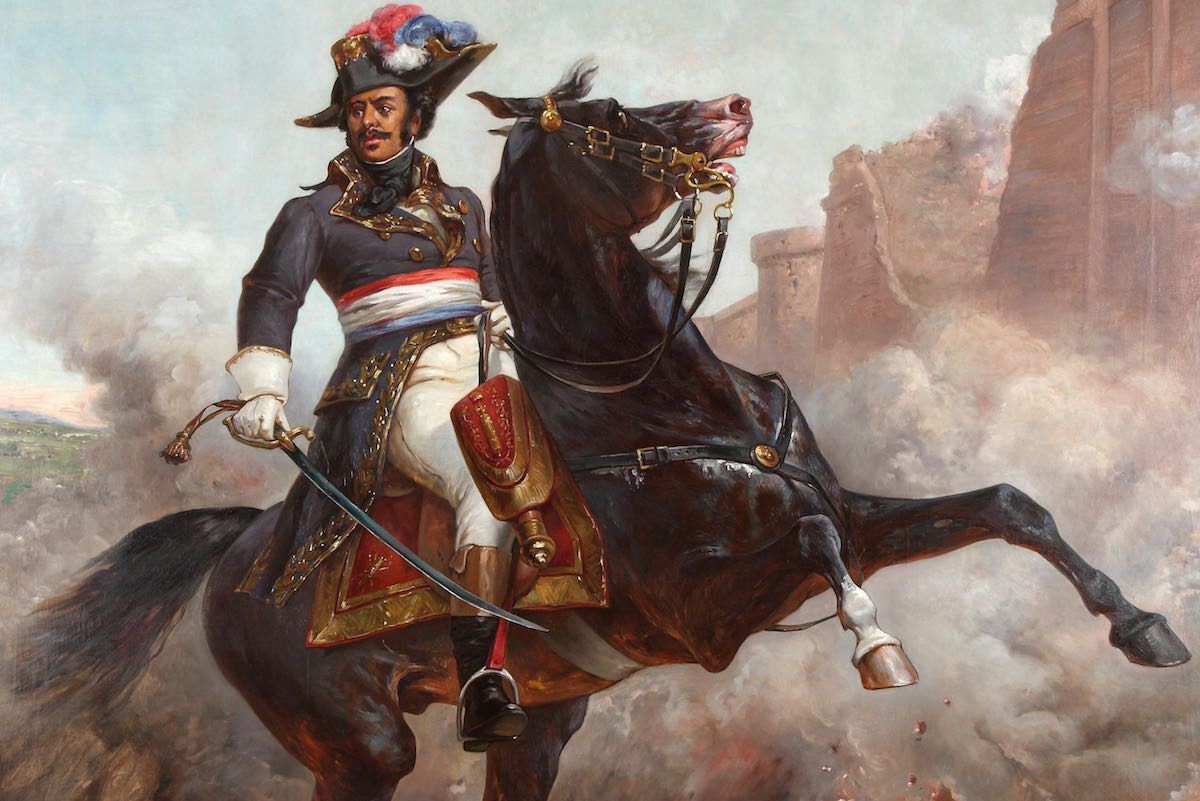
From an innocent sailor to a calculating and vengeful count
The Count of Monte Cristo
premieres at Kilden on February Kilden
This winter, audiences will get to know The Count of Monte Cristo at Kilden Theatre. The dramatic story penned by Alexandre Dumas has been, and still is, one of France's most famous and beloved works. Countless theater productions, novels and films have been inspired by the story of the innocent sailor who becomes the vengeful count.
Published in 1844, the novel has captivated readers around the world for a century with its complex character development and themes of revenge, justice and forgiveness.
To do justice to the story, The Count of Monte Cristo will be this winter's main stage production for Kilden Teater, with a large ensemble of nine actors, exciting scenography and newly produced film material. Director Jonas Corell Petersen was last at Kilden Teater with the production Samhold søkes i 2022, but this time it will be a very different story. Valborg Frøysnes, director of Kilden Teater, is looking forward to Corell's second regional assignment here in Kilden.
- Jonas Corell Petersen is one of our most exciting and distinctive directors. He has an expression all his own. His performances often combine the absurd and the recognizable. He manages to strike a balance between the everyday, the philosophical and political, and not least the humorous," says Frøysnes.
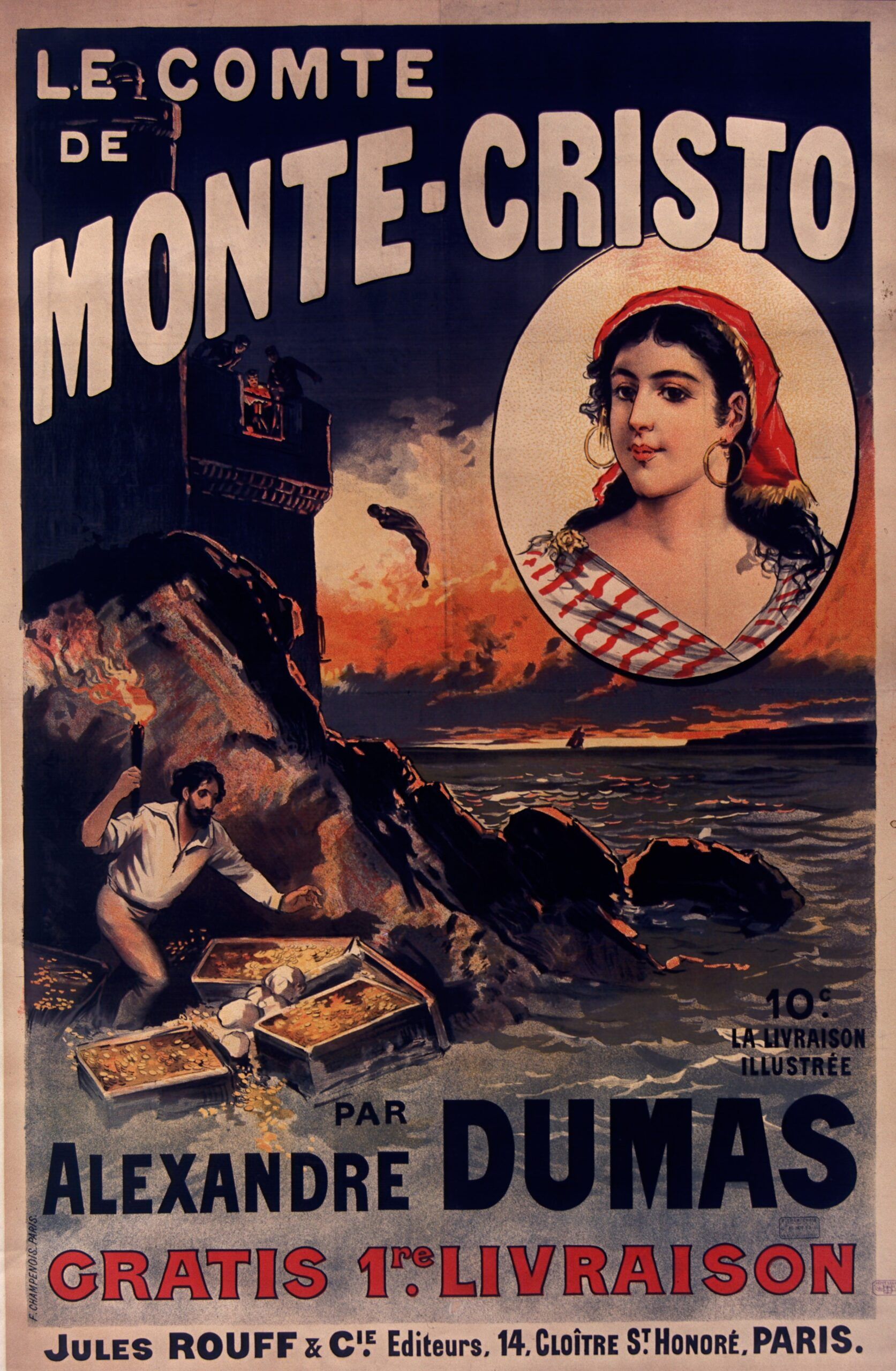
To understand how the story came to be, it might be helpful to know a little more about the author,
the Frenchman Alexandre Dumas.
Dumas families
The author, Alexandre Dumas, was the son of a French general of merit who served in Saint-Domengue, now better known as Haiti. The general, in turn, was also the son of a military officer, who also served in the same area. It's not just the geographical connection to Haiti that is shared between three generations of Dumas, they were all called Alexandre Dumas, albeit with a combination of another name first and a hyphen, but those are details. There is no doubt that the Dumas family was happy with the name Alexandre.
But, back to Haiti. It was Grandfather Dumas who first crossed an ocean, put his boots on foreign soil, and waved goodbye to his native France. Haiti obviously appealed to him as he found both work and love there.
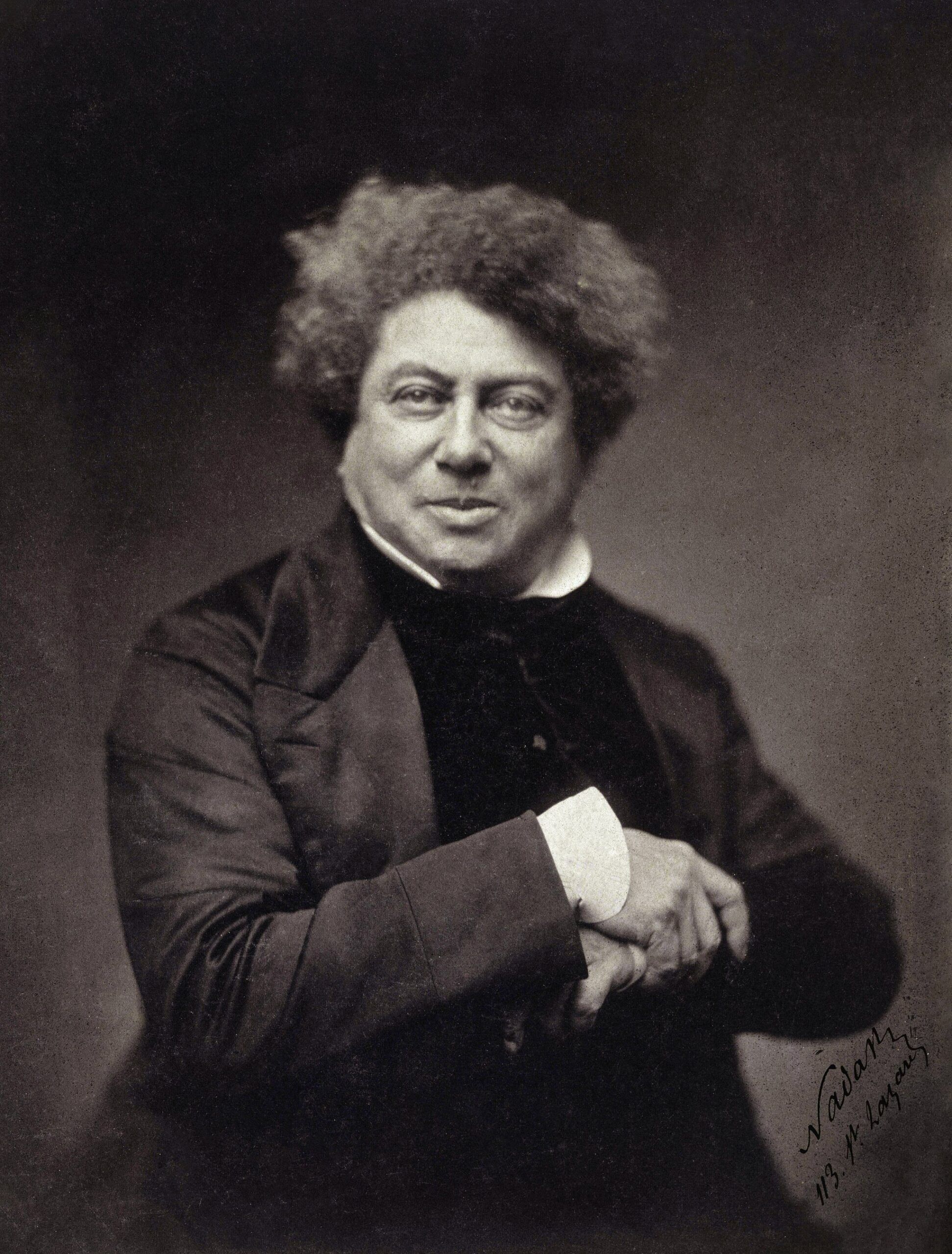
Grandfather Dumas married an enslaved woman of African ancestry named Marie-Céssette Dumas, and then took her surname. Exactly why he did something so progressive centuries ago can only be speculated upon now in 2024, but it is said that it was in order to distance himself from France's colonial prominence. With the stroke of a pen on her marriage certificate, Marie-Céssette was a free woman. Grandfather Dumas and Marie-Céssette had a child, and the name, as we already know, was Alexandre Dumas.
Father Dumas grew up to have a career in the French army. He actually became a general, and probably had a very exciting life at a time when there was a lot of political unrest in France. To be the son of an enslaved woman and a general in one of the world's great powers at that time was probably not an everyday occurrence, almost unthinkable really. But the French Revolution gave enslaved people new opportunities and rights, which opened the door to a military career for father Dumas.
Unfortunately for Father Dumas, a short and decisive man came to power in France in the wake of the revolution, namely Napoleon, and if history has shown us anything, it's that short, angry men are rarely good news for society and the rights of minorities. The right-wing, revolutionary and republican Dumas was captured by the enemy when he left the army after a disagreement with Napoleon. Not only did Napoleon make himself emperor, he reintroduced slavery in the French colonies when he came to power, perhaps as a kind of groin kick to his nemesis Dumas who himself was the child of a woman of African origin and had different physical attributes than himself?
After two years in captivity, father Dumas was released and married Marie-Louise Elisabeth Labouret, they had three children together, one of whom was (of course) christened Alexandre Dumas.
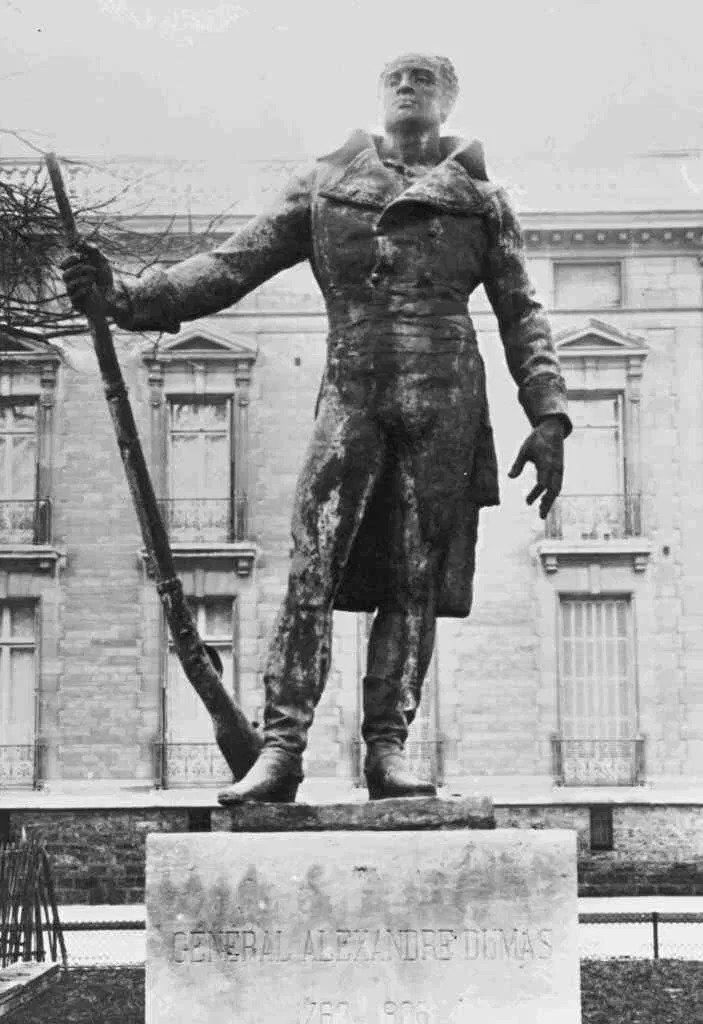
Alexandre Dumas, the author
With a father with a military background, it is perhaps not surprising that Alexandre, the author - not the general, wrote extensively about bullets, gunpowder and cannons. Admittedly, Alexandre's father died when he was only four years old, but the stories about his father still inspired Alexandre's writing. It is said that the stories of The Three Musketeers and The Count of Monte Cristo in particular were written on the basis of his father's experiences.
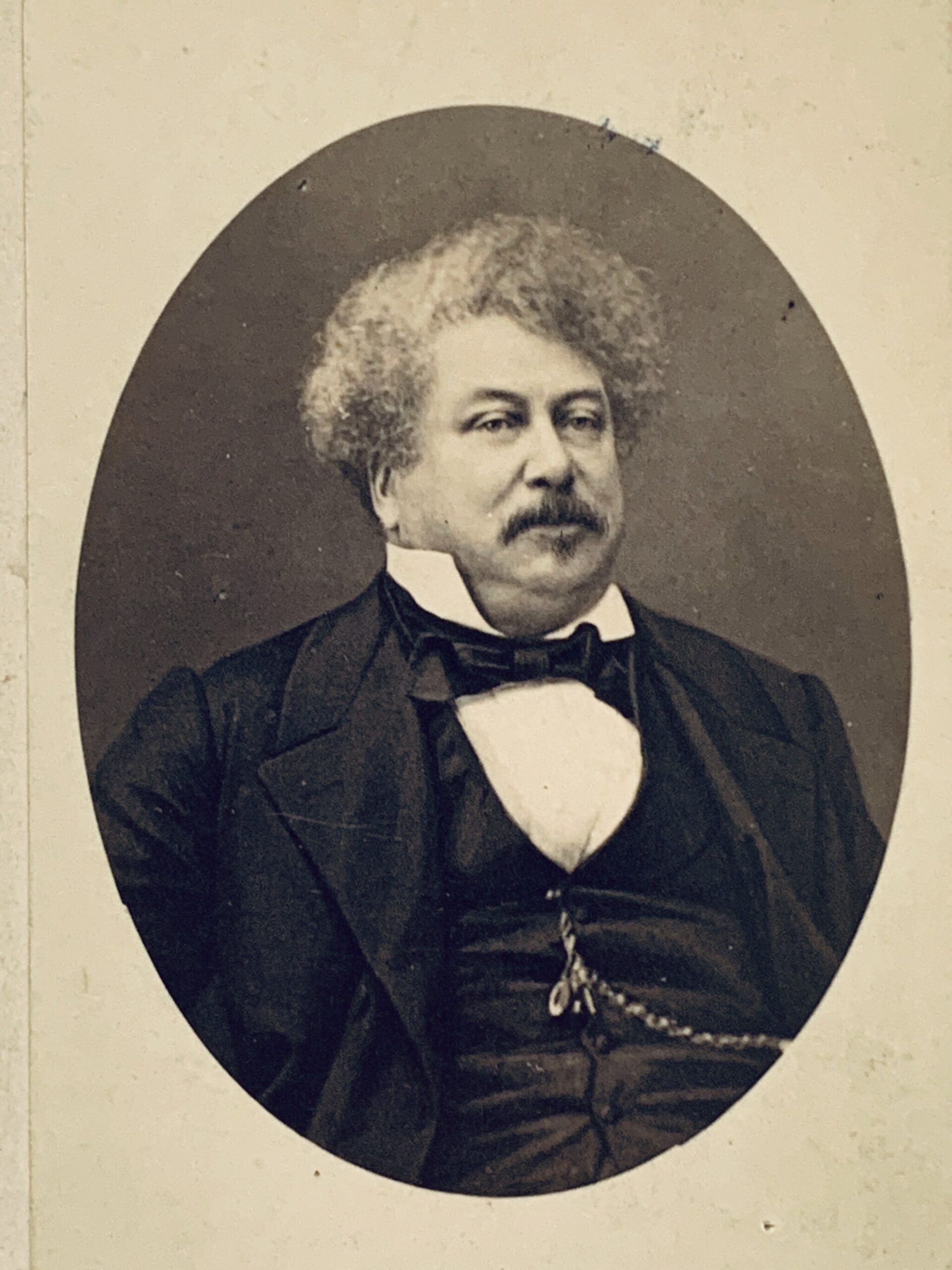
Not a few writers have come out of France, some of the world's literary masters hail from the land of cheese and wine, but our man Alexandre Dumas is the most read of them all.
Despite the revolution and new trends in his homeland, it was not easy to be a person of mixed race in France. Alexandre Dumas was the grandson of a Frenchman and an African woman, and Dumas' appearance was often highlighted and caricatured in various publications. He was also accused of not writing his own texts and was subjected to social marginalization on several occasions.
And justice is an important and central theme in The Count of Monte Cristo, where throughout the story the protagonist seeks justice after being wrongfully imprisoned. But, more on that later, because even though some people questioned Alexander's background and made fun of his skin color and frizzy hair, he had no problem creating art and finding partners. On the contrary. It is said that he had several extramarital affairs and had at least four children out of wedlock. There were also rumors about his oratory skills. Watts Phillips, an English playwright who was also a close friend of Alexandre in later years, described him thus:
The most most generous, cordial being in the world. He was also the most delightfully entertaining and self-absorbed man on the face of the earth. His tongue was like a windmill - once set in motion, you never knew when it would stop, especially if the subject was himself.
Close between the highlights
Alexandre was not only articulate, he could also write. The story of the Count of Monte Cristo is one of the most widely read novels of our time, but it did not start life as a novel, but rather as a serial in a newspaper. The serial was published between 1844 and 1846, during a time of economic growth and industrialization, but also political unrest and social tensions in France. The working class had grown tired of the fact that the upper classes were benefiting from much of the wealth in society, while they themselves were living and working under poor conditions. The discontent led to the abdication of the king and the establishment of the second French republic, and had the republican father Dumas still been alive, he would probably have celebrated the event.
When reading the story of the Count of Monte Cristo, you may notice that the moments of tension in the story are closely spaced. This can be attributed to the form of the serial and the medium in which the story was to be published, where it was necessary for the reader to keep their attention and interest over a long period of time, as the author was at the mercy of the publication rate of the newspaper.
Although the story was intended for the newspaper medium, it didn't take long for the story to find its way into book form, the serial was published between two covers and is considered a national treasure in France.

Innocent man imprisoned
The character development in The Count of Monte Cristo is cited by many as a highlight. The protagonist of the story, Edmond Dantès, starts out as an innocent sailor, but is transformed over the course of the story into the calculated and sophisticated Count of Monte Cristo.
The story of Dantès begins in Marseille. Despite being 19 years old, he is already the captain of a ship, acting as such, has a fiancée named Mercédès and has plenty of friends - who, as it turns out, may not be such good friends after all.
As Dantès sails towards the mainland and sees Marseille in the distance, he is probably looking forward to spending time with loved ones. Little does he know that his fiancée's cousin is deeply in love with his own cousin and that his colleague on board is jealous of Dantès' explosive career.
In his pocket, Dantès carries a letter to be delivered to Noirtier, a former revolutionary and the father of Villefort, the public prosecutor in Marseille. The letter contains information that could jeopardize Villefort's political career, and in an intricate conspiracy between these three, a plan is hatched that will have major consequences for our hero.
With the public prosecutor on their side, the two write an anonymous letter accusing Dantès of being a traitor, present is also his neighbor, but he gets too drunk to actively oppose the plans.
Without a trial, Dantès is thrown in jail before he has time to deliver the letter that could threaten the public prosecutor's position.

If Castle
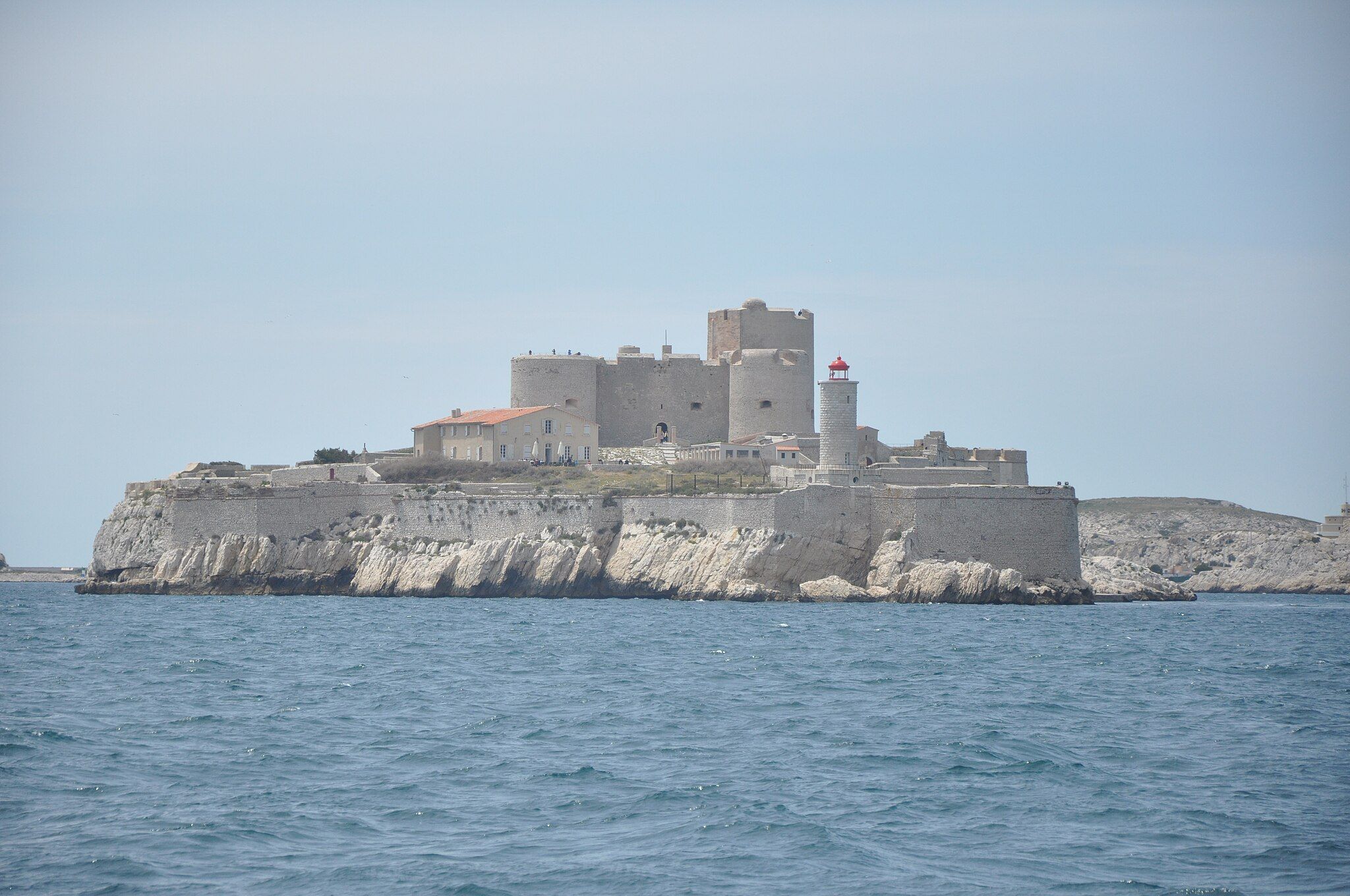
On a small island off the coast of Marseille lies Château d'If, a fort built in the 17th century that was later converted into a prison. Here, Dantès sits for 14 years and probably thinks about his own relational abilities. Fortunately, he is not alone. In prison, he gets to know Abbot Faria, also known as "the mad priest". Faria is a knowledgeable fellow prisoner who happily shares his own knowledge of science, language and history, helping him to understand who was behind his wrongful imprisonment. This is an important part of the foundation for the transformation that Dantès will undergo to become the Count of Monte Cristo.
Dantès and Faria become increasingly close as time passes on the small island on the outskirts of Marseille. They have a deep and mutual respect for each other, and one might assume that Faria has a paternal love for the young man who is unjustly imprisoned with him. Unfortunately, Faria is very ill and is nearing the end of his allotted time here on earth.
So Faria decides to share a secret with his fellow prisoner with whom he has spent his last years: the location of a treasure on the island of Monte Cristo. This gives Dantès a good reason to get out of prison, off the island and to Monte Cristo. But there's just one small problem: he's locked up on an island off the coast of Marseille for life, so how will he escape?
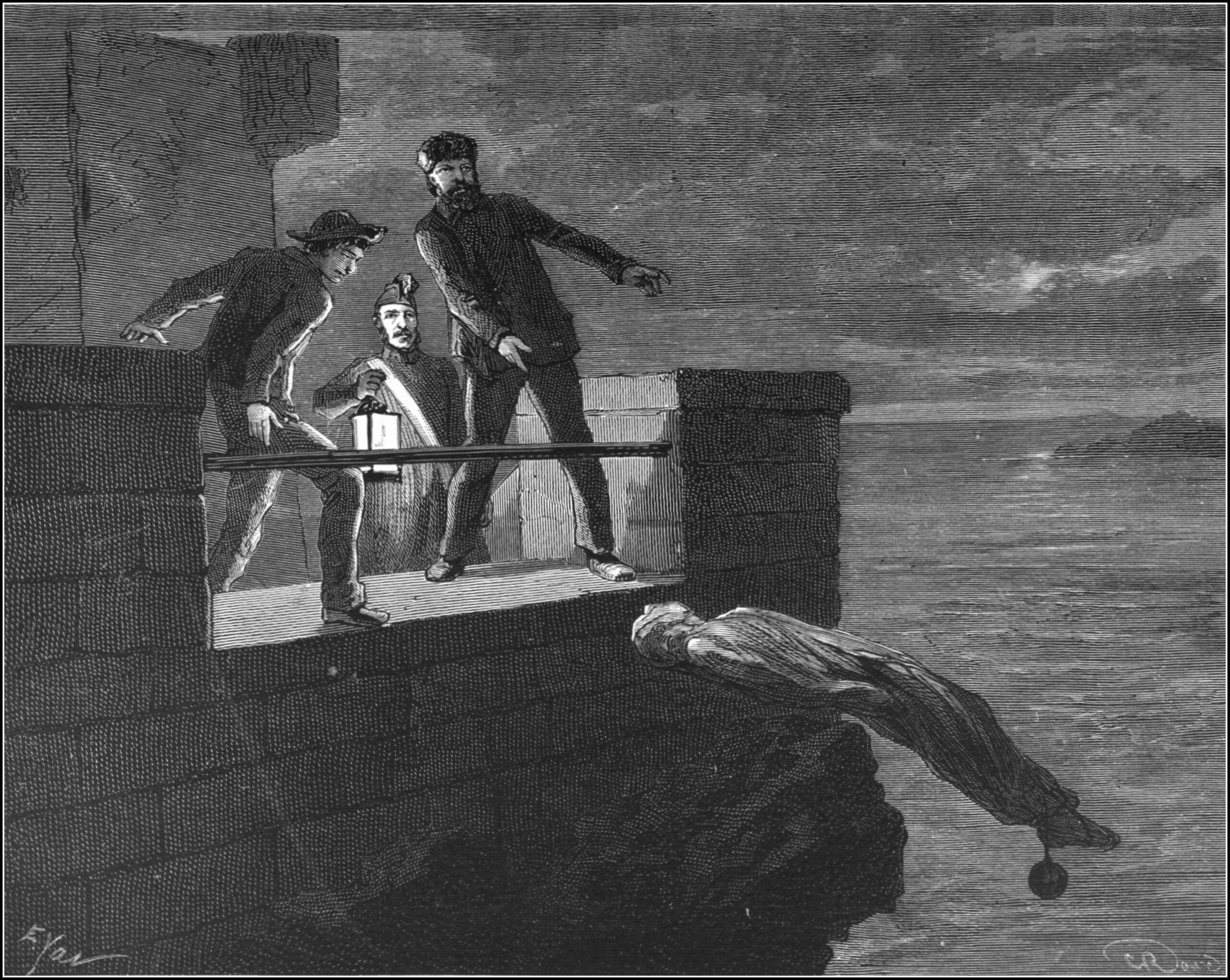
Faria dies, unfortunately, but this also opens up an opportunity for Dantès. He places his deceased friend in his own cell, while he himself assumes the role of deceased mentor and takes his place in the body bag. In nineteenth-century France, funerals were perhaps not so important in the prison system, so in the story we can read of the prison guards throwing the bag into the sea to get rid of the body. Dantès escapes and makes his way to a nearby island where he is rescued by a smuggling ship. He makes his way to the island of Monte Cristo, finds the treasure and, like many other nouveau riche, acquires a title of nobility, the Count of Monte Cristo.
The book is divided into four parts, the first part is about the road to and stay at Château d'If. Part two is about hunting for treasure and rewarding those who have helped him along the way, while the third part is considerably darker and tells the story of a fresh and vengeful Count who hunts down those who had him imprisoned.
In the latter part of the novel, it may seem as if Dantès undergoes a self-examination and shows remorse for his own thirst for revenge, he gets his beloved and, like so many other stories before, it ends well in the end. That is, for the Count, but not for those who defied him in the first part of the story.
The Count in Kilden Theater
It's a dramatic story that takes place in Château d'If, on the island of Monte Cristo and in and around Paris, so, as mentioned, there are many moments of tension in the story. There are also long-distance journeys and changes of scenery, how can this be transferred to the stage and maintain Dumas' legacy?
Alexandre Dumas was primarily known for writing plays. He made his debut as a playwright in 1829, 15 years before the story of Dantès was written. Although the play about the Count of Monte Cristo was written as a serial and then published as a novel, it is a popular play to stage. When the play finds its way to Kilden Teater, it is Jonas Corell Petersen who has dramatized the French novel. Corell was born in Denmark and holds a master's degree in directing from the Oslo National Academy of the Arts. He has won several awards, including the European Fast Forward award for young directors. He has worked as an in-house director at the National Theater and in-house playwright at Dramatikkens hus in Oslo.
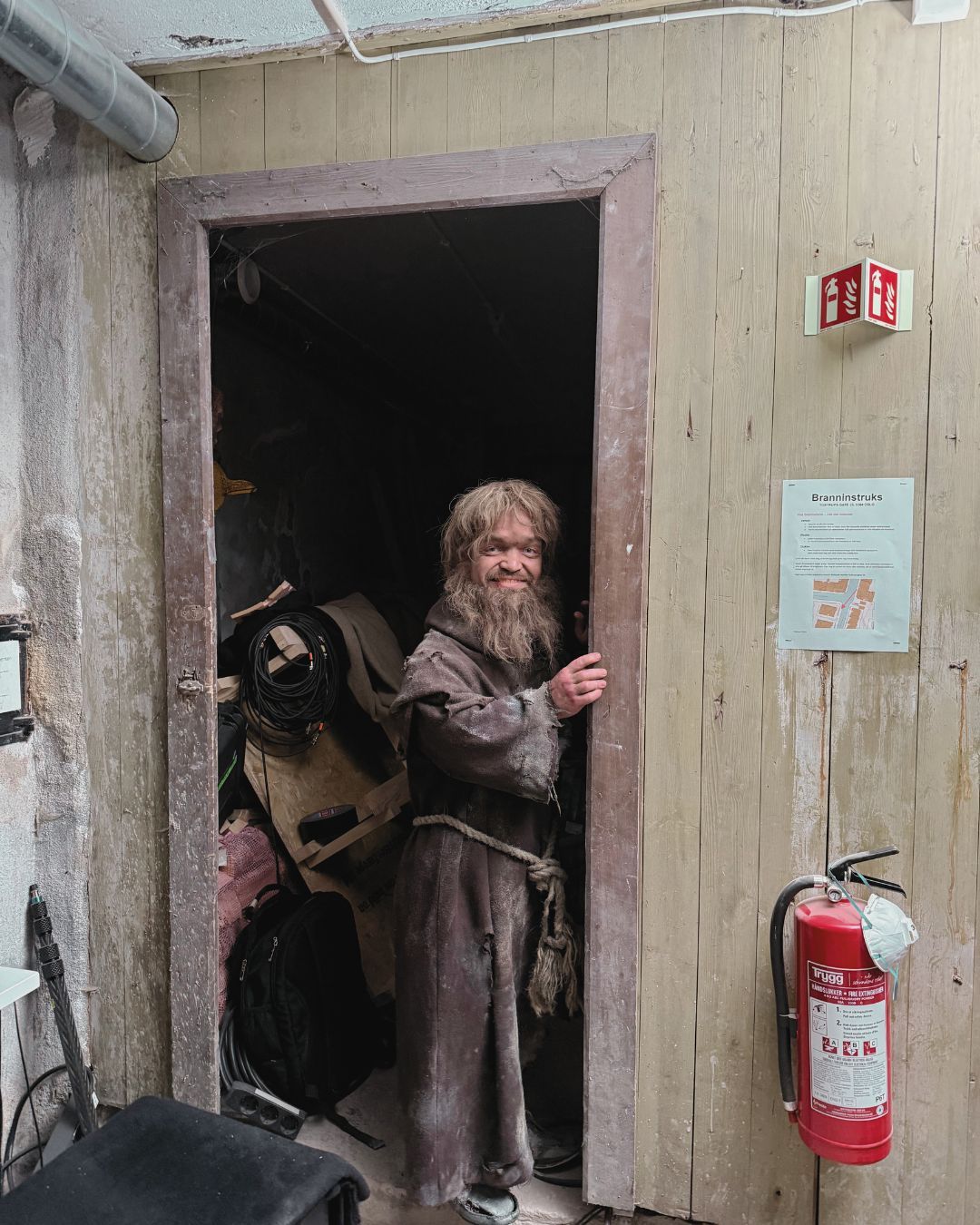
Last year, exciting steps were taken in Oslo to help with the storytelling. Kilden Teater had a film crew in a dusty basement in Oslo, in the absence of a French fortress, to film several scenes that will be used during the performance to show parts of the story that unfolds at Château d'If.

Such a hunt for a suitable place to film can take days, if not weeks. As luck would have it, Ida Grimstgaard, set and costume designer on The Count of Monte Cristo, literally stumbled upon the cell right under her own home in Oslo.
There, in the freezing cold basement of an Oslo apartment building with red bricks on all sides, the French prison cell came to life.

Film in the theater
- The combination of film/video in the theater is not always as successful, often because the film medium becomes so dominant. In many ways, it is much stronger in relation to the stage expression. But in this production, I believe that the artistic team has found a way that can work well and connect the film with the stage. It will be exciting to follow the rehearsal process in the future and see how the elements can work together," concludes theater director Frøysnes.
The result will be seen in teatersalen in February, but already now the audience can get an exclusive look at the process via Kilden Theatre's Instagram account.