Cleaning the World of Anne Frank's Siblings
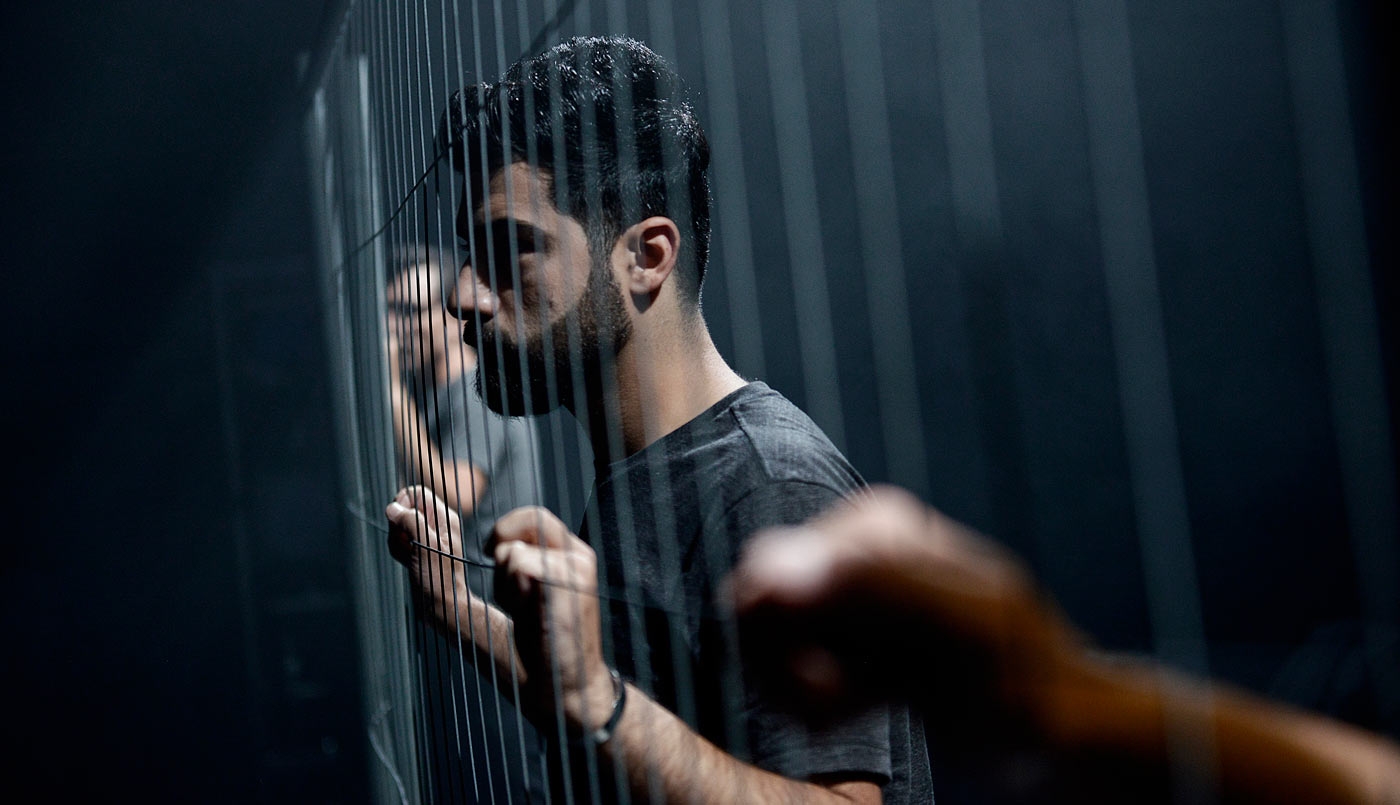
The photo is from the play “Anne Frank’s Siblings,” which premiered at Kilden on September Kilden , 2016, and was performed during the Hedda Days in Oslo in June. On stage, professional actors perform alongside five Syrian refugees. Real-life stories and comments from the media are interwoven with a fictional narrative. The play received significant attention following its premiere, and the Ministry of Culture provided additional funding to ensure more people could see it. As a result, additional performances will be staged in November.
[ultimate_spacer height=»60″ height_on_tabs=»40″ height_on_mob=»40″]
This year, Kilden program features a thematic thread running from *Anne Frank’s Siblings* through *Terje Vigen* to *I Want to Wash the World Clean*. Through the performing arts, we seek to understand what is happening in the world. While 65 million people are desperately pleading for help, Norway boasts that we have Europe’s strictest asylum policy.
Our Minister of Immigration and Integration has promised “not to give an inch” in the fight to keep the influx of refugees down. The most extreme forces in society are being fueled by well-meaning but fear-driven rhetoric. When we have to choose between what is right and what is easy, fear is not a good guide. Europe has burned before. How can we prevent history from repeating itself?
There is a long way from populism to extremism. But the populism we are witnessing dares to undermine our most fundamental values: human dignity and democracy. It is no coincidence that Nazis are once again marching proudly in our streets. That is why we must do our utmost to understand what is happening. And we must do our utmost to reverse this trend.
Respect can only be earned by showing respect. Understanding can only be earned by understanding. And freedom is not freedom until every single person has control over their own choices.
As a theater artist, I work in two areas that share many parallels. One is domestic violence. The other is populism or extremism. Cases of domestic violence rarely begin with someone striking another person. First comes a period of verbal abuse and psychological violence. Then, when that isn’t enough, the blows follow. According to Alternativ til Vold, the majority of those who do this strike because they feel powerless. They strike in an attempt to regain the control they have lost. It is not an excuse, but it is an explanation.
“THEATER CAN BRIDGE THE GAP BETWEEN DIFFERENT REALITIES, BETWEEN DIFFERENT ECHO CHAMBERS, BY SHOWING US THE REALITY OF ‘THE OTHERS’”
Plattform (the Norwegian Institute for the Prevention of Radicalization and Violent Extremism) highlights a number of factors that can lead to radicalization. Here we see the same pattern. The transition from offensive language to acts of violence occurs gradually in a radicalization process. One of the main reasons people are vulnerable to this process is a sense of powerlessness in the face of society. The key to combating populism lies in how we address this powerlessness.
“What’s the worst thing about being on the margins of society?” I asked one of my far-right partners in the Anne Frank project.
“The loneliness,” he replied.
Humans aren’t meant to live alone. We’re social creatures. Some of us will do almost anything to become part of a community. Another contributor to the Anne Frank project, a refugee who truly wanted to become part of Norwegian society, solved his loneliness by becoming a Mormon. Not because he believes Mormons have a monopoly on the truth. But because the Mormon Church was the only place that offered him a sense of belonging. All credit to the Mormons, but what a defeat for Norwegian society. Because that is what all forms of exclusion are. A defeat for society.
Theater can bridge the gap between different realities, between different echo chambers, by showing us the reality of “the others.” Most importantly, theater can show us that the concept of “the others” is fictional. For there are only individuals. People shaped by the history they carry and the lives they have lived. When we experience that someone wants to understand us and our history, it is also easier to listen to others with understanding.
We adults are committed to ensuring that all children are invited to birthday parties, regardless of who they are, what they believe in, or how they treat others. We aren’t nearly as inclusive in our adult social circles. We unfriend people we disagree with on Facebook, and we distance ourselves from them in real life. It has become politically correct to be exclusive. We ourselves create the exclusion we fear, and only we can break it down again—by giving everyone in society the opportunity to be part of the community. Some find meaning in life through religion. Some find meaning in joining a war and cleansing the world. But fortunately, one can also find it by creating, or experiencing, art together with others. That is why art is important in democracy. And that is why we must be conscious of creating art that is inclusive.
Birgit Amalie Nilssen, Theater Director