The Bjørneboe Anniversary
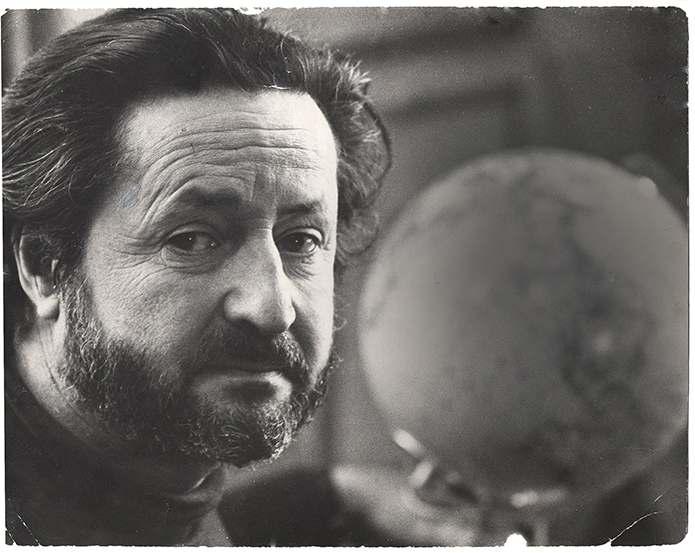
In 2020, Kilden marking Kilden 100th anniversary of the birth of author and social critic Jens Bjørneboe.
Karen Kristine Blågestad
CONTINUALLY CAPTIVATING NEW GENERATIONS
It is high time that Kristiansand firmly anchored Jens Bjørneboe in the city’s cultural history, and nurtured, celebrated, and discussed his artistic legacy.
For this was where he came from; it was in these streets that he gained his first experiences and survived his unhappy childhood. Perhaps his ever-insistent rebellion has its roots in this very city: in the oppressive religious and petty-bourgeois striving where the church, the school, and financial power dictated what was “right and wrong.”
Jens Bjørneboe has always had a penchant for the “wrong” things. For a long time, he held the record for the number of expulsions from Kristiansand Cathedral School. He eventually lived on the very fringes of society—an alcoholic, gay, and rebellious as he was. But his struggle for the value and rights of the individual, against abuse and oppression, is an honorable struggle that continues to inspire new generations and has shaped them time and again.
And one of the first things they read and relate to is *Jonas*. This boy who flees out to sea from a school that doesn’t see him or understand him, from the salamanders who worship systems, structure, and numbers. *Jonas* was about school, but at every level beneath the surface, it’s about power—and power that corrupts. About human dignity—and the lack thereof.
Jens Bjørneboe’s literary work has helped propel Norwegian civilization forward and fostered humanism. That is a source of pride. And that is the very essence of Jens Ingvald Bjørneboe’s legacy.
“Never be afraid to speak your mind. Whenever something happens, always help the most vulnerable.”
The quote is from Jonas. It hasn't lost its relevance.
Karen Kristine Blågestad
Culture Editor at Fædrelandsvennen
Line Baugstø
MY CHILDHOOD HERO
As a young man in the 1970s, I read everything I could get my hands on by Jens Bjørneboe. The novels. The poetry. The essays. The plays. And he changed my view of the world. He taught me the meaning of freedom and rebellion, and to always stand up for the weakest. I admired his uncompromising stance, his political message, and his sharp analyses. But also his humor and elegant language. Bjørneboe could basically write about anything and make it interesting, as I saw it. It is no coincidence that *Police and Anarchy* has the subtitle *Essays on Cats, Courts, and People*.
This was at a time in my life when I was at my most open and impressionable, and Bjørneboe taught me what values were important. Every teenager should really plow through *The History of Bestiality*. But at the same time, be warned: You don’t read books like that in your youth without it leaving a mark. The world will never be the same.
Line Baugstø
Author
Julie T. Stangebye
READ IT OVER AND OVER AGAIN
My first encounter with Bjørneboe was through *Blåmann* when I was a teenager. I read the same pages over and over again, as if to delay the ending. The notion I had at the time—that older literature “surely wouldn’t interest me”—now seemed utterly foolish, and I continued to seek out books by and about him.
Then there are certain phrases that take root in you and stay with you long after you’ve finished reading the books. For me, one of these is: “Out of consideration for your friends, you shouldn’t die in the spring,” from Jonas.
Julie T. Stangebye
Author
Ketil Bjørnstad
A CORNERSTONE OF MY WORK
Jens Bjørneboe had left his teaching position at the Steiner School in Oslo by the time I started there as a 7-year-old in 1959. One of the main reasons my parents chose to send my brother and me to the Steiner School was Bjørneboe’s novel *Jonas*. It offered a critical critique of the school system that had a profound impact on many people.
Later, I met Bjørneboe through my friend Ole Paus and, during the very last years of his life, was part of his circle of acquaintances. His body of work—as a poet, novelist, and essayist—had an enormous influence on many in my generation.
I owe much of my political engagement to Bjørneboe. It’s no secret that my own novel *Barnevakt* was inspired by a particular meeting I had with Bjørneboe in 1973. I also write about this meeting in the novel *Syttitallet*.
Bjørneboe’s struggle against false authorities has been a cornerstone of my own work. Both in literature and politics, he has left a mark that keeps him very much alive and present, more than forty years after his death.
Ketil Bjørnstad
Author and musician
Harald Furre
STILL RELEVANT
Kristiansand is shaped by everyone who lives here, and Bjørneboe is definitely one of those who truly made Kristiansand his own. His writings about a difficult childhood and social exclusion remain just as relevant today, as does his commitment to a school system tailored to the students. Bjørneboe is controversial in many ways, and perhaps that is precisely his most important contribution. I believe his life and work have helped us see more clearly today the value of being a city with a high degree of tolerance and ample room for diverse opinions. Today, we are clear that Kristiansand should be a city for everyone, and that it is precisely this diversity that makes this possible.
Harald Furre
Former mayor of Kristiansand
Trine Skei Grande
KEY CONTRIBUTIONS
Jens Bjørneboe’s life and literary work are shrouded in myth. Many young people have had their first, formative encounter with adult literature through reading Bjørneboe. His scathing social criticism continues to make an impact today. Bjørneboe was a humanist. I believe the stories of individuals who were subjected to abuse of power by the school system, the prison system, and the judicial system have been an important contribution to postwar social development.
Trine Skei Grande
Minister of Culture
Jan Oddvar Skisland
MADE AN IMPRESSION
Jens Bjørneboe is one of Kristiansand’s most prominent figures. His body of work covers a wide range of topics, including fundamental issues related to upbringing, education, and culture. He himself experienced the tensions and challenges associated with these issues both as a rebellious student at the Cathedral School and as a teacher at the Steiner School in Oslo.
We studied the novel *Jonas* as part of the curriculum when I attended “Katta,” and it was one of the books I had to read that actually made a strong impression on me. The sense of injustice and unfairness still resonates deeply with me. I hope that through the commemorations this year, we can help bring to light the issues he raised. These themes are likely just as important to us today.
Jan Oddvar Skisland
Mayor of Kristiansand
Read also:
- The Bjørneboe of Punk Rock
- The dyslexic person interprets the author
- The system versus the individual
[ult_buttons btn_title="BUY TICKETS FOR JONAS" btn_link="url:https%3A%2F%2Fkilden2020.wpengine.com%2Fforestilling%2Fjonas%2F|title:Jonas|target:%20_blank|» btn_title_color=»#ffffff» btn_bg_color=»#7a3434″ btn_bg_color_hover="#5e5e5e" btn_title_color_hover="#ffffff" btn_icon_pos="ubtn-sep-icon-at-left" notification=""