The Play of Colors – A Source of Dialogue
Words are strange
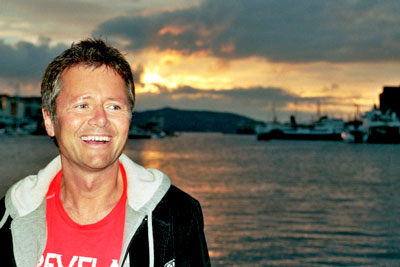
Ole Hamre is a musician and composer who has developed and led a number of artistic projects at national level. Hamre is the man behind the human organ "Folkofonen" and not least the initiator and artistic director of the multicultural children and youth project "Fargespill".
A combination of sounds that can trigger a whole world of experiences and associations. And because different people can have different associations with the same word, spoken language is an imprecise means of communication that opens the door to many misunderstandings. For example, I was talking to speaker and former basketball player Marco Elsafadi about the word respect. I associate the word with attention and resourcefulness. In his childhood, before he was linguistically acclimatized,
this was a word Marco associated with submission and discipline.
Irene Kinunda from Congo, a long-time color player on stage and now employed by "Fargespill", has said that in her encounter with the Norwegian language there were so many long compound words. Her teacher told her to break them down and see what each word meant. One word that was widely used among her peers was the word "hell". She thought that helv meant half and vete meant to know. So hell meant knowing half. And only God knows everything. As a deeply religious person, she thought it was a very nice word and used it all the time. You are hell. I am hell. Everything is hell, except God!
Source and Dialogue are two exciting and beautiful words. And as I chew on these words, it strikes me that we need contact with our own source, with our origins and culture to experience ourselves as whole people. We need to carry this with us in our dialog with the outside world, and in this way be allowed to become visible to others, with all that we are and all that we come from. To do this, we need a language. Until children and young people who come here from all over the world have learned the Norwegian language, they must be given the opportunity to use another language. A language that everyone can understand and express themselves in, no matter where they come from.
This is the language we use in "Color games". Through this language, children and young people find themselves, and the language is called song and dance.
In "Fargespill", this language encompasses both what you came from and what you are. The "Fargespill" performances are made of music and dance that children and young people from between 30 and 40 countries, including Norway, bring with them. Ethiopian shoulder dance meets Norwegian gangar. Mogadishu meets Bollywood, which meets Edvard Grieg, Afghan 7/8 time is presented in vossabunad and clapping toys from all over the world are united in one big polyphonic community mantra. The result is a concept that has spread to 29 municipalities and cities throughout Norway, where more than 3,000 children have participated on stage in front of hundreds of thousands of spectators.
This experience of players of color being seen, being considered an asset and being recognized for their culture is changing the lives of many of these young people.
As Mona Ibrahim puts it in the award-winning documentary NRK recently made about Fargespill: "Through Fargespill I found myself. It was here that I realized I could be both Somali and Norwegian at the same time. That's when I found harmony in my life and it has given me a lot of self-confidence."
It's Mona's ability to push her own boundaries on stage, there and then, that hits us. This is what gives us the Fargespill experience. This is a wordless experience that many have tried to describe in words. Dagfinn Lyngbø, for example, said that Fargespill gave him goosebumps under his legs. "When we told this to some of the children, they didn't understand anything. And when they finally understood what goose bumps were, they thought that we Norwegians were some strange creatures who got them under our feet.
And next March, you’ll get goosebumps at Kilden. One hundred children and young people from all over the world—all living in Kristiansand—are ready to go, and together with a large team of highly skilled professional support staff led by Elisabeth Lindland, they’re already hard at work preparing for what will be the third production of *Fargespill* atperforming arts centre Kilden performing arts centre.
Many people have attempted to describe the "play of colors" experience. But no matter what words we use, we will not be able to grasp an art experience. That's why we have art. That's why we have music. Because although music is a composition of sounds just like language, these sounds speak to a different part of us. They speak to the part of us that we all have in common no matter where we come from. That part includes hope, faith and love, plus our own image of who we are. And in order to convey a holistic experience from this world, a language other than Norwegian is required - this time delivered by 100 children and young people from 35 countries who pour from their source and are ready for a dialog with you.