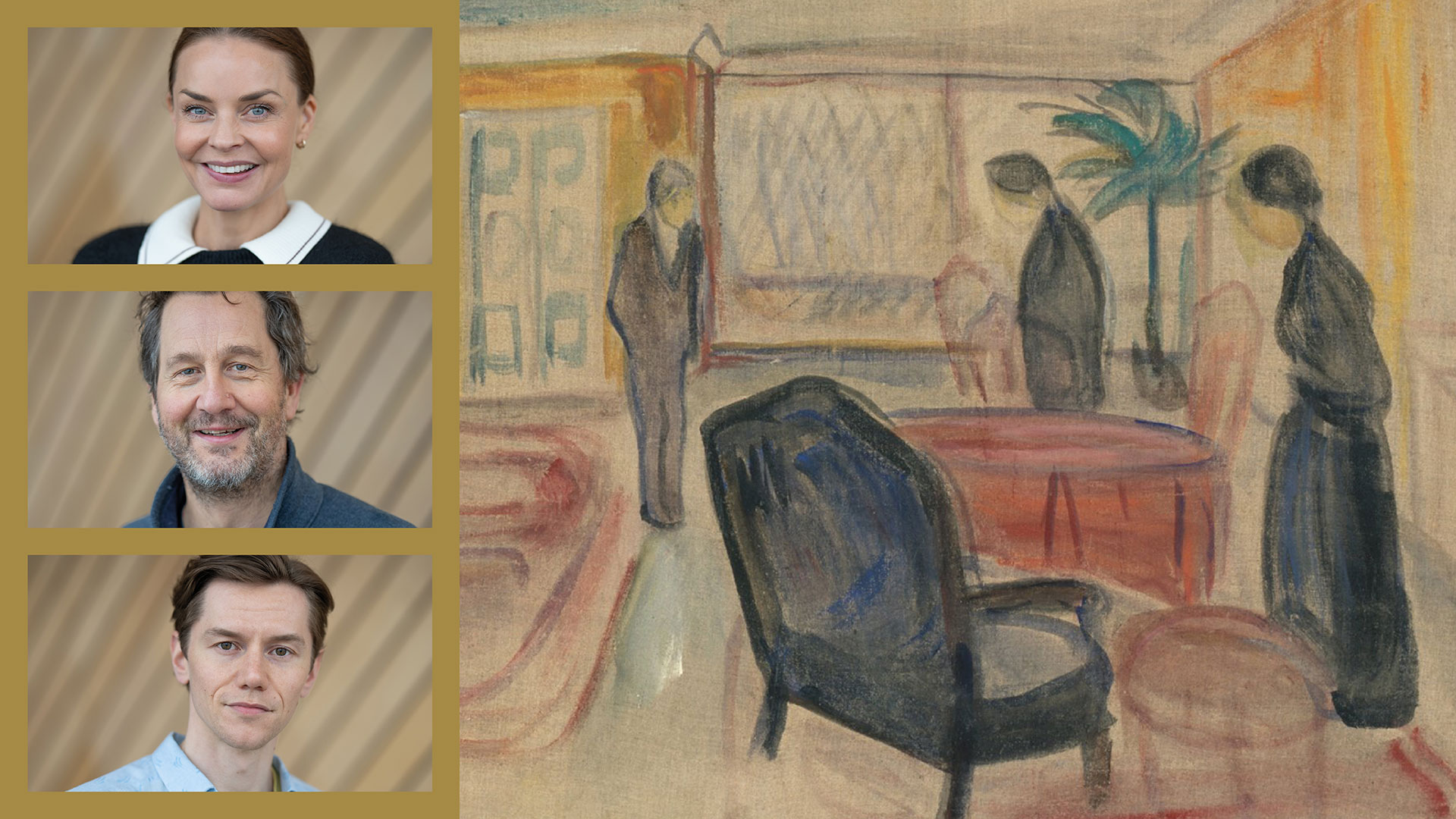
Ibsen plays on the main stage this fall
Ghosts by Henrik Ibsen

Are we free people? Are we able to make choices that are our own? Or are we so fundamentally shaped by our heritage, upbringing, morals and environment that most of what we think is free will is in fact repetition?
This fall’s main stage production from Kilden is one of Ibsen’s major works, and his most controversial play— Ghosts. At Kilden’s Theater and Opera House, it is being staged with a dream cast of inspiring artists, outstanding actors, and string players from the Kristiansand Symphony Orchestra. Together, they bring to life a drama that sparked strong reactions when it was published in 1881 – inin fact so strong that the premiere had to take place in Chicago, USA. Despite its great success , it took nearly 20 years before ithad its premiered at the National Theater in Oslo in the year 1900.

This fall's big initiative in Kilden
Now, 125 years later, it is director Mari Kjeldstadli who brings Ibsen’s family drama to life in Kithe stage. She returns for the third time, following Jonas in 2020 and Rosmersholm in 2022 – both critically acclaimed box office hits. This time, the theme is lack of freedom that deeply engages her.
- As humans, we seek community - we need other people. That's why individual freedom can often become an unattainable ideal. The moment we violate the expectations that come with a community, we risk being left out. Freedom can thus be read as the ability to choose which community you want to belong to. Kjeldstadli explains, and adds:
- When duties and norms are imposed without our choosing them, it can create an inner conflict. This conflict can easily become destructive - because our need to live according to our own choices will sooner or later push itself forward.
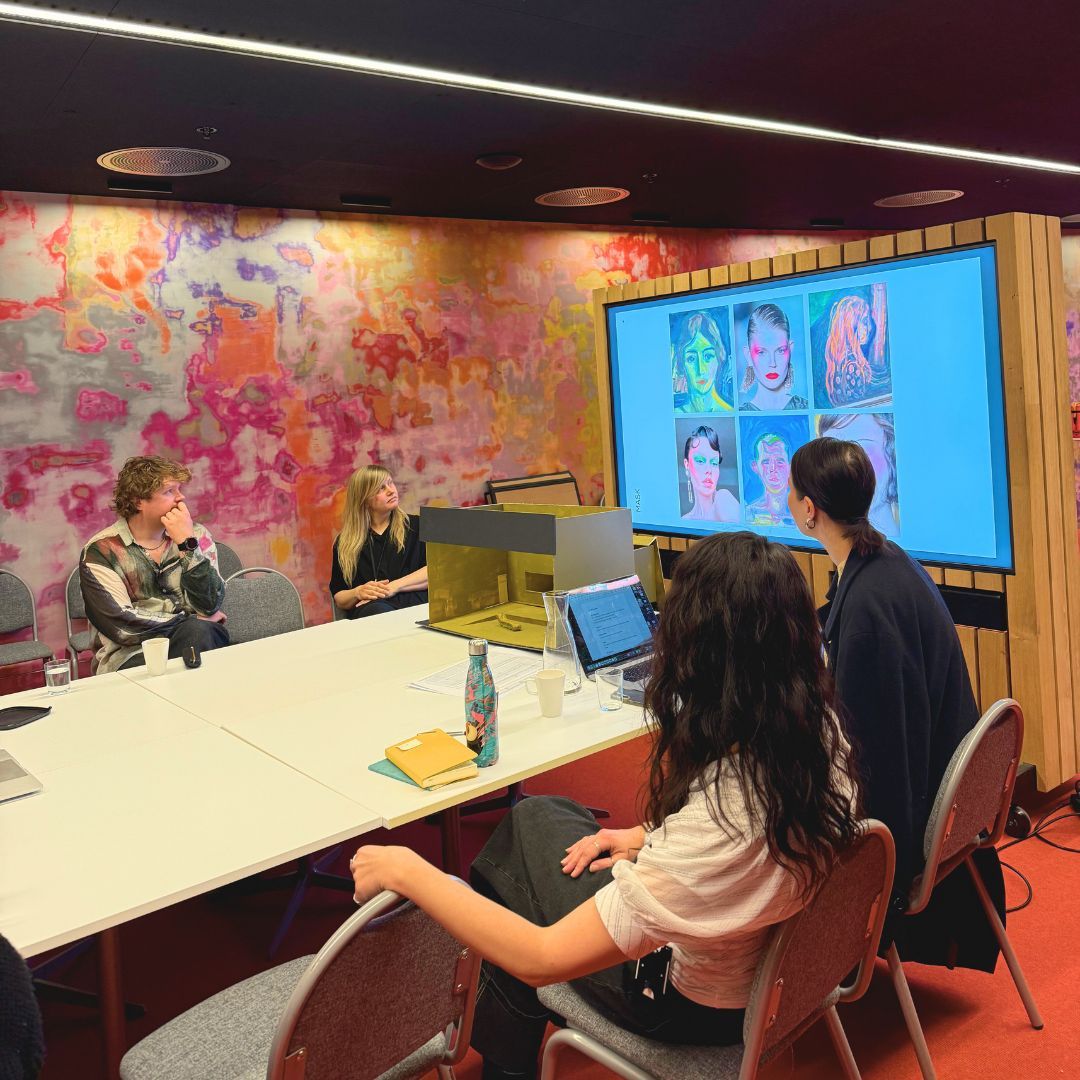
Furthermore, Kjeldstadli highlights a word that describes precisely the essence of what the play is about.
— Joy of life. For Ibsen, this is the opposite of destructiveness, and can be interpreted as living truthfully and meaningfully—with room to express oneself. It could be seen as a privileged statement, especially since it comes from the son of a wealthy man. But that is precisely why the question is important: Once basic needs are met—what is it that gives life meaning and joy?
But I want to have joy of lifeI don't want to be shy and cast shadows - I want to live!
- OSVALD

Mother and son and son in the lead
The actors Henrik Rafaelsen, Fredrik Høstaker, Mina Try, Agnes Kittelsen and Paal Herman Ims participate in the production. The latter two are visiting Kilden for the first time, and play the central mother-son duo at the forefront of the story.
- We are all somebody's children, it's a basic relationship in everyone's life and a knot in us, båfor better or worse. The expectations and demands that føfollow from beingæbeing a parent, and maybe evenæespecially mother, has always beenæbeen strict. It's a role characterized by duty and thus also by lack of freedom, but at the same time by deep, unconditional love. And therein lies an impossibility: to live true to oneself and at the same time live for someone else, says Kjeldstadli.
Duty? You don't know what you're saying. You don't know what an empty and hollow sound that word makes when you've experienced what it means.
- FRU ALVING
— There is a peculiar relationship between Mrs. Alving and her son Osvald. Fbecause not just the role of a parent that is by duty and expectations. Even as an adult remains Osvald affected by come home, that makes something to how he sees himself himself and life he has lived. It is , by the way many questions about who is related to whom in the play, which whether it is crucial to who one is.
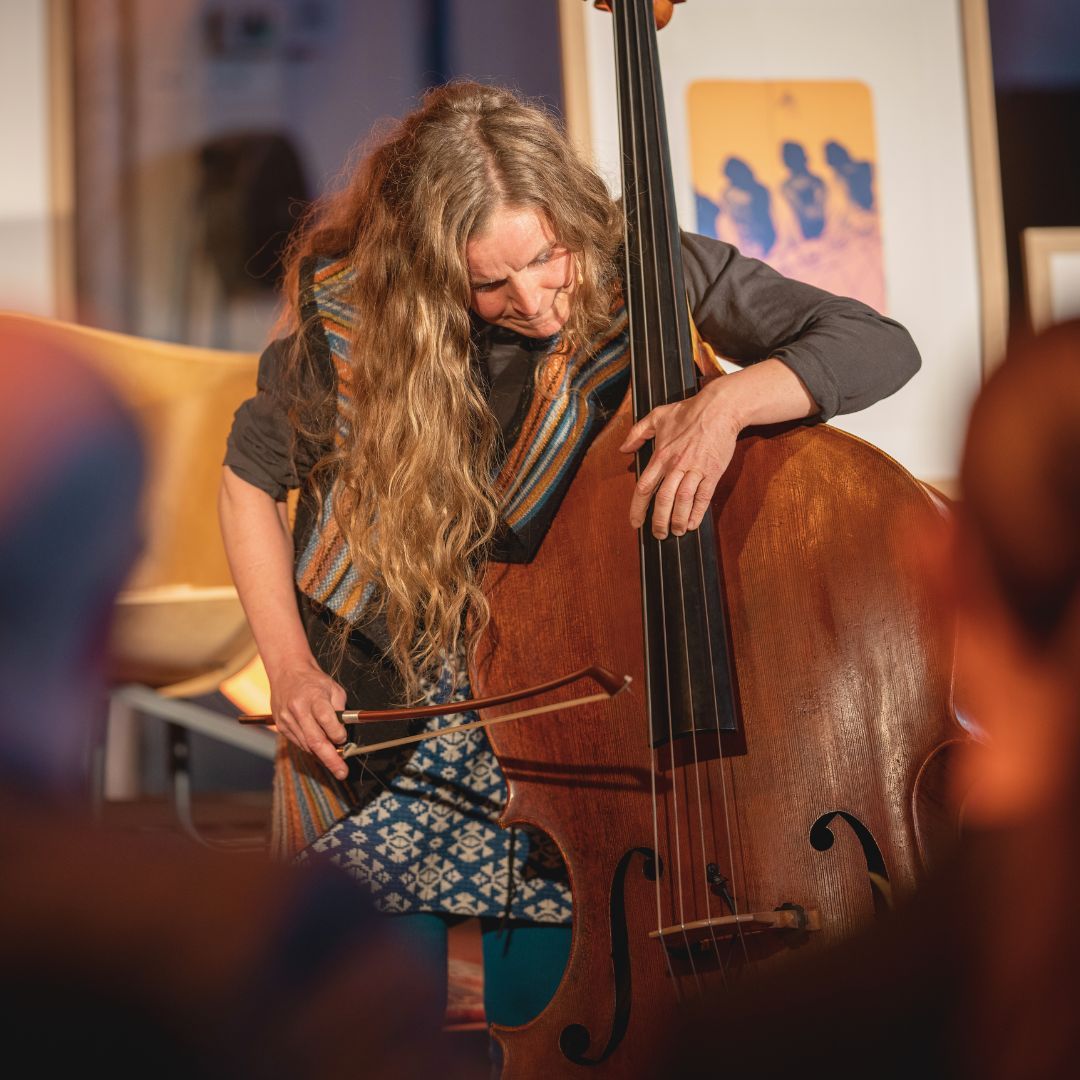
Strings on stage
Also on stage are three strings from the Kristiansand Symphony Orchestra, conducted by the renowned musician, composer and Hedda Award winner Guro Skumsnes Moe.
— Guro is one of the artists I know who listens most attentively,
says Kjeldstadli about the musician she has collaborated with several times before. For her, having musicians on stage is one of the unique aspects of staging a performance in Kilden, which also houses the Kristiansand Symphony Orchestra.
- "When the music is played live, it can be in dialog with what is happening, as an active interlocutor. There are not five actors on stage, but eight actors - eight voices. Having musicians on stage gives a unique closeness and presence to the sound. And it puts the music on a par with the other elements.
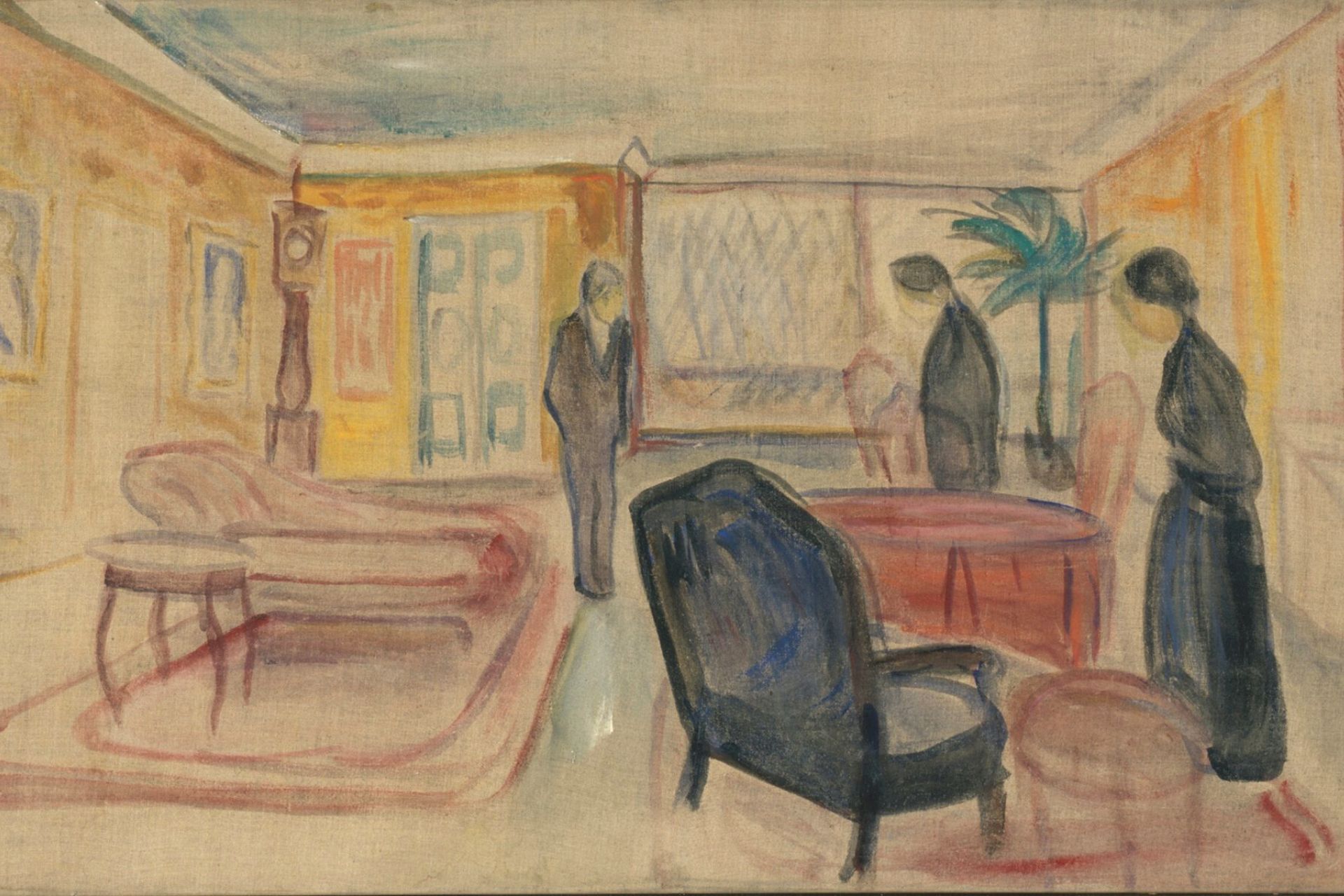
Inspired by Munch
When it comes to scenography and costumes, Kjeldstadli, together with set designer Norunn Standal, costume designer Synne Reichelt Føreland and lighting designer Phillip Isaksen, have looked to Edvard Munch's soulful and contrasting world.
Munch had both a strong artistic and thematic connection to Ibsen's Ghosts. He was deeply fascinated by the play and used it as inspiration for several paintings. After Ibsen's death, Munch was also commissioned to create the set design and illustrations for a production of the play. Ghosts in Berlin. In this work we find, among other things, the work Stage design for Ghosts.
According to Kjeldstadli, Munch and Ibsen are very similar in terms of mood and theme.
- The contradiction between facade and interior has been central to finding the expression in the performance. That's why we've been inspired by Munch. He paints the interior. He paints femotions, momentsmoments, what can't really be put into words.å. And he works with quite large contrasts, which communicates well in the material we work with and the expression we seek.

Ibsen's women
Ibsen's Ghosts is often seen in the context of his breakthrough play A Doll's Houseand the character Mrs. Alving is compared to the character Nora.
When Nora Helmer slammed the door behind her in 1879 and left her husband and three children for a true life of freedom, the bang reverberated throughout Europe. How could such a great and respected playwright as Henrik Ibsen write something as morally reprehensible as a mother and wife who put themselves before their family? Who choose their own happiness over their duties?
These were the reactions that met Ibsen after his real breakthrough as a writer with A Doll's House. At the center was a woman, and the conflict she faced was between herself, a true life of happiness, and the duties society expects of her - but in lies and unhappiness. As a result of the criticism that met him, Ibsen chose to take the bull by the horns. If the audience wanted a woman who does not abandon her duties, then they should get it. Work began, and his new play Ghosts was published in 1881, two years after the success of A Doll's House.
The problem for critics and audiences was probably just that the story they were served about a woman who actually stayed in an unhappy and untrue marriage was in many ways more controversial and "morally corrupting". Here, he touched on all kinds of taboo topics about criticism of religion, contempt for authority, double standards, infidelity, poorly concealed sexually transmitted diseases - and not least potential incest, abuse and mercy killing.
There is no freedom for a woman as long as she obeys her conscience more than her husband.
- FRU ALVING
Perhaps most of all, Ibsen criticized marriage and all that this institution entails. Arne Garborg was not kind in his review of the book in Dagbladet in 1881:
Once again, it is marriage that must hold the line. And never has there been a more passionate and more ruthless attack on this institution on which our society is built. Henrik Ibsen "does not agree to move pieces". He smashes the game over.
Are we free people?
A recurrence is not necessarily a ghost. It can just as easily be a pattern. An idea. An expectation. Ibsen has both: Captain Alving who haunts the house, and the old values that haunt everyone who lives there. In this play, the focus is not on a single trauma, but on an entire social structure that is inherited - in attitudes, in silence, in illness. What is inherited biologically, and what is transmitted through lifestyle and language? What is in the body and what is in the walls?
Europe was in a period of change. New ideas were pressing in, and modernity was knocking at the door. Darwin challenged creation, Nietzsche challenged the church, Marx challenged power, and John Stuart Mill told us that man should be free. Ibsen read these thoughts - or heard them on the wind. He wasn't the first, but he captured the zeitgeist.

Although the play itself is scandalous, the scandal is not the end in itself. The scandal is the means. Gengangere is therefore not a battle cry, but a consequence analysis. Here he shows what happens when you do what you're supposed to, but not what you should. Mrs. Alving tries to save what can be saved. But it's already too late.
Instead of rebellion, we get adaptation. Instead of freedom, we get disease. It is not the choice to leave the marriage that has the greatest consequences for Ibsen - but the choice to stay.