The Pursuit of the American Dream
Heimanifrå – In High Heels in June
By Rune Belsvik
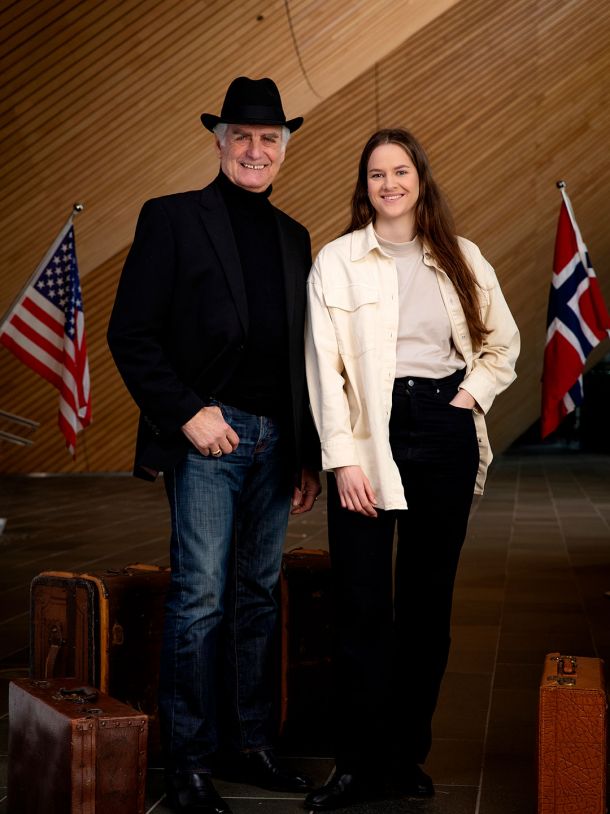
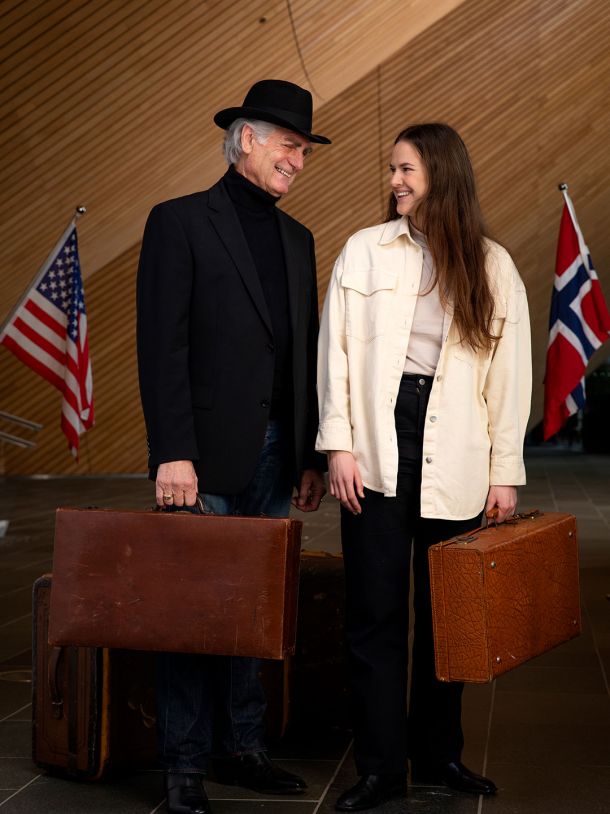
With Kilden staging the musical theaterproduction *Heimanifå*, audiences get a glimpse of what the emigrants from Southern Norway were actually up to “over there.”
"My mom really didn't want me to go to America—it was so far away. But since the alternative was to go to sea, she let me go anyway," chuckles country legend Bjøro Håland with deep, heartfelt laughter.
This winter, he will perform and sing in Kilden major production Heimanifrå – in high heels in June by playwright Rune Belsvik, which is about exactly what he himself has experienced: Emigration to the United States in the mid-20th century. In the play, we meet 18-year-old Inger, played by Ragnhild Meling Enoksen. She leaves her life in a small village in Agder and ends up chasing the American dream in Brooklyn, New York.
– It’s both fun and a little special to be a part of this. After all, I’ve written my own story in this very picture, says Håland, adding that the years “over there” have had a major influence on his life.
At the age of 17, in 1961, he bid farewell to the family farm, Håland, in Nord-Audnedal. He set off for Silokaia in Kristiansand, where the ship bound for America would take him to New York City and everything that awaited him there. His older brother, who was already married and settled in Brooklyn, was ready to put his younger brother up on the couch—until he found a place of his own to live. His uncle and his family weren’t far away either. It didn’t feel strange or scary to go to America, he says.
– There were a lot of us in our family who wanted to live the American dream; you could safely say we had a case of America fever. But that was the case for so many people back then; almost everyone knew someone who had gone there to try their luck.
Researcher and author Siv Ringdal from Lista can confirm this. She wrote the books that Rune Belsvik drew freely upon during the script development, and explains that a great many people from Southern Norway took part in the mass migration to “Junaiten.”
– From the 1890s through the 1960s, the Agder counties actually had the highest emigration rate relative to their population. Lista had a particularly high number of emigrants; by 1920, a third of the population had left.
For many people in Southern Norway, New York was like an extension of their hometown. Mentally, it felt closer to Brooklyn than to Trondheim, and once you made it “across there,” it was common for the emigrants from Southern Norway to help fellow villagers, friends, and acquaintances find work and, hopefully, the path to a better future.

– Emigration from Southern Norway to America has had a profound impact on Agder; it has helped shape who we are, how we live, what we eat, how we speak, and how we identify ourselves.
Important local history
This is precisely one of the main points that theater director Valborg Frøysnes highlights when she explains why Kilden the play. It will run from February 4 February through Easter 2022.
– Most people in Agder have a story about America to tell, about a distant or close relative who has moved across to live the American dream. I think many in the audience will recognize themselves in this and feel a connection to the play, she says.
But she also points out that its historical value is an important factor.
“We also wanted to stage a play that deals with local history, rather than buying and staging a ready-made story from abroad with more peripheral significance. The history of emigration to America is deeply rooted in Agder; it’s a well-known and beloved story that shows just how close we came to the United States. Not only that, but the ship bound for America departed from Silokaia, so we’re staging the play on historic ground,” she says.
Actress Ragnhild Meling Enoksen finds it particularly exciting that the play is based on a true story. She believes it provides a unique starting point for really connecting with the audience. Ragnhild is currently working on learning the Lister dialect and is receiving professional guidance from Professor Martin Skjekkeland.
She was born and raised in Asker herself, and says that until recently she knew very little about the connection between Agder and America.
“But when I landed the lead role as Inger, I talked to my parents about emigration. And it turned out there were stories about America in my family, too,” she laughs.

Music from that period
Music plays a central role in Heimanifrå, and Bjørn Charles Dreyer, a native of Mandal who was born in the United States, is in charge of the music. Theater director Frøysnes thinks it’s especially exciting that country music plays such a prominent role in the production.
– Country music is very popular in rural Norway, and we want to highlight that. There is something heartfelt and wonderfully unpretentious about this music that also deserves a theatrical stage. Now, audiences can look forward to experiencing not only Bjøro Håland’s unique voice, but also other well-known and lesser-known country, blues, and popular music from that era, she says.
Throughout the play, the audience is shown—through both music and acting—how America and the American Dream were woven into the everyday lives of people in Southern Norway in the mid-20th century. Children and young people were socialized into this strong and close relationship with America, Ringdal explains.
– The play depicts a young girl’s dreams and fantasies about the country and life “over there,” but also how her new everyday life did not always turn out as expected. It depicts the people of Southern Norway’s love for America, but also how modern life in the big city of New York challenged the new immigrants’ norms and ideas—both about what was right and wrong, moral and immoral, and what was modern and what was old-fashioned.
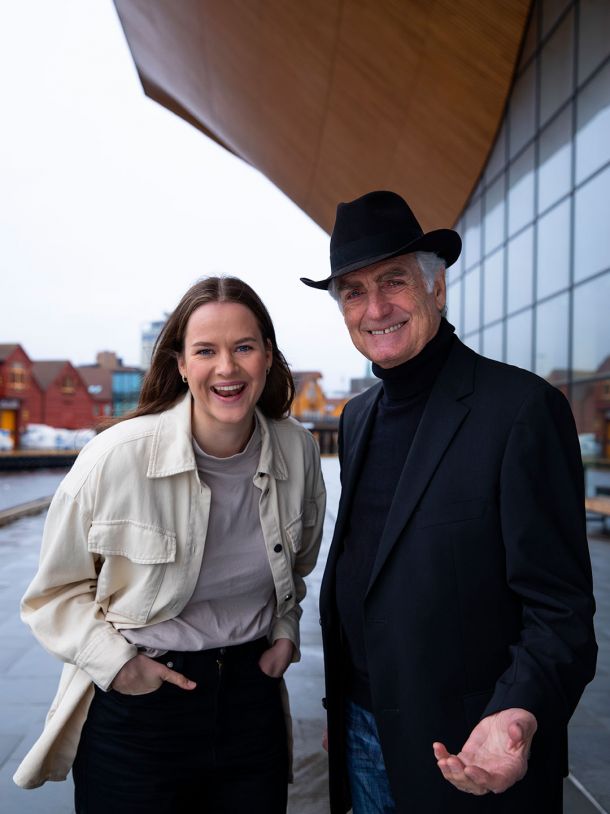
– The play depicts a young girl’s dreams and fantasies about the country and life “over there,” but also how her new everyday life didn’t always turn out as expected.
What was unique about the migrants from Agder at that time was that most of them ended up in the big cities—rather than as farmers on the prairies of the Midwest. According to Ringdal, people from Southern Norway worked primarily as sailors, carpenters, on tugboats, as domestic workers, in factories, and in shops.
– Another distinctive feature is that many people thought they would take a trip to America. They didn’t necessarily intend to stay there permanently—even though many ended up doing just that. They planned to take a trip, earn some money, and have new experiences, and then they would return home.
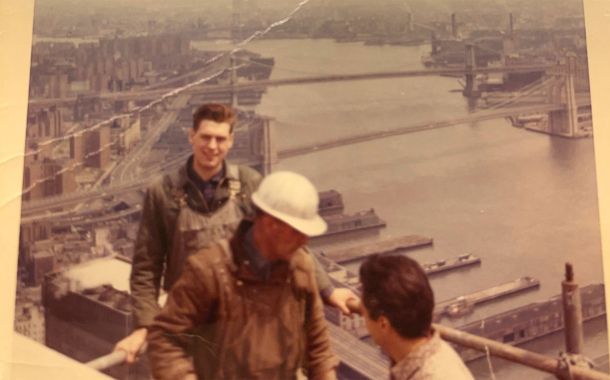
That was also Bjøro Håland’s original plan. He was going to stay for a couple of years, work—and earn enough money to go home and get an education. He ended up staying for nearly six years, working alternately as a carpenter and a construction worker, while also singing in bars.
“It was easy to find a job because there was a huge construction boom in America at the time. I started out as a floor installer, and I actually laid the parquet flooring in Sophia Loren’s bedroom,” he says, describing in detail all the different layers the floor had to consist of to ensure the movie star got a perfect floor.
“Unfortunately, I didn’t get to meet her,” he adds.
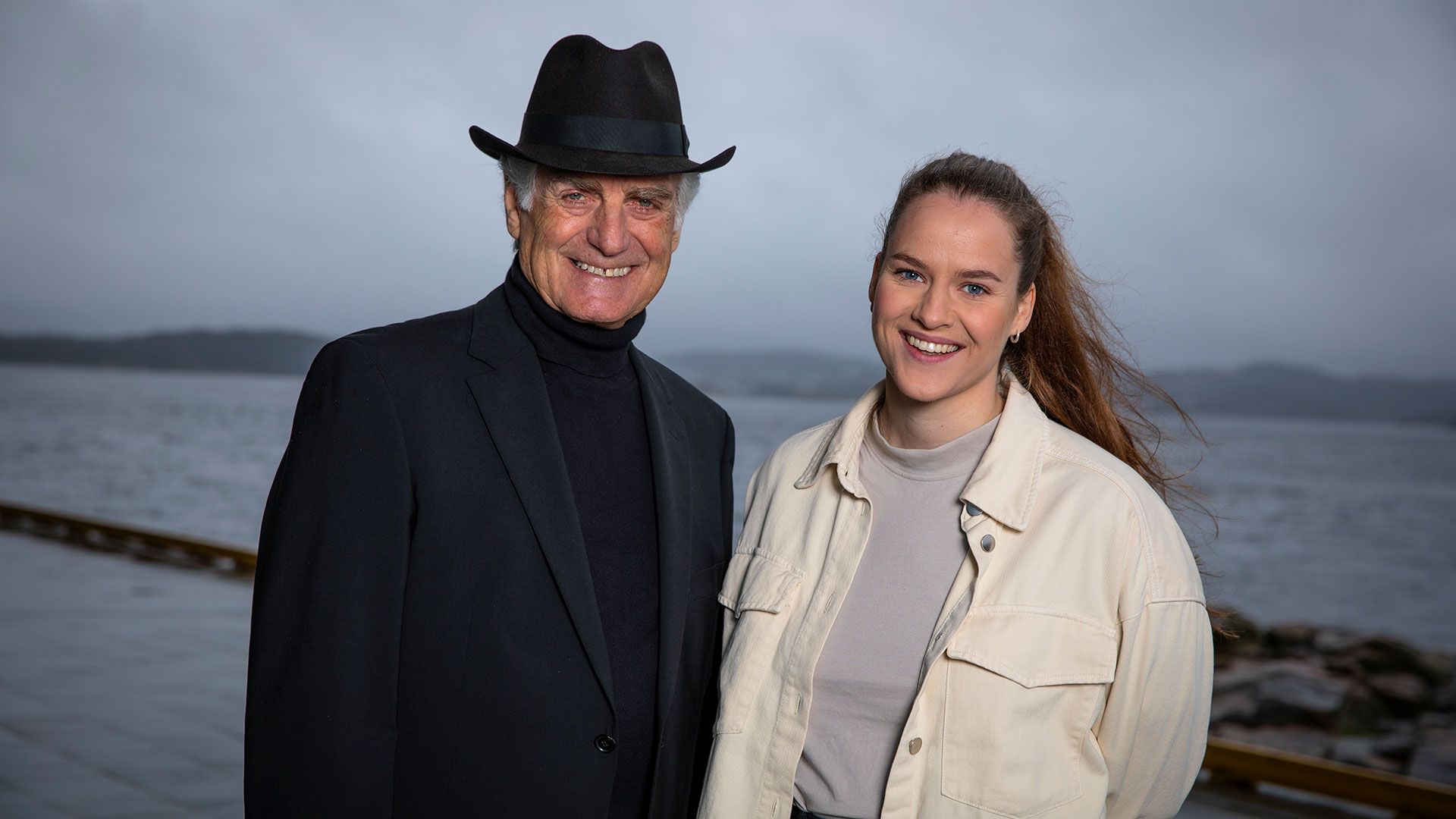
Scaffolder and singer
Håland also tried his hand at being a professional scaffolder, and describes workdays spent climbing up Manhattan’s skyscrapers without any safety equipment whatsoever—except for a silver-colored metal helmet on his head.
“This probably saved my life,” he says, holding up the old helmet he’s kept all these years. Both it and the old carpenter’s hammer are cherished mementos.
“I remember one time I was standing on the scaffolding and something came flying down from above and hit my helmet so hard that it fell off. Without the helmet, it probably wouldn’t have ended well,” says the man who has contributed so much to international cooperation between Norway and the United States—particularly in the field of music—that he has been awarded the title of Knight 1st Class from the Royal Norwegian Order of Merit.
Like other migrant workers from Southern Norway, it wasn’t a given that Håland would return to Norway—and Agder. He met his future wife, Liv, “over there,” and at one point, they might just as easily have stayed as returned home. But they missed Norway so much that they made a conscious decision to move back before they had children and settled into family life.
– One of the last things my mother said was that I shouldn’t even think about getting married over there, because she figured I’d never come back to Norway to live. So on that point, I listened to her. I don’t regret it, but America is still very important to me. I have a lot of friends and family there, so I go back as often as I get the chance.
Text: Christine Gulbrandsen
Photo: Mads Nielsen