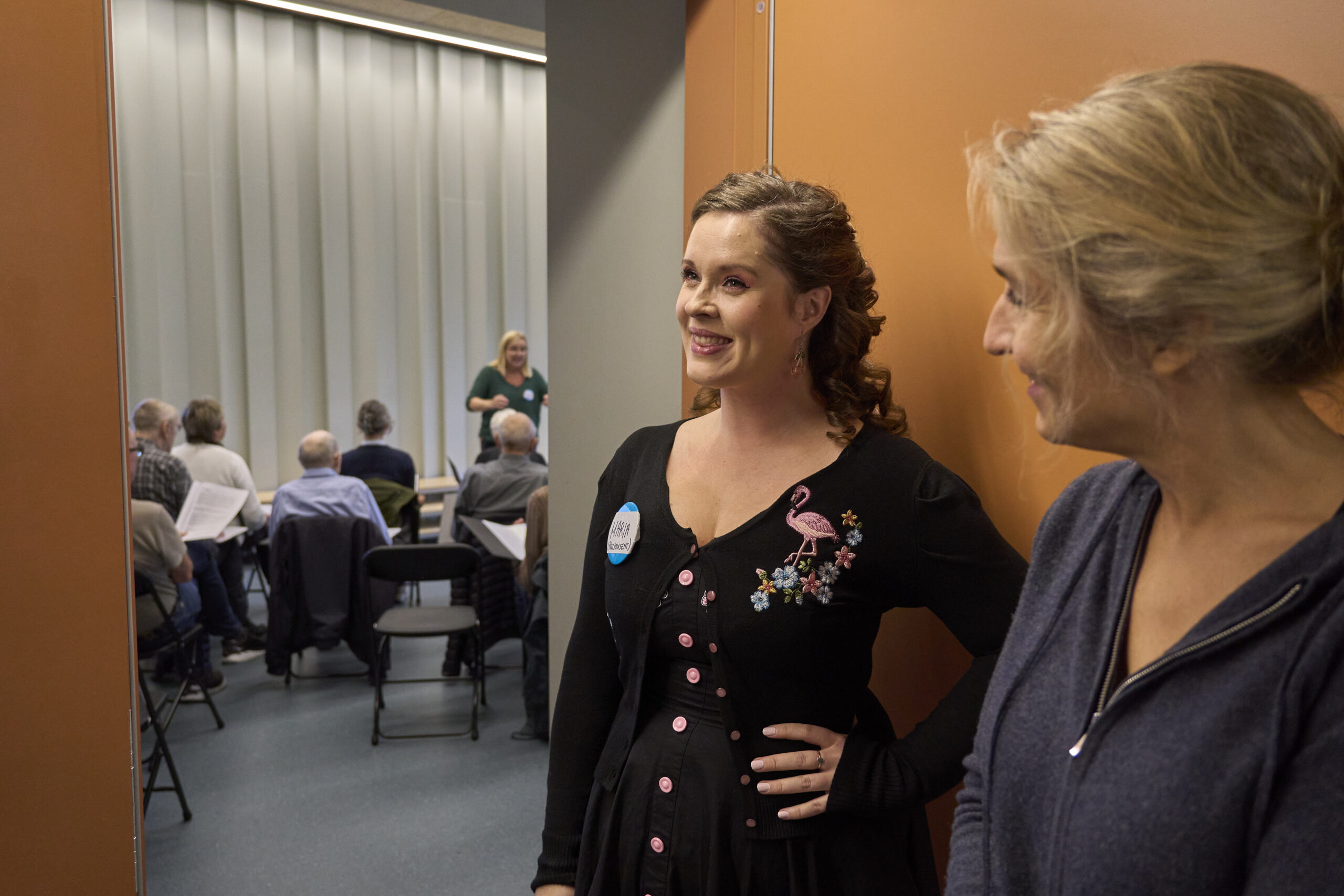
‘- I feel like I have the most important job in the world’
The Gullstrupene Dementia Choir will hold its first concert on October 17
Text & photo: Mikal Vassbotn
This spring, the town’s first dementia choir, Gullstrupene, was formed. Soon, the stage will be set for the choir’s very first concert at Kilden.
Every Monday, the choir members gather at Knuden Cultural School to find joy in singing and in a community designed for people with dementia and their families.
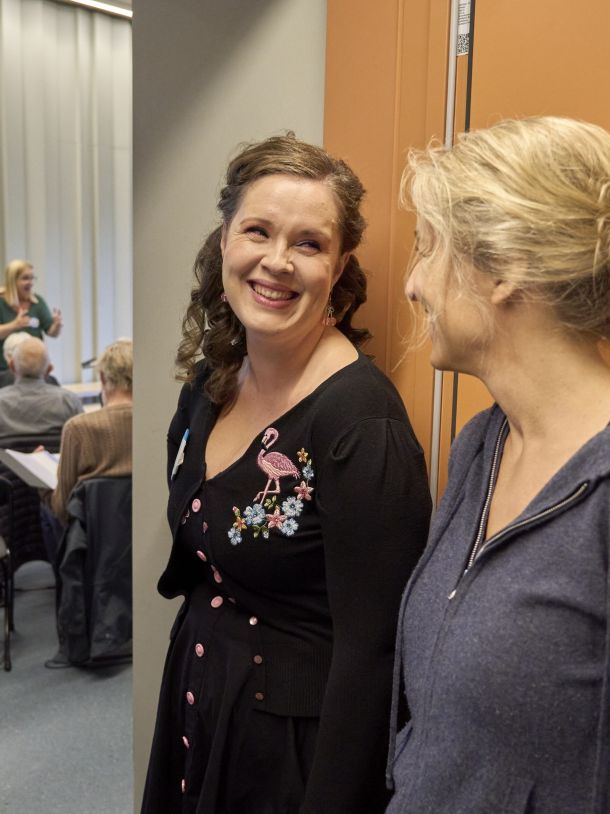
“It’s been a steep learning curve,” chuckles Maria Elise Thorkildsen, who, along with Elisabeth Lindland, is the producer and driving force behind the choir.
“The first few times, we tried to do too much, but we quickly realized that the song has to be the focus,” says Maria. “Now we’ve settled on a format that works well for everyone involved,” she continues.
With the door ajar
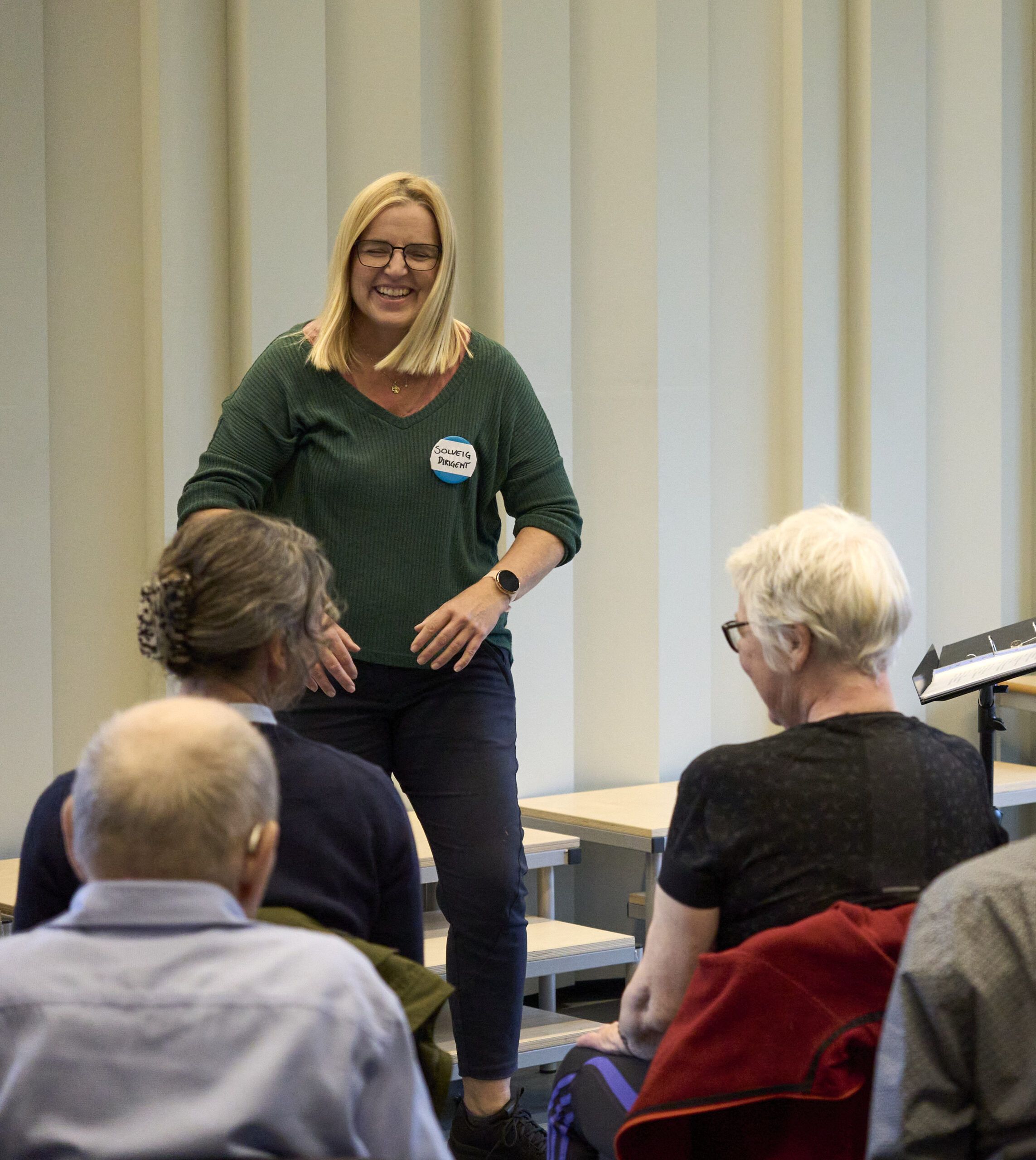
The choir gathers at Knuden’s premises to rehearse. There is lively chatter among the members, who seem like old friends. Solveig, the choir’s conductor, clears her throat, claps her hands, and begins with warm-up exercises that, to the uninitiated, might resemble simple gymnastics exercises, but which are part of the warm-up routine designed to bring out the finest tones from the choir’s fifteen members.
Once the choir has started, Maria sometimes stands with the door ajar to catch a glimpse of the rehearsal.
“I feel like I have the most important job in the world. I get to set the stage for what happens in the rehearsal rooms every single Monday; I often stand there watching while I cry, because it’s so beautiful,” says Maria.
“I feel like I have the most important job in the world. I get to set the stage for what happens in the rehearsal rooms every single Monday; I often stand there watching while I cry, because it’s so beautiful,” says Maria.
Maria explains that the choir has found a sense of inner peace and that the members have become more confident in their roles within the group. There’s great joy in seeing everyone again on Mondays, but for many in the choir, rehearsal could probably have gone on a little longer.
“A lot of people get a little sad when the session is over—that’s probably the biggest compliment we can get,” Maria says with a smile, clearly pleased.
Social exclusion
Elisabeth believes it is important that the program also serves as a meeting place for family members. She has personally experienced a family member developing dementia and has firsthand experience of how the disease affects the family.
“My mother developed Alzheimer’s, and it quickly became clear that there were few places that were adapted for her—and for us as her family,” says Elisabeth.
“As a family member, you slowly but surely see what’s happening, and many people probably feel lonely and excluded, with nowhere to turn, but the residents of Gullstrup have built a community with professionals—something I would have loved to have had when my mother fell ill,” Elisabeth continues.
For many people, it is the music that stays with them the longest. Elisabeth’s mother continued to sing long after she had lost her ability to speak, and she is not alone in this. The link between cultural activities and mental health has become clearer in recent years as more resources have been made available for research in this field.
The EU-funded report “Culture for Health,” released just before Christmas, concludes that “Art and cultural activities are important for promoting good mental health and quality of life among the population, both individually and collectively.”
However, even with scientific backing, many people still associate a stigma with dementia. It can be difficult to admit to oneself—and to others—that one is affected by it. Randi Guri Jessen is married to one of the choir members and talks about the journey toward accepting what is about to happen.
“My husband hadn’t come to terms with his dementia diagnosis when the Gullstrupene choir opened its doors to new members, but since he knew Maria from before, he thought he’d have a chat with her. Shortly after, he wanted to join the choir,” says Randi.
Randi says it was important to her to help her husband understand that joining the choir also meant coming to terms with the diagnosis. “We wrote the application together that very evening,” Randi smiles.
Randi's husband has never sung in a choir before, but they both share an interest in music.
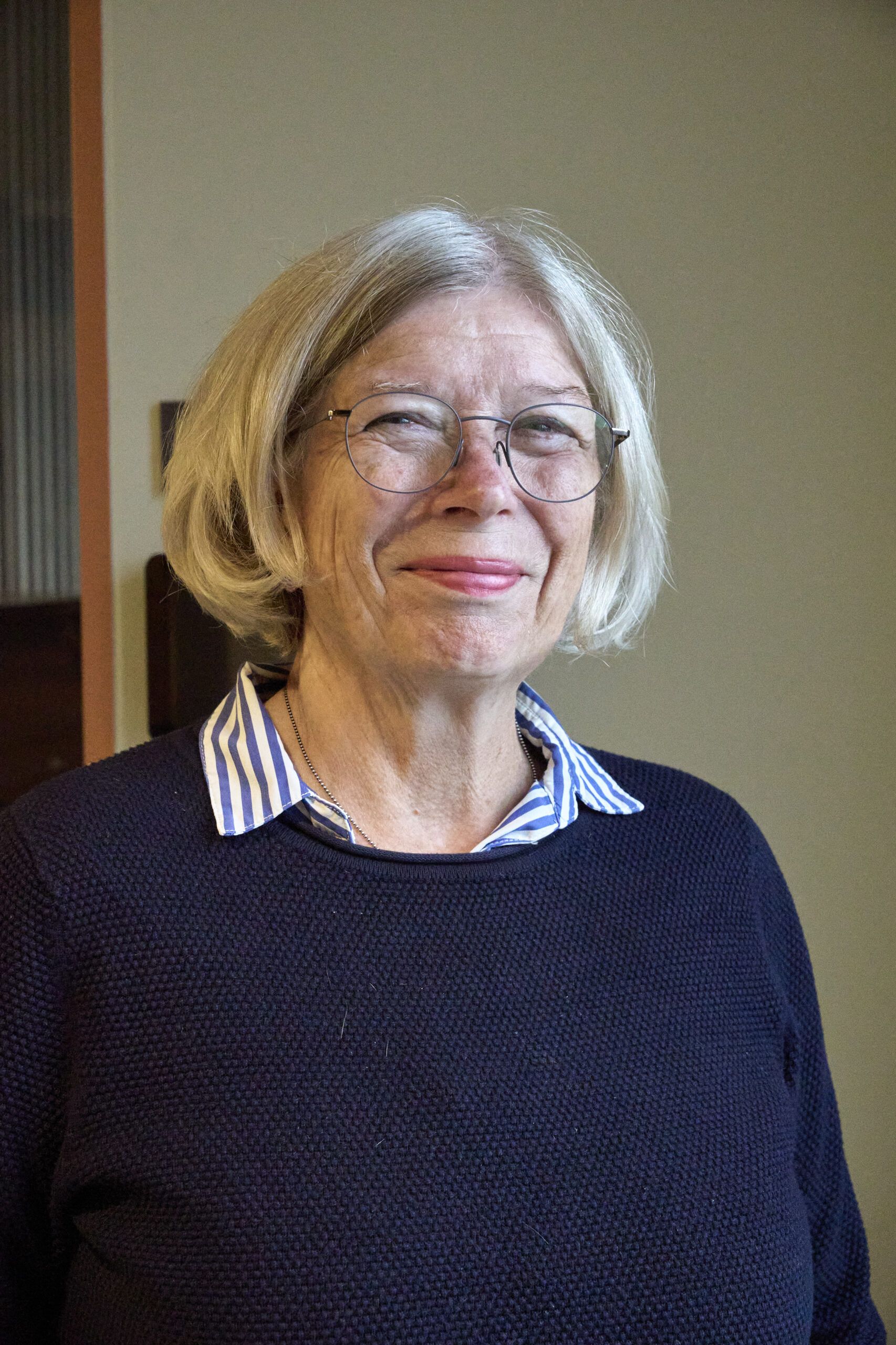
“We share a love of music, and we’ve been avid participants in the city’s cultural offerings. The fact that the choir is now going to give a concert at Kilden both the choir and I, as a family member, Kilden very exciting,” Randi continues.
Monday's practice is coming to an end; familiar notes can be heard drifting down the yellow hallway at Knuden from the room at the end of the corridor.
“This choir is important for family members, too. There aren’t many social settings left for us; we spend a lot of time alone and end up watching a lot of TV. We want to get out and do something,” Randi says firmly.
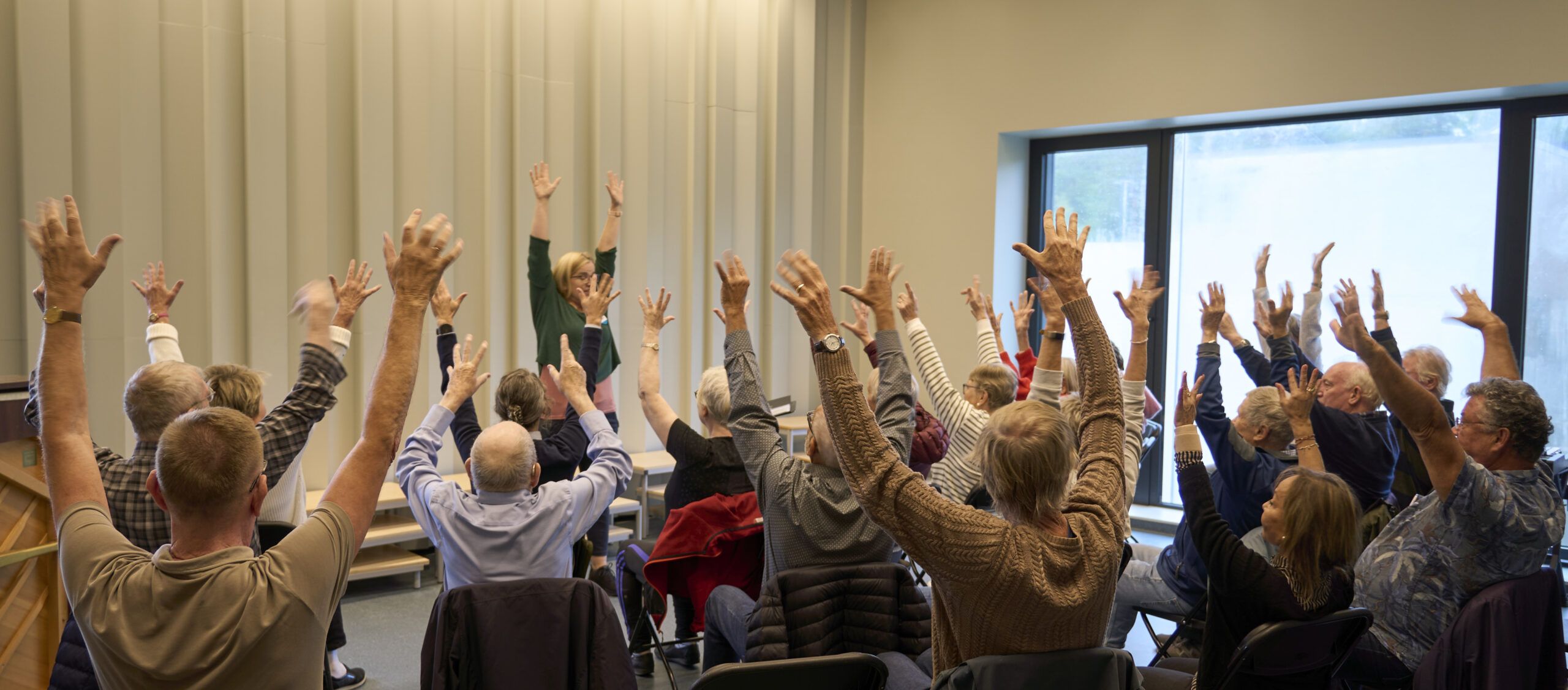
Unfortunately, there aren’t many resources available for families affected by dementia. Randi points out that the support provided by the Gullstrup family helps improve coping skills and quality of life, both for those with dementia and for their families.
“I really hope this is something that can continue for a long time to come,” says Randi before continuing.
“My husband’s eyes light up when he’s rehearsing for the concert on October 17, and I have to say I’m looking forward to it quite a bit myself,” Randi concludes.
The rehearsal at Knuden is over for now; the choir will soon gather again in the lobby at Kilden show what they’ve been practicing since April. Welcome!