Kilden Kristiansand
Kilden Years
There is a before and after Kilden. The building has now stood there for ten years. The number of people who have been inside its glass walls is approaching two million. That’s a lot for a city that not long ago surpassed 100,000 residents. Yet every now and then I meet people who have never been there, and on rare occasions, someone who doesn’t know where it is or what I’m talking about.
Kilden Silokaia. The theater and concert hall. Kristiansand’s outstanding Performing Arts Center. A venue capable of hosting concerts, theater, opera, musicals—every conceivable and inconceivable form of performing arts—and of welcoming guest ensembles and artists who, before Kilden bypass the city because we lacked suitable and sufficiently large spaces.
“I’ve often wondered what Bjørg Wallevik put in the politicians’ coffee that day they decided to build this building,” the building’s first director, Bentein Baardson, has said on several occasions. It’s a lighthearted way of putting it, but it underscores that it was no easy feat to secure approval for such a major investment in the arts and culture.
Despite opposition
Nor was this the case for the Oslo Opera House, the Munch Museum, and the National Museum. Our local controversy over the Kunstsilo project also fits into a long tradition in which culture gradually prevails despite intense opposition.
So rise up in prosperity and happiness, our dear old hometown, with the vibrant colors of the South that we would never trade, with towers and domes reaching high toward the sky.
Here we spent our wonderful childhood days and our happy youth. We wish everyone—women,
men—God’s blessings upon Kristiansand!
Such is the radiance of optimism in Brigadier Musician Adolf Hansen’s more than century-old “Kristiansand Song,” whose opening notes are cast in iron on the grounds of the fire station in Baneheia, where the view of Kvadraturen still draws many onlookers. It is hardly great poetry; the melody is, in fact, much more the work of an artist. Both are signed by brigade musician Hansen.

– While party-loving, music-hungry young people filled the city’s streets and parks, others held prayer meetings out of sincere concern for the city’s welfare.
Life-changing events
Sometimes we see change happen quite suddenly. We talk about a “before” and an “after.” We have a few such turning points in Kristiansand and Agder. The municipal merger in the 1960s is one such event, when the city of Kristiansand and the municipalities of Oddernes, Randesund, and Tveit became a single entity, despite strong opposition. The influx of people from all corners of the world over the past 30–40 years is also a turning point. It has transformed our city and our country, bringing us new ideas, resources, and development. Not without resistance. But before the Chinese restaurant Lum Fong opened on Dronningensgate in 1973, we knew of hardly any food other than meatballs and pork chops with carrots and potatoes, not to mention fried or pickled mackerel with cucumber salad.
The Quart Festival also marks such a turning point. I would venture to say that it played a major role in changing the city’s mindset. Starting in 1992, Kristiansand became an important festival destination for young people. It, too, faced opposition. While party-loving and music-hungry young people filled the city’s streets and parks, others held prayer meetings out of pious concern for the city’s welfare. Despite the opposition: the Quart Festival created a more open city, a more tolerant city, a happier city.
Then came Kilden. I won’t go into the process leading up to it—the architectural competition, the construction period, all that. I had been a culture reporter for Fædrelandsvennen until 2006 and had followed the discussions closely. When Kilden its doors in January 2012, I once again became a freelance reviewer for theater and classical music, and thus had the opportunity to keep up with much of what was going on.
– We’ll get to experience the best and the biggest up close and in person—things we used to watch on TV or had to travel far to see; now they’re right here. (….) A new era has begun. It began yesterday.
A New Era
The opening week was unforgettable. The following is an excerpt from my review of the opening performance: “It has often been said that a new era begins with Kilden. Now it is a fact. Now it’s happening right here in town: Up close and in person, we’ll get to experience the best and the biggest—things we used to see on TV or had to travel far to experience—now it’s right here. (….) the new era has begun. It began yesterday.” The performance offered a taste of what was to come, and the atmosphere, the joy, and the positive reception from a huge audience created a sense of shared optimism.
Track
So what has made the biggest impression? Recently, NRK 1 aired a prime-time documentary called *Spor*. It’s about Kilden unique project where students from KKG, together with the Kristiansand Symphony Orchestra and under professional guidance, create a performance in which young people with various disabilities collaborate with students from the sports program in dance, song, movement, text, and poetry. A performance that moves the audience just as deeply as it creates something beautiful with the participants. I have seen several of these productions, and I believe this is likely one of the most important things to have happened in Kilden’s first ten years.
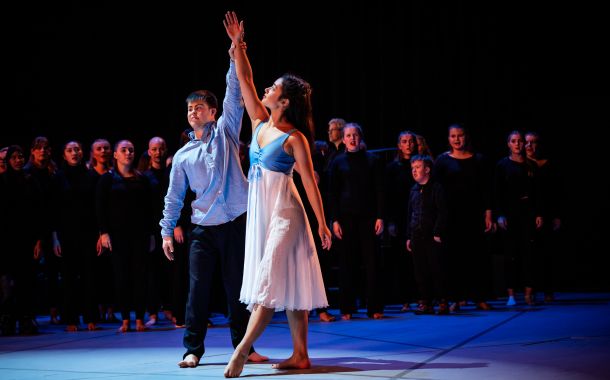
– Imagine being six years old and standing alone in the spotlight on the city’s biggest theater stage, with 500 pairs of eyes fixed on you, blowing bubbles. Or singing. Or performing well-rehearsed yet slightly unsteady dance steps. You show who you are and what you can do, what you’ve learned, and the confidence you’ve gained.
Play of colors
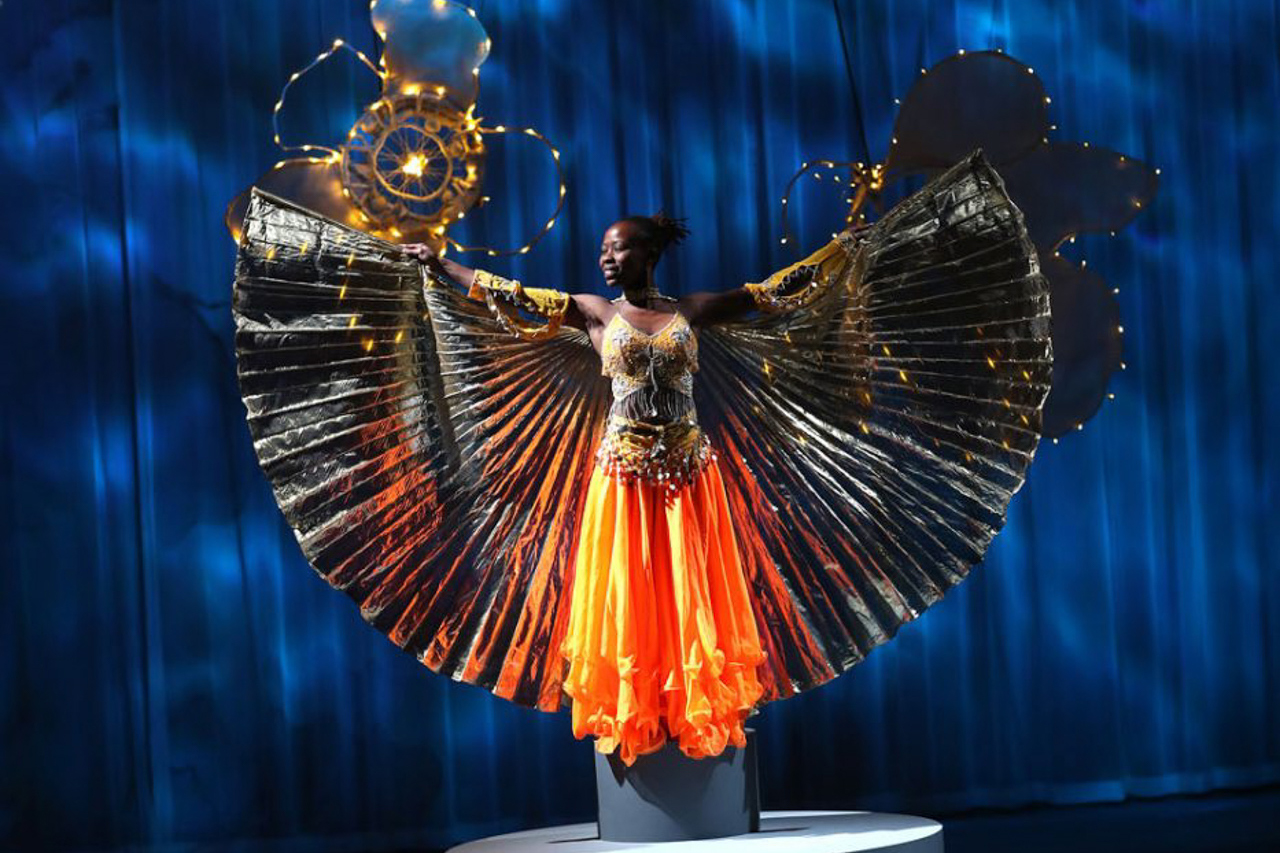
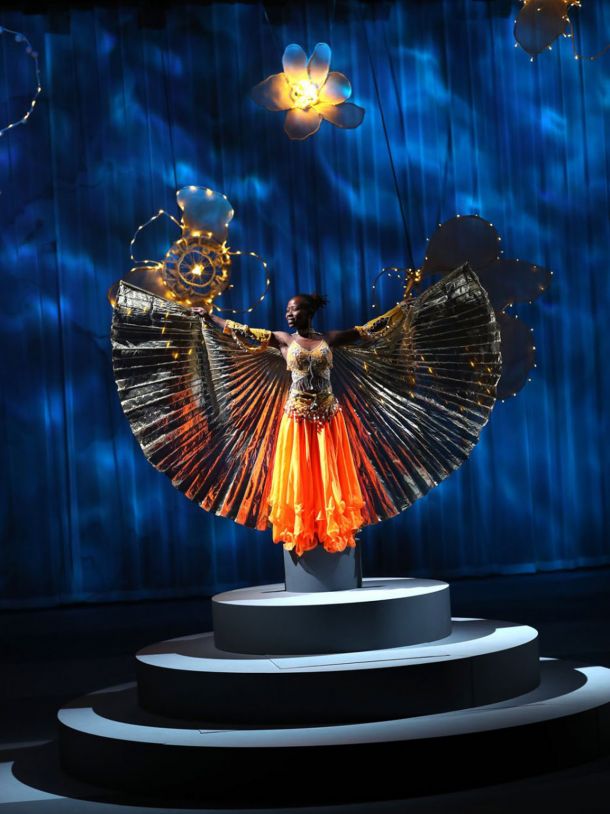
Similarly, the performances known as Fargespill are extremely important and have made a lasting impression. This is about embracing diversity, creating space for collaboration and understanding, and getting to know one another across cultural backgrounds. One hundred children and young people from 30 countries take the stage. Grand achievements go hand in hand with the smaller, simpler ones. In an imaginative way, folk tunes, rhymes and verses, lullabies, and dance songs from many countries are combined.
“Imagine being six years old and standing alone in the spotlight on the city’s biggest theater stage, with 500 pairs of eyes fixed on you, and then you blow bubbles. Or you sing. Or you perform well-rehearsed yet still slightly unsteady dance steps. You show who you are and what you can do, what you’ve learned, and the self-confidence you’ve gained. Alone in the spotlight, yes. But you’re still part of a large community—a colorful one at that. You share the waiting, the rehearsals, the learning; you’re scolded and shushed; your patience is thoroughly tested, and you test the patience of others. The work leading up to the premiere is arduous and perhaps long. But the reward comes in the roar of the audience when it reaches you. As the final notes fade away, the last dance ends, and the lights go out. In the auditorium, young and old stand with tears of joy in their eyes, cheering for someone they know down there on stage, or simply cheering in pure warmth and enthusiasm,” I wrote after one of these performances.
Musical theater
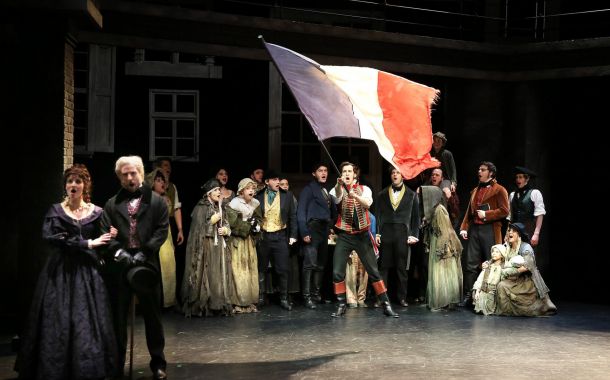
“The very best at Kilden ” was my headline after the premiere of *Les Misérables*. “The boldest” and one of the best, I thought, was *The Book of Mormon*. *West Side Story * and *Evita*—these major musical productions have delighted and moved audiences.
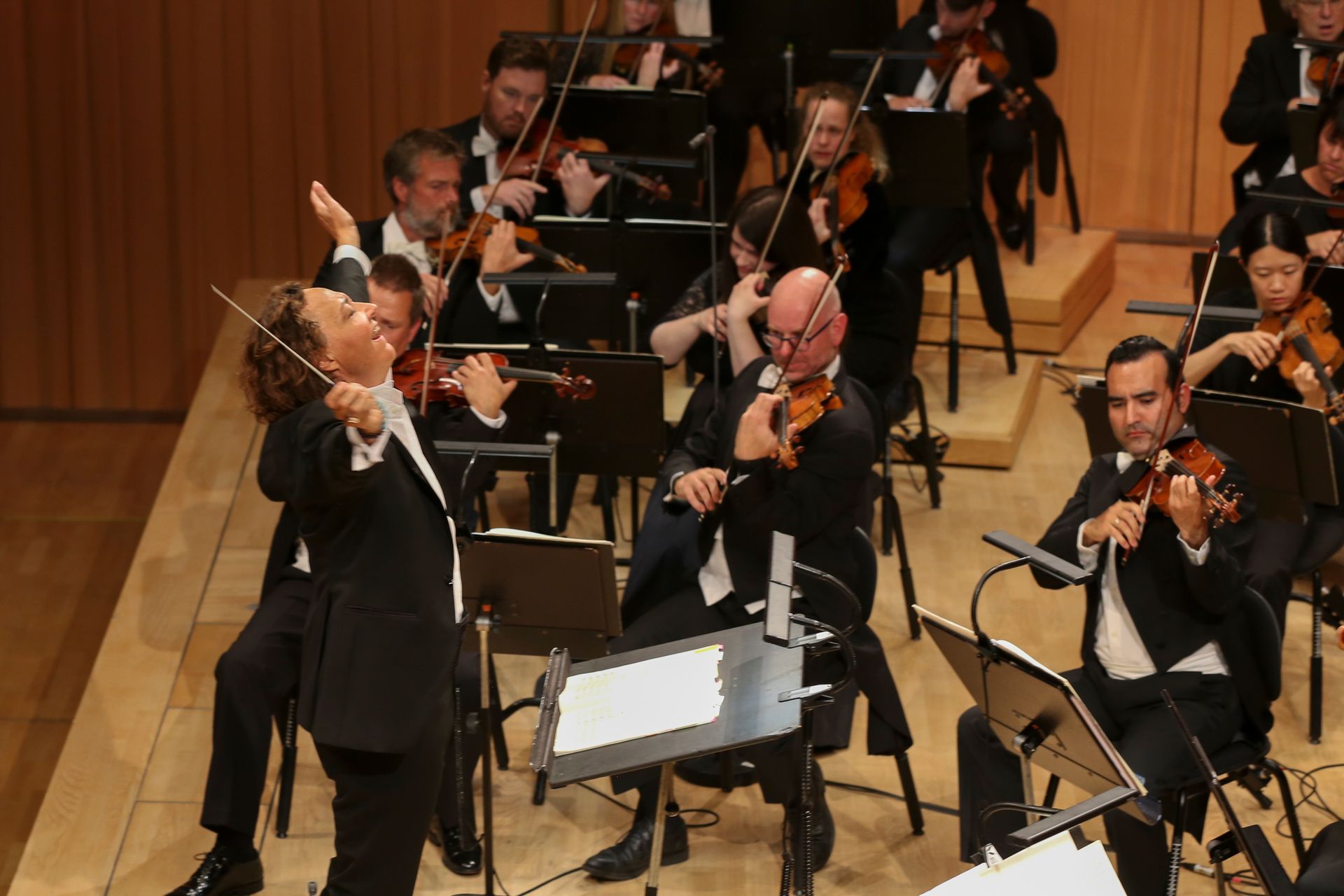
The same goes for large-scale orchestral concerts featuring the city’s own orchestra, as well as guest performances by philharmonic orchestras from Gothenburg, Bergen, and Oslo. Operas like *Carmen*, *The Marriage of Figaro*, and *Tosca* —all of this is possible because we have both an orchestra and a theater under one roof. Incidentally, there hasn’t been quite enough opera in recent years.
Professional training for amateurs
When Kilden’s professional production facilities are made available to the city’s and region’s amateur ensembles, great things happen. Just as they did when Mozart’s Requiem was performed by high school students:
– I’ve seen 101 young people between the ages of 16 and 18 do something they’ll never forget. Those same 101 sang in such a way that I’ll always remember both seeing and hearing them.
What a delight it is to witness a skilled team of teachers, choir directors, rehearsal coaches, and the well-oiled organizational machine at Kilden, along with the symphony orchestra, taking this same group of young people on a journey into the depths of Mozart’s unfathomable soul. They have been given the opportunity to experience some of the finest works ever created in the realm of music.
They have encountered an ancient Latin funeral mass text. And they have been given the opportunity to help recreate this work in a language that belongs to our time. And in Rune Belsvik’s well-crafted new text, inspired by and largely co-written with a group of young people facing significant mental health challenges, the 101 have been able to sing about the same pain, sorrow, suffering, and death, and about the comfort, reassurance, glimmers of light, and hope found in the ancient text. Finally, Latin and Norwegian are blended, with the prayer for the light of the eternal light to shine upon humanity, and the conclusion: “Hope lives in me!”
More than just entertainment
In this way, Kilden becomes Kilden than just a place for entertainment. It becomes a place for growth and expanding one’s horizons, for maturing and reflection, for profound experiences and valuable immersion in some of the most beautiful things humanity has ever created.
This is possible precisely because the theater is a production house and possesses all the expertise needed to help amateurs enter the professional world. Every single employee at Kilden is essential to this effort. There isn’t a single position too many there, as certain politicians have recently claimed.
Something for everyone
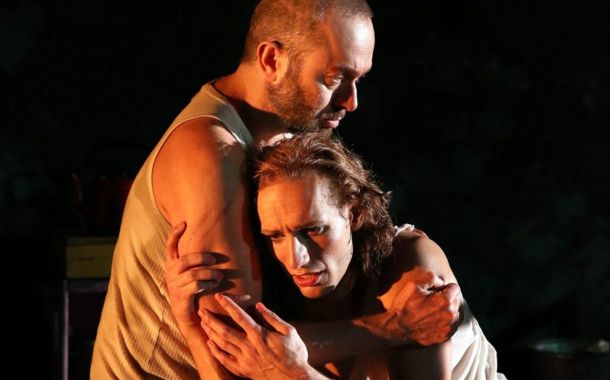
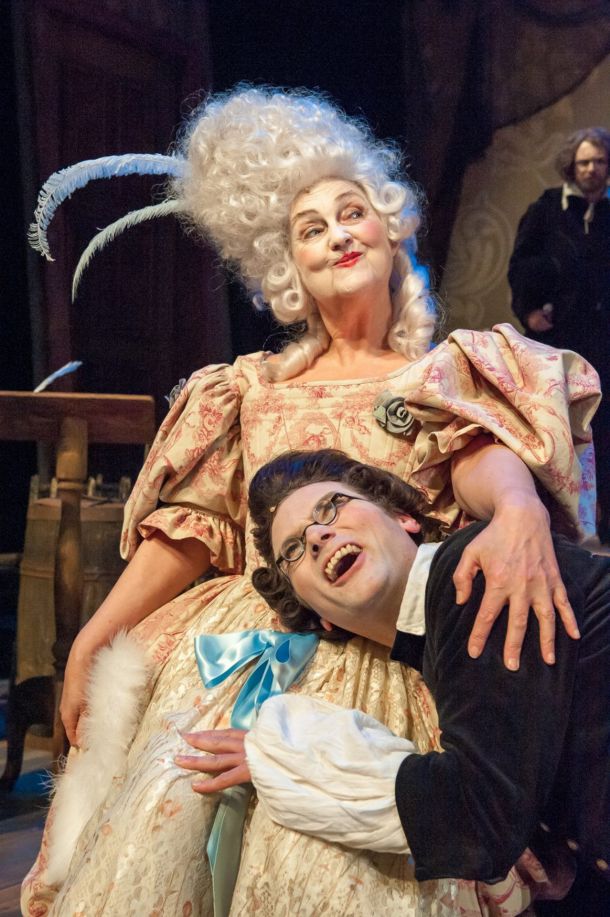
What is the most important thing about Kilden? Diversity, says a good friend of mine. The fact that there is such an incredible variety of things going on. Rock, jazz, country, church music, modern, classical, traditional theater, and experimental theater. Holberg’s *Den stundesløse*, *The Spider Woman’s Kiss*, *The Poet* —a production based on short stories by Kjell Askildsen, *True Love*— loosely based on Camilla Collett—these are some of the great theater experiences at Kilden.
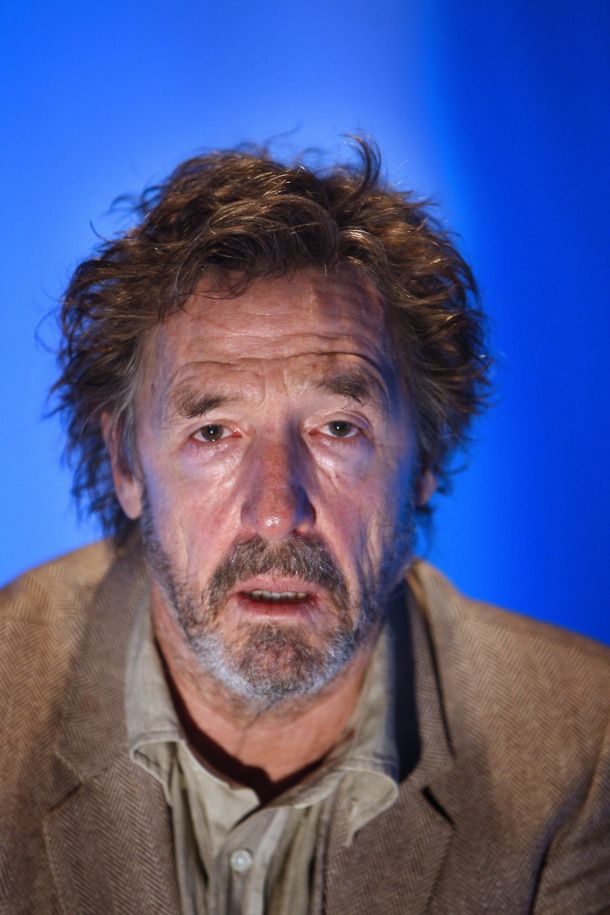
Kilden transformed Kristiansand
SeniorKilden is a fantastic program for the city’s senior citizens, and the fact that it’s a hit is evident from the nearly full house every Tuesday at lunchtime. Sølvstrupene also deserves a mention—it’s the only choir in town with long waiting lists for new members. There is no audition. The only requirement is that you are over 62 years old. The choir has 150 members, and many more want to join, hence the waiting lists.
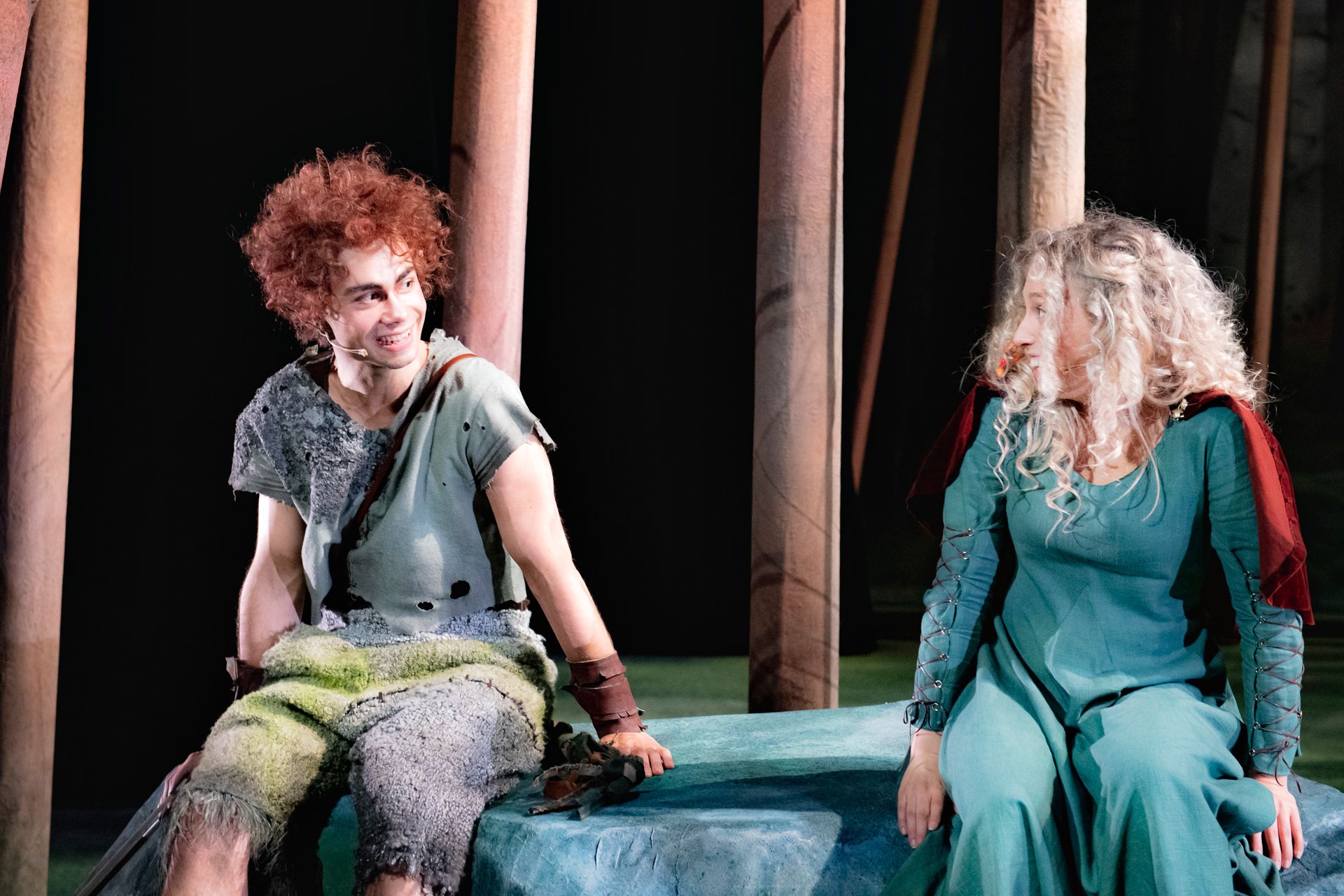
LørdagsKilden for families and children—and especially the big family shows like *Trolle and the Magic Fiddle* and *Alexander Rybak*—still hold a special place in the hearts of many children. I recently met an eight-year-old who knows all the songs by heart!
Kilden transformed Kristiansand. Kilden continue to make a difference as long as the building stands. The city is thriving in “prosperity and happiness.”
Text: Emil Otto Syvertsen
Photos: Kjartan Bjelland, Jacob Buchard, Jon-Petter Thorsen, Heida Gudmundsdottir, and Fredrik Arrf.