Is this your first time at a concert with the symphony orchestra?
Where can I check the schedule?
Prior to most concerts, we offer a free pre-concert talk from 6:40 to 7:00 p.m. in the Concert Bar, featuring guest soloists, conductors, or musicians. On the program page, you’ll find information about the music and the performers, as well as various links related to the concert, including the option to listen to the music on Spotify.
A free program is printed for each concert and is also published on our website about a week before each concert.
Can I eat or drink during the concert?
Located in the lobby is Restaurant Frihavn, where you can enjoy lunch, dinner, or simply a cup of coffee or a glass of wine. The bars serve coffee, mineral water, beer, wine, and a variety of snacks. You can also order drinks here during the break to avoid the lines.
You are allowed to bring drinks from the bar or Restaurant Frihavn into konsertsalen otherwise noted, but we ask that you do not bring food into the hall.
Table reservations: Tel. 902 29 412, email:kilden.
Where should you sit in the hall to get the best view of the concert?
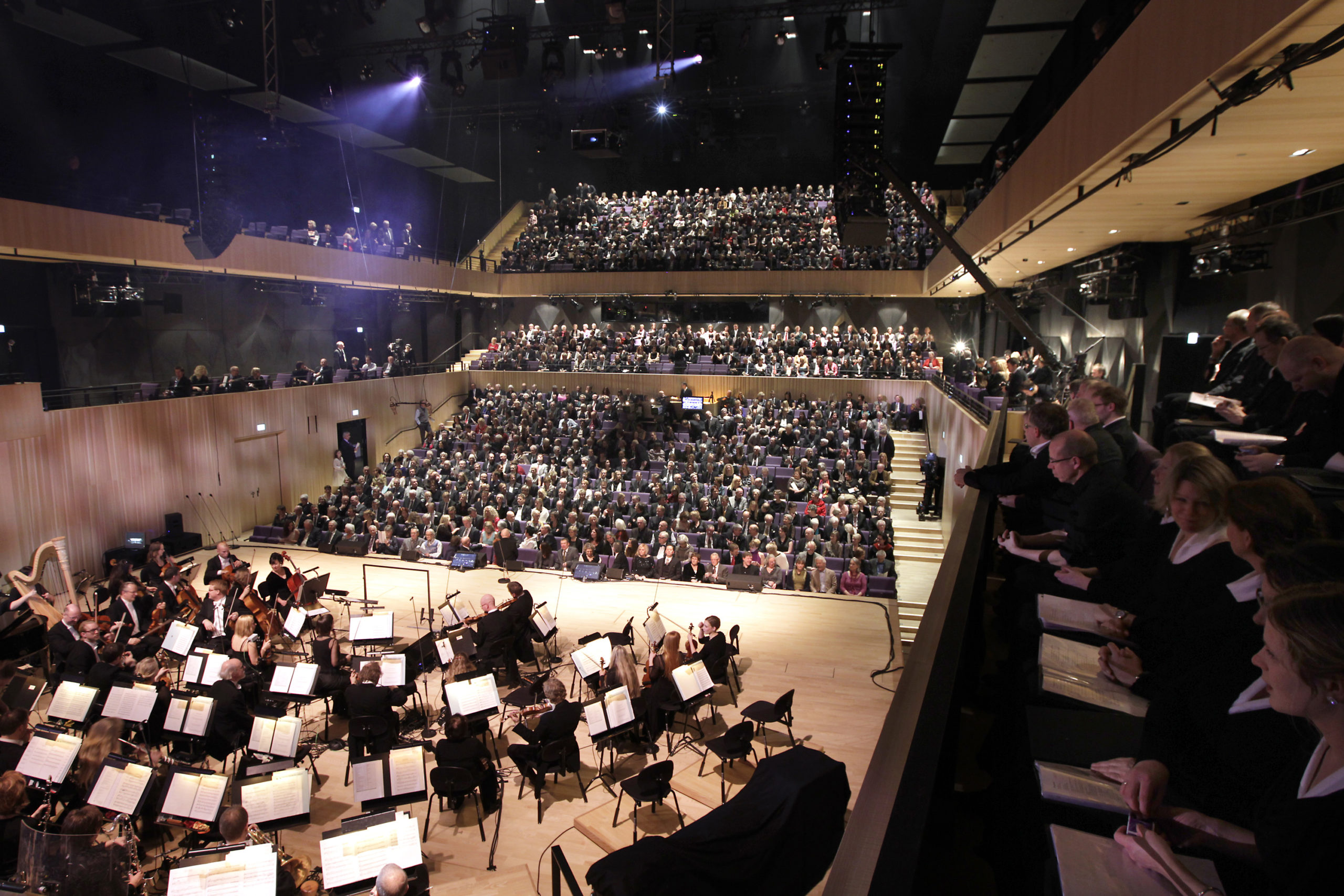
Konsertsalen 1,100 people. The acoustics are excellent—no matter where you sit in the hall.
There are also hearing loops and wheelchair-accessible seating. If you require special accommodations, please check the accessibility information.
If you're not sure where your seat is, just ask one of our ushers.
When can I enter konsertsalen?
The doors to konsertsalen 15 minutes before the concert begins. The orchestra members warm up individually on stage.
Before the concert begins, the concertmaster (leader of the first violins) stands up and signals to the principal oboist to play the tuning note. The various sections check that the tuning is correct. The conductor makes his entrance, and the orchestra welcomes him by standing up. The conductor symbolically greets the orchestra by shaking hands with the concertmaster.
How long does a symphony orchestra concert last?
The concerts usually last about 2 hours, including an intermission. Please check the event’s program page for more information.
Can I take pictures at the concert?
Cell phones should be set to silent mode or, preferably, turned off. The light and sound from cell phones are very disruptive to other audience members.
Photography and video recording are not permitted during the concert.
What should I wear to a concert?
There is no dress code for classical concerts. – Just come as you are!
When should you clap during a symphony orchestra concert?
Many of the pieces performed consist of several parts, or “movements,” as they are called. Over the course of many centuries, a tradition has developed whereby there is silence between movements, and applause is reserved until the entire piece has been performed.
This isn’t about etiquette or snobbery, but simply about maintaining a certain mood so that the musical experience is more intense. The silence between movements enhances the atmosphere, creates a pleasant sense of wholeness, and makes it easier to lose oneself in the music.