SEPARATE BUT EQUAL
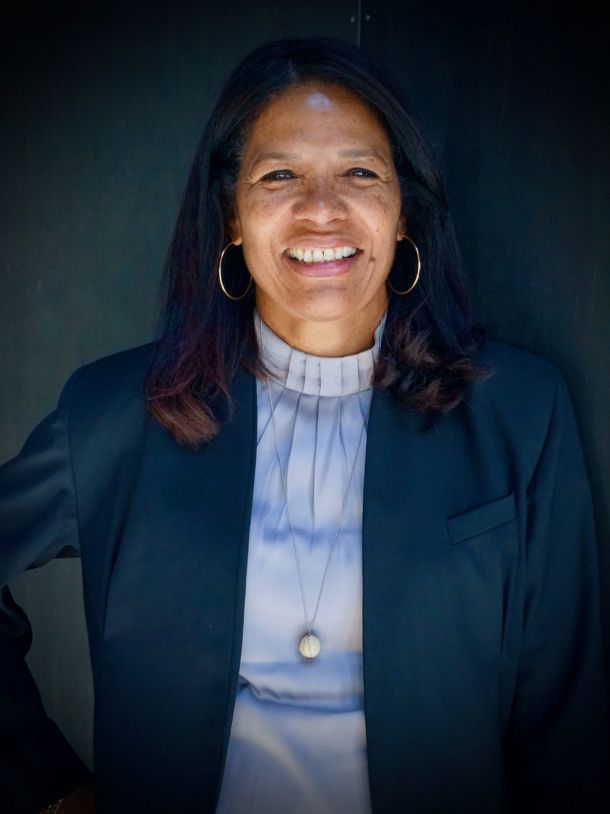
This text was written by Lisa Cooper and her father, Glennon Cooper. On March 23, Lisa Cooper will give a talk titled “The Dream of a Just America”in the Kilden foyer, in connection with the performance *Heimanifrå – på høge hæle i Junaiten*, in which Inger travels from Agder to America and encounters racism for the first time.
The American civil rights movement that fought against segregation and racial discrimination is one of the most important movements of our lifetime.
Before the civil rights movement took hold around 1955, African Americans were systematically oppressed and robbed of basic rights, denied their pride and excluded from the American dream. This was despite the abolition of slavery in 1865. The main weapon in the fight for justice was the non-violent protests led by Martin Luther King Jr.
A number of the civil rights advocates were lawyers, and it was precisely in court and through changes to the law that they believed they could have the greatest impact and that justice could prevail.
The main goal was to change the legislation so that equal rights would apply to all citizens, i.e. by overturning the Supreme Court's decision of 1896, the so-called Plessy v. Ferguson, which allowed separate but equal, i.e. equal treatment, but separately.
This legislation was enforced through what were called Jim Crow laws that required segregated public schools for whites and blacks, segregated public restrooms, public swimming pools, segregated sections on buses and a host of other facilities and public services. This permeated the entire community.
In 1954, a window opened when the Supreme Court ruled in Brown v. Board of Education of Topeka that racial segregation in public schools was unconstitutional. Although this ruling only applied to the school, it was an indication that segregation in other public facilities would also be unconstitutional and overrule Plessy v. Ferguson which allowed separate but equal.
On a hot August evening in 1955, 14-year-old Emmett Till allegedly whistled at a white woman. A few days later, the teenager was attacked and brutally murdered by the white woman's husband and brother-in-law, who was later acquitted by an all-white jury. On a cold December day in 1955, civil rights activist Rosa Parks refused to give up her bus seat to a white man. Rosa Parks knew what she was doing. With this seemingly simple act, Parks challenged authority itself.
The African-American woman was arrested and imprisoned, sparking huge protests led by Martin Luther King Jr. in the form of a bus boycott that almost destroyed the local bus companies. As a result, the Supreme Court ruled that bus seat segregation was also unconstitutional.
These two events have been seen as a catalyst for the next step in the civil rights movement. The fight for freedom continued with a series of events leading up to Martin Luther King Jr.'s world-famous " I have a dream" speech in Washington. The year was 1963 and I was one year old.
This was a movement that focused on the enormous scale of human rights violations, abuses and widespread discrimination within the labor market. The fight paid off. The following year, the Civil Rights Act was passed. This required the government to prohibit racial discrimination in employment, in voting and in the use of public services and facilities. This was a great victory for the civil rights movement, a victory that had cost many lives along the way.
The situation of African Americans in New York in the 50s and 60s
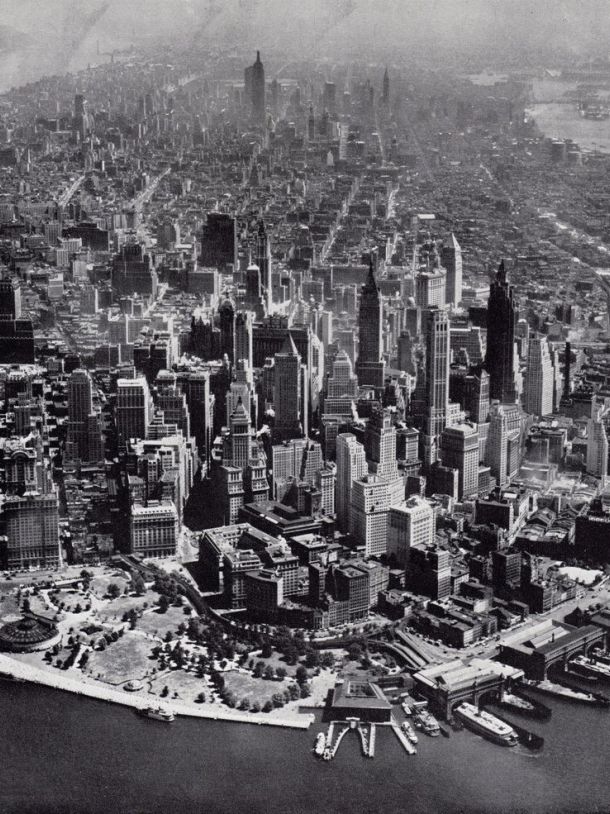
Despite legislative victories, the divide between whites and blacks continued. New York was home to the largest African-American population in the United States, and our presence and right to work was accepted without fear of daily lynchings or widespread violence. Yet we were far from being treated equally. Nevertheless, a strong culture, an intellectual and literary community, a vibrant music scene and safe neighborhoods emerged for African-American families in New York.
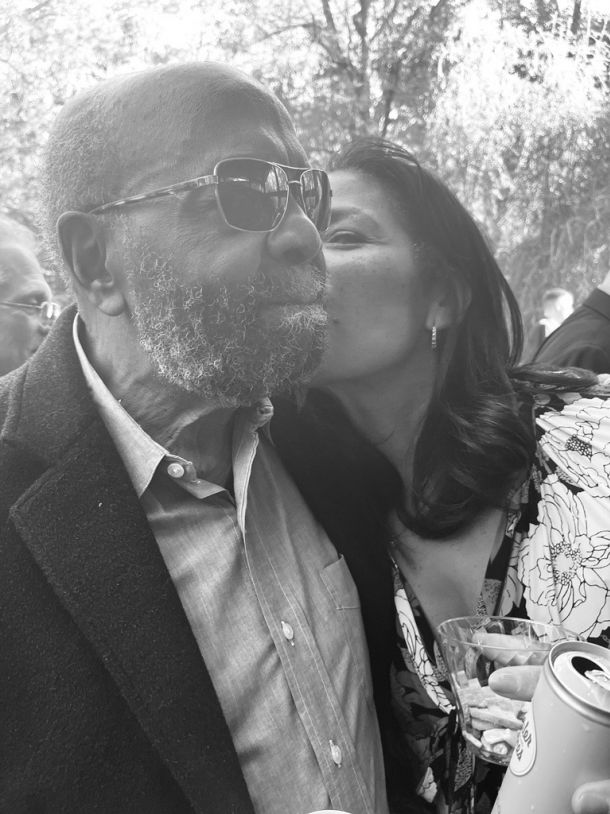
My father tells in his own words about New York at this time
My experience as an African American from Harlem was in many ways quite similar to that of other minorities in the other boroughs such as Manhattan, Brooklyn, The Bronx and Queens. Staten Island, however, was an exception. Even from my earliest memories, I remember that everyone knew that minorities were not welcome on Staten Island. I recall a number of racist confrontations, even race riots. Staten Island was the only borough that wasn't part of the subway system because it's an island. From my youth, I remember the long subway rides from one side of Brooklyn to the other, and trips to Riis Park Beach in the Rockaways during the hot summer months.
Many people lived in Brooklyn and worked in Manhattan, or lived in Manhattan and worked in the Bronx, Queens or Brooklyn. It was more or less accepted that blacks and minorities could reside in close proximity to whites virtually all over Manhattan. Many worked downtown.
There were also a number of entertainment options aimed at minorities. Broadway shows, movies and big band concerts at the Paramount Theater were also accessible and popular among the minority population. At the same time, we were always aware that the majority of the audience was white, and we had to behave as nicely as we could.
Some of my fondest memories are when my older sister would take me to a big band concert at the Palace Theater or the Roxy Theater. We also went to shows at the Apollo Theater on 125th Street in Harlem, just a stone's throw from where we lived on 138th Street. Here we could be ourselves, completely and utterly, because here it was a black pulicum. We felt free.
Fair housing policy was a major issue among minorities in New York. No matter how recognized, how high status or income you had, blacks were discriminated against in the housing market.
One of many examples is when the Metropolitan Insurance Company started a housing project on the lower east side of Manhattan that was intended for middle-income families. It was named Stuyvesant Town and quickly became popular with white buyers. Blacks and Hispanics were not welcome. But Met-Life knew what to do.
They built a similar one in Harlem. Known as the Riverton, it became very popular with African Americans when it opened in 1948. These were state-of-the-art apartments with an elevator and buzz-in security. Only people with good and stable finances were accepted. They ranged from celebrities, doctors, lawyers, civil servants, police officers and train drivers. My own father (Lisa's grandfather), who had worked for 40 years in the US Postal Service, expressed his interest as early as 1948. He was turned down because he refused to pay $300 in what was called a favorable review fee. But in 1956 we bought a two-bedroom apartment and moved into 2190 Madison Avenue, Riverton, NYC.
For those who will see, or have seen, the performance Heimanifrå - på høge hæle i Junaiten, we hope this text can contribute to a greater understanding of the struggle and context in which black Americans lived in the 50s and 60s. And with that in mind, make some reflections and ask the question - how far have we really come?
Lovingly prepared by Lisa Cooper and her dear father, Glennon L Cooper
LISA COOPER grew up in Brooklyn, New York and now lives in Norway. She is the founder and CEO of Catalysts and Catalysts Technologies, which works with mentoring, diversity and diversity management. She holds a number of board positions, including chair of the board at the Norwegian School of Architecture and Design.
GLENNON COOPER grew up in Harlem, New York. Today he is retired after working 31 years as a DEA agent, ending his career as No. 3 at the top of the DEA (Drug Enforcement Administration) hierarchy. He was also the head of security for the National Football League.