The Role of Theater in Ancient Greece
By Robert Emil Berge,
Postdoctoral researcher at MF University College
The Role of Theater in Ancient Greece
Every year at the end of March, there was a huge public festival in ancient Athens.
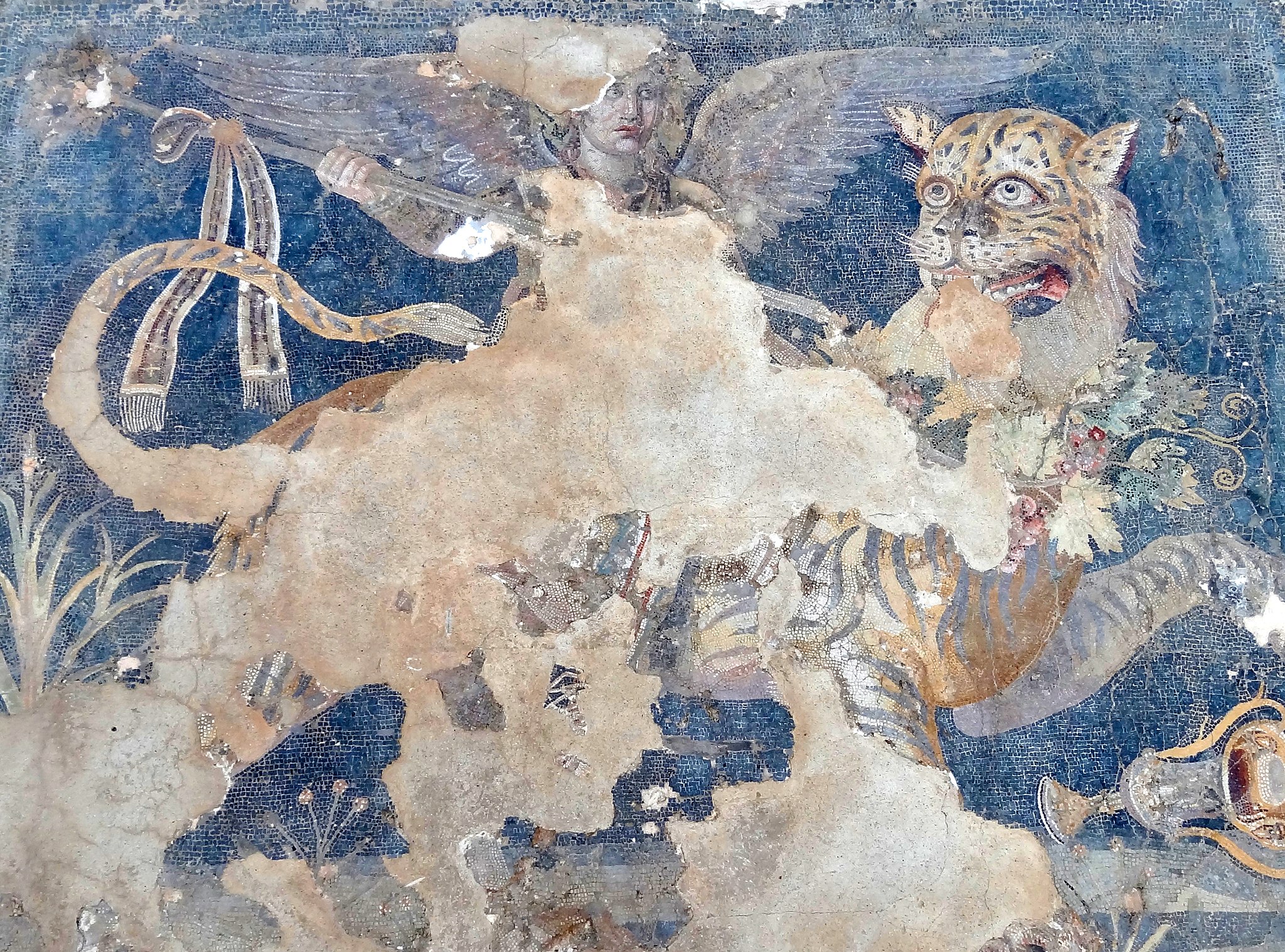
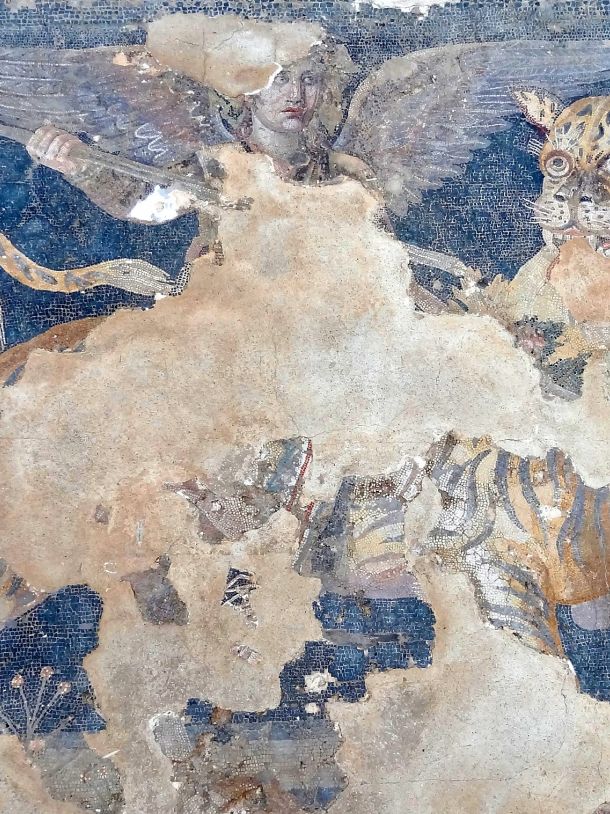
For five days straight, the Dionysia festival was celebrated with grand processions, hundreds of bull sacrifices, choral dances, and, not least, drama competitions. The entire population took part, feasting on food, wine, and extravagant entertainment. It even happened that the prisons were opened so that the inmates could attend the theater. The Theater of Dionysus in Athens, located just below the Acropolis, could seat around 10,000 spectators.
We know that Greek drama was performed throughout the Greek world, from Libya to the Black Sea, over a period of about 700 years, from the 5th century B.C.E. at least until the 2nd century C.E. Nevertheless, only plays written for the drama festivals in Athens have survived, the vast majority from Athens’ golden age in the 5th century BC. It is quite clear that the art of theater in Athens attained a very special status, and that it is closely linked to the development of Athenian democracy and to Athens’ role as a great power.
The old aristocratic clans
In the 6th and 5th centuries B.C., conflicts arose between the ancient aristocratic clans—which had long controlled most of Athens—poor farmers burdened by debt, and citizens who had grown wealthy through increased trade. The monarchy, which was supported by the aristocracy, was replaced by tyrants who were populist autocrats. One of these was Peisistratos. He gained support, among other things, by confiscating the land of the rich and giving it to the poor. In addition, he established several festivals, one of which was the Dionysia festival, held for the first time in 534 BC. The cult of Dionysus was very popular among the people and had a leveling effect, since it was open to everyone—a fact that served the tyrant’s interests.
Several decades later, after the most important democratic reforms had been introduced in 508 B.C., the Dionysia festival continued to serve as an equally important political instrument. Since all major decisions were to be made by the entire people, it was essential to maintain a strong sense of community. In the theater, difficult conflicts and issues could be brought to life in an artistic way that fostered unity rather than discord. In comedies, it was also permitted to ridicule political leaders and other figures of authority, allowing people to vent their frustrations without actual uprisings breaking out. Democracy itself is a recurring theme in both tragedies and comedies, even if it is not necessarily the main theme. This also applies to Antigone and King Oedipus (Oedipus the Tyrant (in Greek).

– Democracy itself is a recurring theme
in both tragedies and comedies
After the Greeks defeated Persia in the Persian Wars in 479 B.C., Athens became the leader of a large alliance of Greek city-states. Both the spoils of war and taxes from its allies brought Athens immense wealth. These laid the foundation for what we call the Athenian Golden Age, during which architecture, art, philosophy, historiography, and drama were developed that have influenced all of Western culture to this day. The drama festival was a perfect opportunity for Athens to demonstrate that the city was not only an economic and military superpower, but that it was also culturally superior. The Dionysia festival was held just as ships from allied city-states arrived to pay their taxes. Thus, in addition to the local audience, the theater was filled with visitors from large parts of the Greek world.
A distinctive feature of ancient Greek culture was that almost everything they did was a competition. This also applied to the art of theater. The festival program likely varied somewhat from year to year, but it may have unfolded as follows: On the first day, there were dithyrambic competitions. Athens was divided into ten phylae, a new democratic organization of the people based on geography rather than clan affiliation. From each of these came two dithyrambic choirs, one consisting of fifty men and one of fifty young boys. These competed against each other by singing a poetic text while performing an intricate choreography.
The next three days were set aside for the tragedy competition. Day by day, three tragedy poets presented three tragedies and one satyr play each. The satyr play was a lighthearted and burlesque performance, which served as a fitting conclusion after three serious tragedies. On the final day, five comedy poets presented one comedy each. All the plays were new and had never been performed before. It was not until Athens’ golden age had ended in the early 4th century BCE that it became common to perform old plays from the good old days.


It was, of course, a great honor for the poets, actors, and choir members alike if their entry won the competition. But it was at least as important for the choir patrons. These were wealthy citizens appointed by the city to finance their respective choirs. They had no choice but to bear this expense, but for most, it was likely both an honor and strategically important. Influential politicians could constantly boast in their speeches that they had contributed as sponsors of drama. But for this to work, they obviously couldn’t be too frugal with the budget for costumes, masks, and everything else that made the performances grand.
No other art form has had a greater influence on Western culture throughout history than Greek drama. It may seem strange that a tradition so deeply politicized could produce works of such high quality that they have continued to move and engage audiences and readers, generation after generation, right up to the present day. One explanation for this may be that drama sprang from an ancient and rich poetic tradition, and every Greek likely possessed a well-developed critical sense when it came to poetry. If one presented half-baked ideas and propaganda, one simply would not be able to compete with the great poets. No matter how much the theater served the existing order, the audience expected groundbreaking ideas, formulated and presented with the very highest quality.
Greek Tragedy Oedipus/Antigone is currently being performed atperforming arts centre Kilden performing arts centre October 4.