The History of the Theater
For 20 years, Inger Johanne and Knut Mæsel have made a success of the Rusletur books that deal with our own local history. In 2022, the couple wrote a longer text about the history of the theater on the occasion of Kilden's 10th anniversary. We have been lucky enough to be allowed to publish the text in its entirety with pictures here on Kilden 's pages.
Thanks to Inger Johanne and Knut for a thorough and well-written article about the history of theater in this city.
THE HISTORY OF THEATER IN KRISTIANSAND
FROM THAULOW'S HOUSE TO KILDEN
In 2022, it will be ten years since the city's magnificent main venue Kilden Theatre and Concert Hall was opened. But our city has a long and colorful theater history, and it goes hand in hand with the history of Det Dramatiske Selskab.
The old amateur theater company provided the city with theater buildings from 1807 until the "old theater" was demolished in 1966. That's why it's almost impossible to talk about one without touching on the other.
Text: Inger Johanne and Knut Mæsel
Photo: The Rusletur Writers' Photo Archive
THAULOWS HOUSE
Østre Strandgate 1
In his speech at the opening of Kristiansand Teater in 1976, editor Johs Seland said that already when Ludvig Holberg stayed in Kristiansand in 1705-06, at certain times of the year, especially around Christmas, the people of Kristiansand performed a kind of popular play called spillegilder. Gilder because they were always associated with refreshments.
Pietism arrived in the middle of the 18th century, and the joy of acting disappeared. But with the rococo era, the sense of theater returned. And as Kristiansand was conveniently located for cultural impulses from the south, the inhabitants experienced the arrival of dilettante comedy through a private theater company in the 1760s.
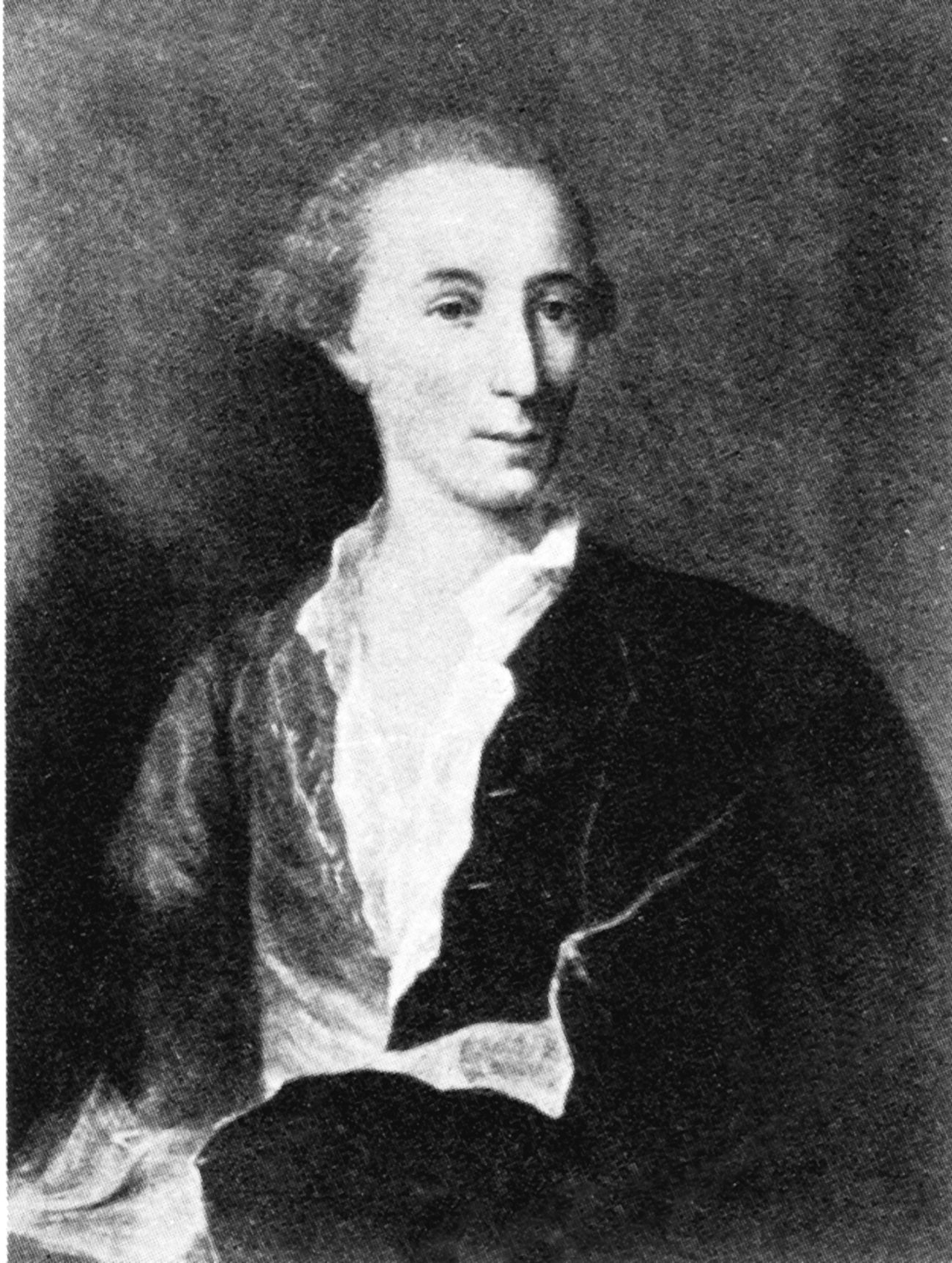
Henrik Arnold Thaulow (1722-99) was an important driving force in the city's cultural life at the end of the 18th century. He was one of the initiators of the establishment of both the Dramatic Society and the Musical Society in Kristiansand.
On a December day in 1787, Det Dramatiske Selskab, the city's oldest living cultural institution, was born. Henrik Arnold Thaulow, who in 1763 had been hired as town and city hall clerk in Kristiansand, was one of the initiators.
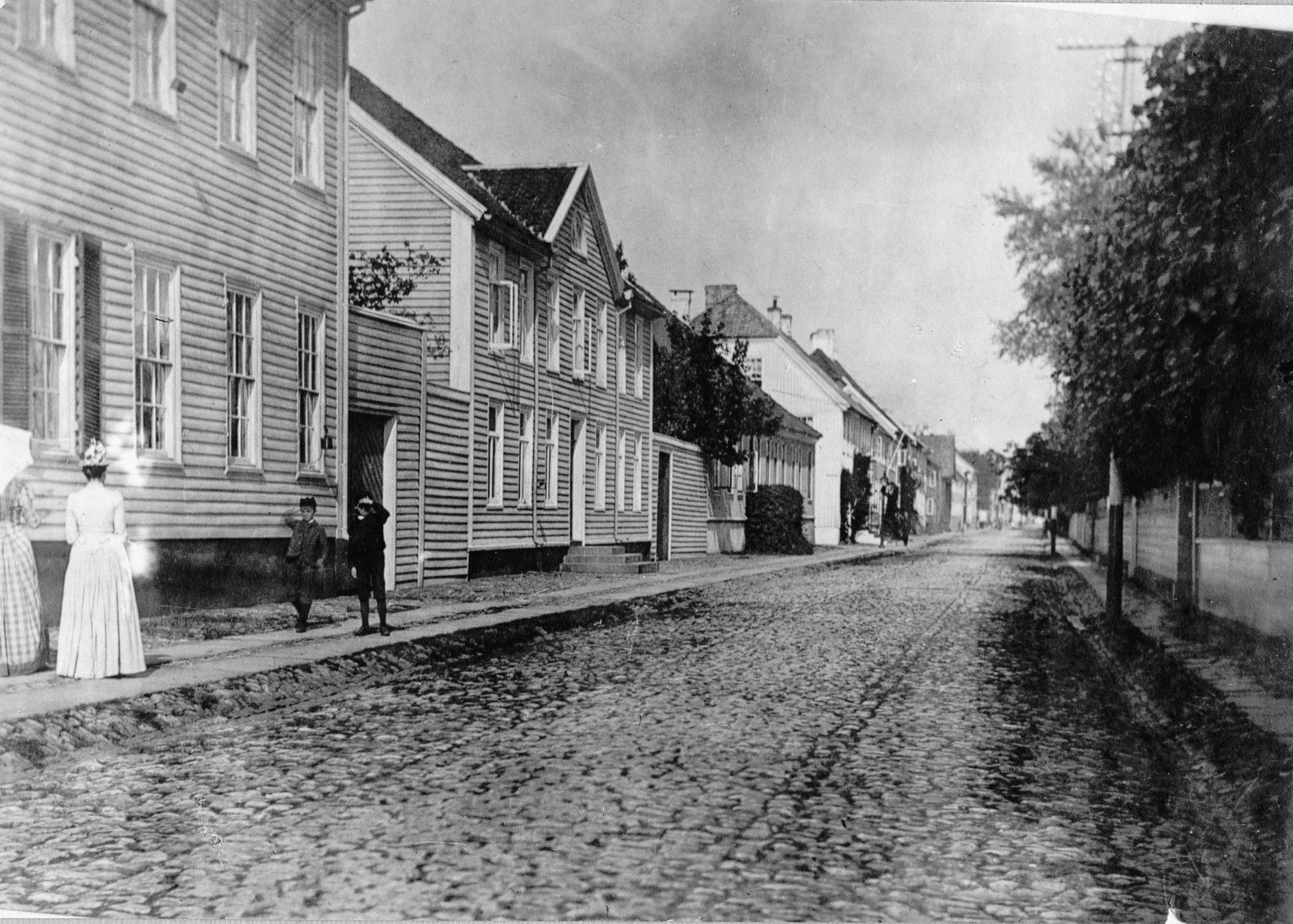
The birth took place in his home in Østre Strandgate 1. There had originally been three houses on this plot. But after a fire in 1771, the three properties were merged by regimental field marshal von Fangen. It was he who built the house that Henrik Arnold Thaulow bought in 1785.
This old photo shows Østre Strandgate around 1880. It was the white house with sheets in the middle of the picture, Østre Strandgate 1, which Henrik Arnold Thaulow bought in 1785. There stood the "cradle of culture" in our city.
The large house in Østre Strandgate 1 was to become an important hub for both music and theater life in the city. Almost weekly, Jacobine and Henrik Arnold Thaulow opened their doors to small private concerts for a narrow circle of influential people in Kristiansand at the time. In addition, the house was the stage for a number of smaller productions. And when traveling artists came to town, it was in Thaulow's house that concerts and performances took place. It is worth mentioning that the Thaulows were the grandparents of the Wergeland siblings.
When the Dramatic Society was founded in 1787 under Thaulow's leadership, it was only natural for him to make a hall in his private house in Østre Strandgate available to the society. The city lacked a theater building.
The class divide in the city was very pronounced at this time. As a result, the amateur theater company initially took on an almost aristocratic character. The association was closed, its members had to be "sponsored" or recommended, and there were no public performances. But there must have been a lot of activity in the company. During the season, which lasted from November to May, one play was performed each month with both female and male actors. And from the very beginning, part of the profits went to charity.
For a full twelve years, the members conducted a lively business in Østre Strandgate. But when Thaulow died in 1799 and the property had to be sold, the company was left without a house. Activity declined. And after a while, the company went into a period of hibernation.
THE CITY'S FIRST THEATER BUILDING
Kongensgate 4
In the early 1800s, ship surveyor Peder Olrog owned a large house on the corner of Vestre Strandgate and Kongensgate, where the theater is located in 2022. He rented out large parts of the house to the old Klubselskabet, and after some negotiations, the Dramatic Society was given the opportunity to use some of these premises for theater activities. Admittedly, the space was small and the stage equipment was poor, but the members nevertheless ensured that quite demanding plays were performed in the temporary premises.
Generalskipsmåler Olrog would come to play an important role both for the Dramatic Society and for the city's overall theater life. When the company was revived in 1807, the management or board consisted of stiftamtmann Emanuel de Thygeson, Major Hagerup and Doctor Petersen. These three had a fervent desire to build a proper theater and began negotiations with Peder Olrog about renting the large garden facing Kongensgate that belonged to his corner property. In the end, a lease was drawn up.
But Olrog made an important demand. The contract was to be non-cancellable on his part "on the condition that the company's dramatic performances did not cease for two consecutive winters". Olrog thus ensured that the company's members had to make an effort to keep up the activity. This proved to be of great importance both for the Dramatic Society and for the city's theater life. And then - after Mrs. Olrog's large bakery oven and a couple of smaller outbuildings had been moved from the garden area, the planning of the "Comoediehuset" on Olrog's plot could begin.
The theater building was designed by engineer Captain Benoni d'Aubert, Thaulow's son-in-law, and it was Lieutenant Oftedahl who was commissioned to carry out the construction at a cost of 2900 riksdaler, after he had reduced the price slightly. The theater was completed as early as the autumn of 1807. The Dramatic Society had provided both itself and the city with a theater building.
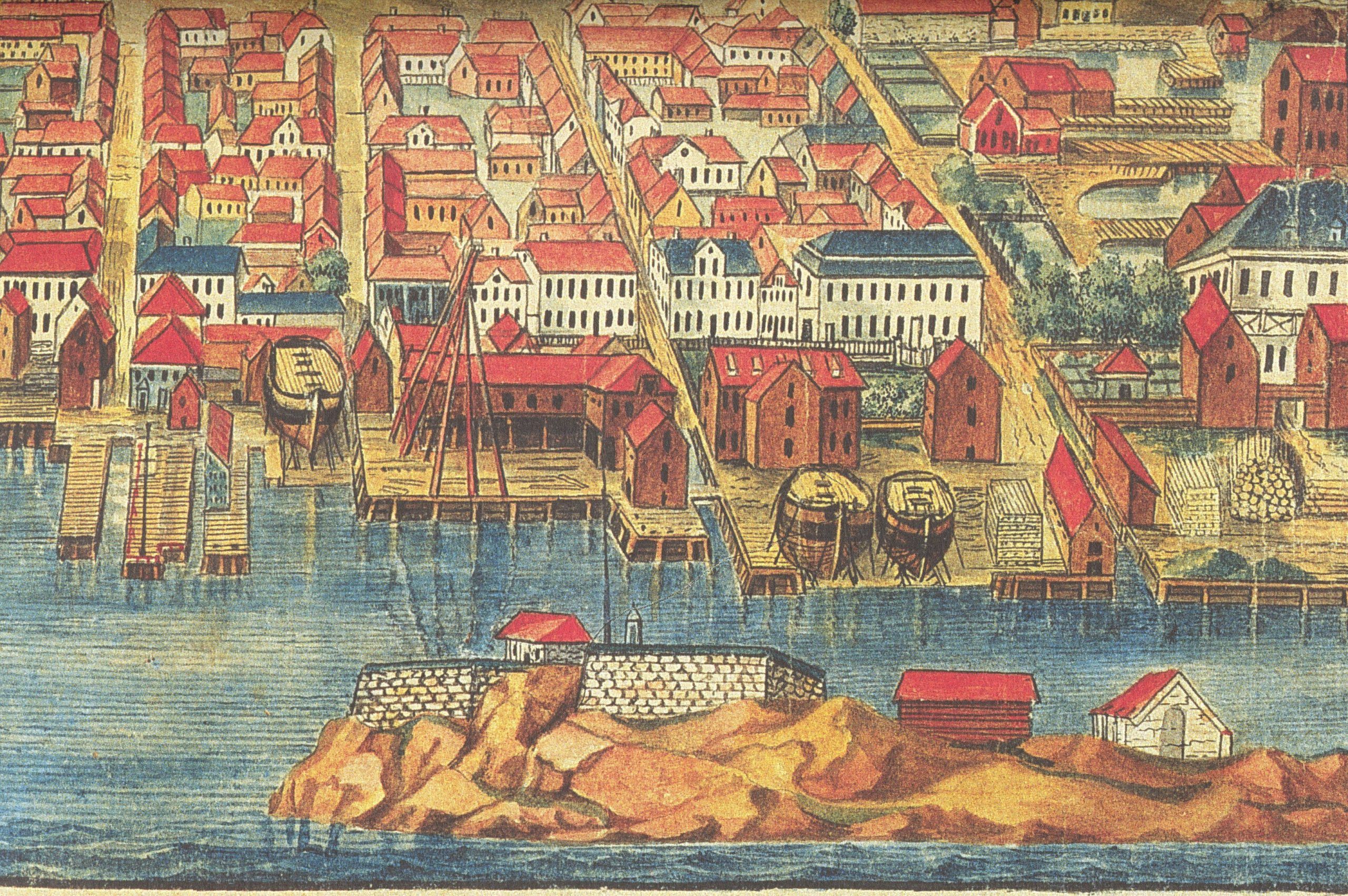
We know that the theater was a simple, single-storey building constructed of timber with brick infill. In the stable building that stood between the theater and Olrog's corner house, a so-called foyer was built on the second floor, which became a simple and straightforward connection between the theater and the premises of the old Klubselskabet. Local historian Karl Leewy writes that "the theater was no delight to the eye from the outside. It had to be called an ugly, gray box. Nothing had been done to spruce up the facade."
But the interior of the theater is said to have been better than the exterior. It consisted of a theater hall with parterre (parquet) and gallery, as well as four rooms and two hallways. It was said that it was somehow cozy in teatersalen despite the chocolate brown and gray colors of the walls. A six-armed glass chandelier hung from the ceiling, which was a gift from de Thygeson. There were boxes by the stage, and on both sides of the curtain were niches with painted portraits of Holberg and Wessel.
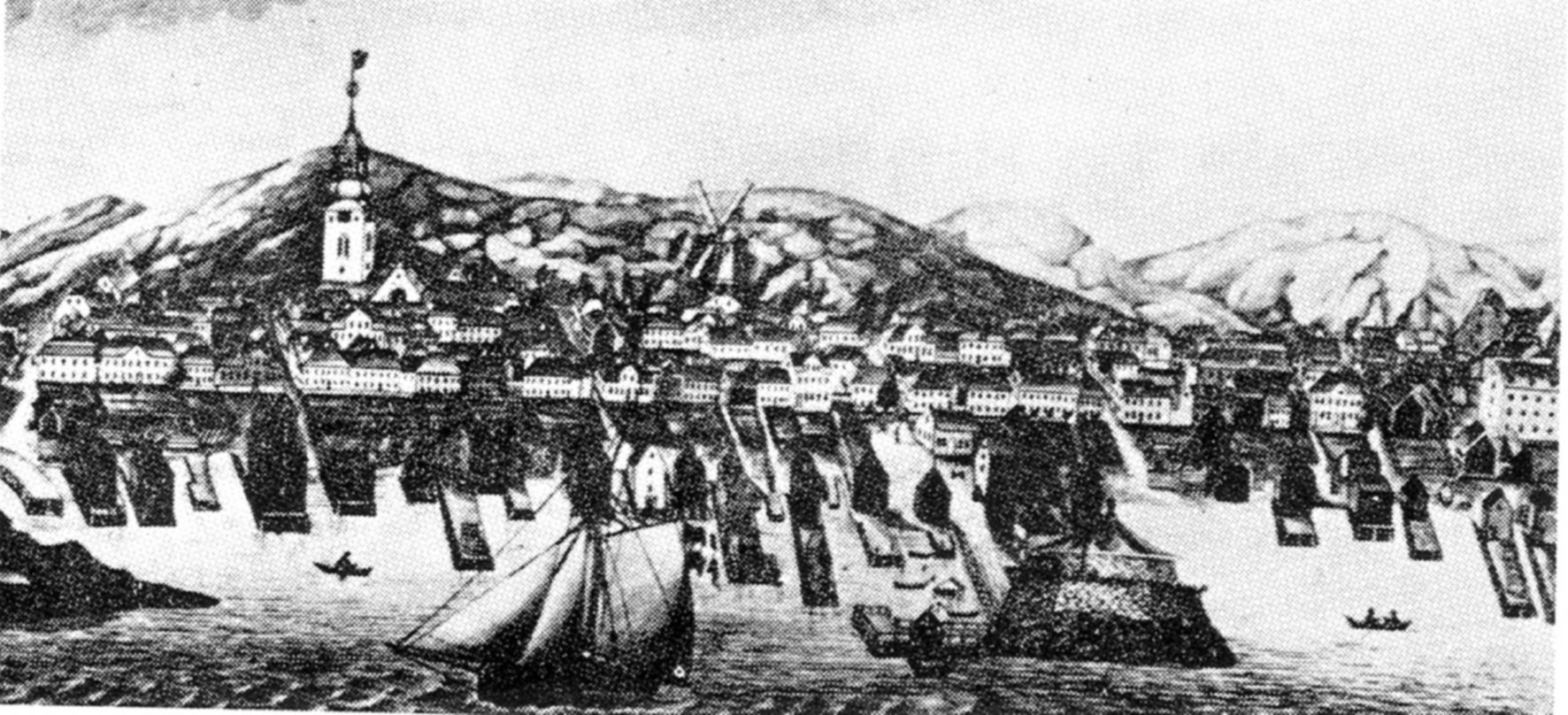
The curtain, which could be rolled up and down, showed a picture of the eastern harbor from the early 1800s. The theatrical painter was the Freemason Meindert Arjens Appel. He also painted a number of backdrops with different motifs. All scene changes had to take place on an open stage. Both machinery and aids in the theater were extremely primitive. The lighting was also poor, as there was only candlelight. It is said that new wax candles were used on opening night, while only tallow candles were used in rehearsals. There were a few oil lamps by the orchestra pit. The heating was also miserable. The audience usually wore their outerwear.
The ladies only had access to the seating in the gallery, while the men stayed in the stalls where there was only standing room. Apparently, it seemed both distinguished and superior when the men stood during the performances. No wonder they had to retreat to "the Olrog club room" during breaks to fortify themselves with a glass of punch or brandy!
The theater was called "The Temple" in the vernacular. In this theater building, the city's own stage talents could unfold. But also traveling Danish and Norwegian theater companies played on the theater stage.
Throughout the 19th century, interest in theater went in great waves, in line with the currents of the time. But in 1857, the Dramatic Society once again had enterprising men on the board. A loan was taken out, and a major modernization and repair of the theatre was initiated. And it was probably high time, because the theater building from 1807 had been built in the cheapest possible way. Among other things, parquet benches were installed and the old boxes were removed to provide more space for the audience. The heating was improved, and as the city had acquired a gasworks in 1857, the theater had gas lighting. But the staircases and exits remained just as narrow and flammable as before. Fortunately, the old curtain was retained, but the pictures of Holberg and Wessel were taken down and thrown away.
The inner life of the theater also changed in the 1850s. The ladies were brought down from the gallery. Applause was allowed, and it became possible for ordinary citizens to buy tickets for the various events. And there was more to Templet than meets the eye. You could experience Ibsen's and Bjørnson's dramas, Rossini's and Verdi's operas, spiritual soirees, snake people, sword swallowers, fakirs and so-called royal, world-famous artists who performed magic and sang. The Dramatic Society's local forces performed plays and comedies, often to full houses. In 1877, the company became the owner of the theater site, and once again began to renovate the premises.
Then disaster struck. On July 8, 1892, the great city fire broke out, and the city's first theater building fell prey to the flames. The Dramatic Society's own minutes tell the story: "During the great fire on July 8, 1892, the Dramatic Society's property Christianssands Theater, built in 1807, burned down. The building was insured for NOK 10,600. The small amount of contents owned by the theater was not insured."
BYENS ANDRE TEATERBYGNING, Kongensgate 2
It was a great shock when the city's first theater building was reduced to ashes in July 1892. However, it wasn't long before the Dramatic Society decided to erect a new building as soon as the finances were in place. They succeeded in buying the corner plot where Olrog's house had stood so that they could start planning a new, spacious theater.
It was architect Berle who designed the new theater building and builder Schram who built it for around NOK 60,000. The theater was completed in 1895. It provided space for 500 spectators, divided between the stalls and two rows of boxes. The ceilings and rows of boxes were decorated in Italian Renaissance style.
After its inauguration, the theatre was characterized as one of our country's most beautiful and well-decorated theatre houses. It had great similarities with Drammen Theatre and Den Nationale Scene in Bergen.
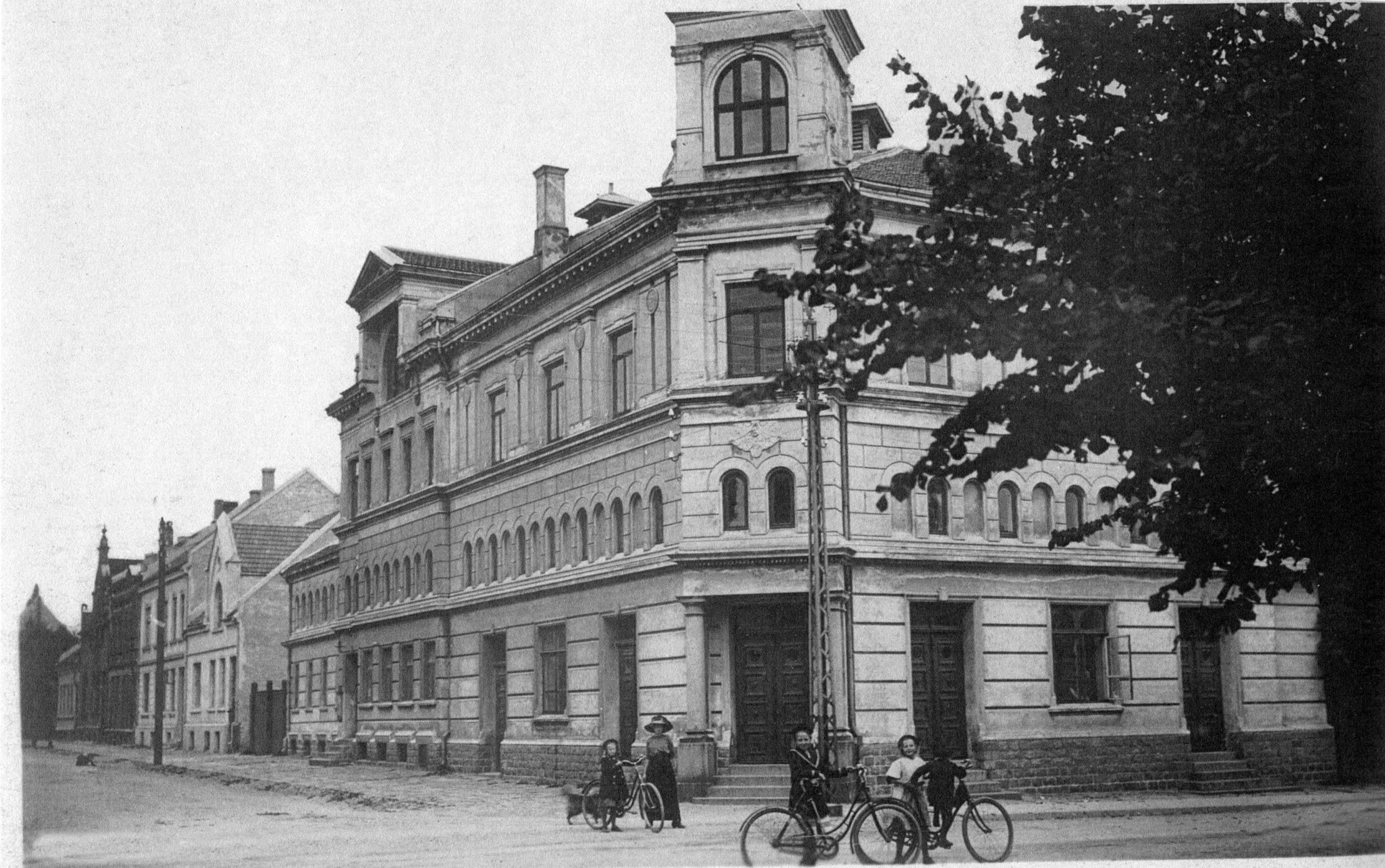
View from Vestre Strandgate after 1917. The city's other theater building, the old theater, can be seen to the left of the picture, while Jebsen's magnificent villa, which later became the county governor's residence, can be seen to the right.
Postcards from the Stein Nygård collection.
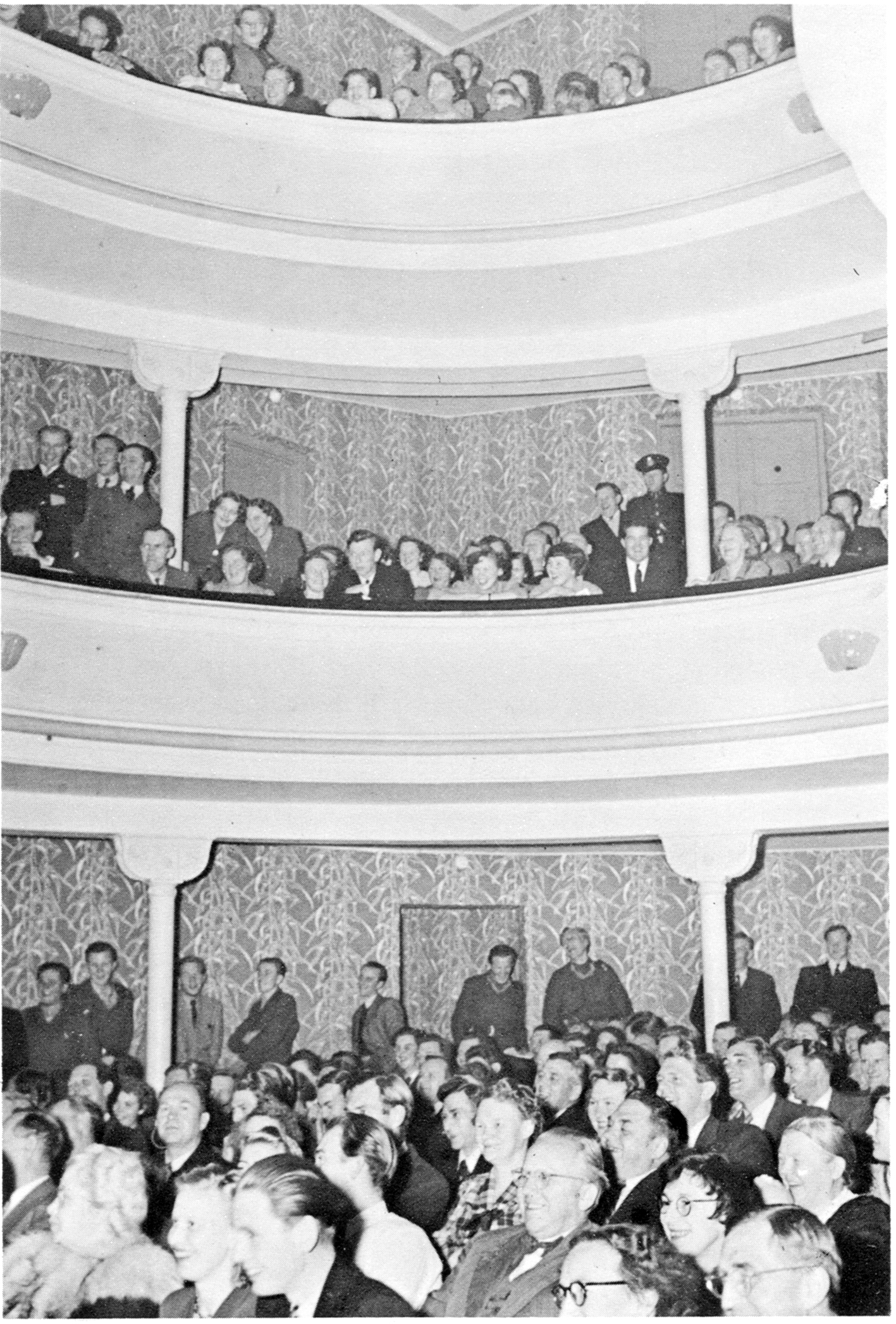
There are few pictures of the audience areas in the old theater. Here we see a glimpse of the stalls and the first and second rows of boxes, also called "Heaven".
Photo from the book "Trekk av Kristiansands teaterhistorie"
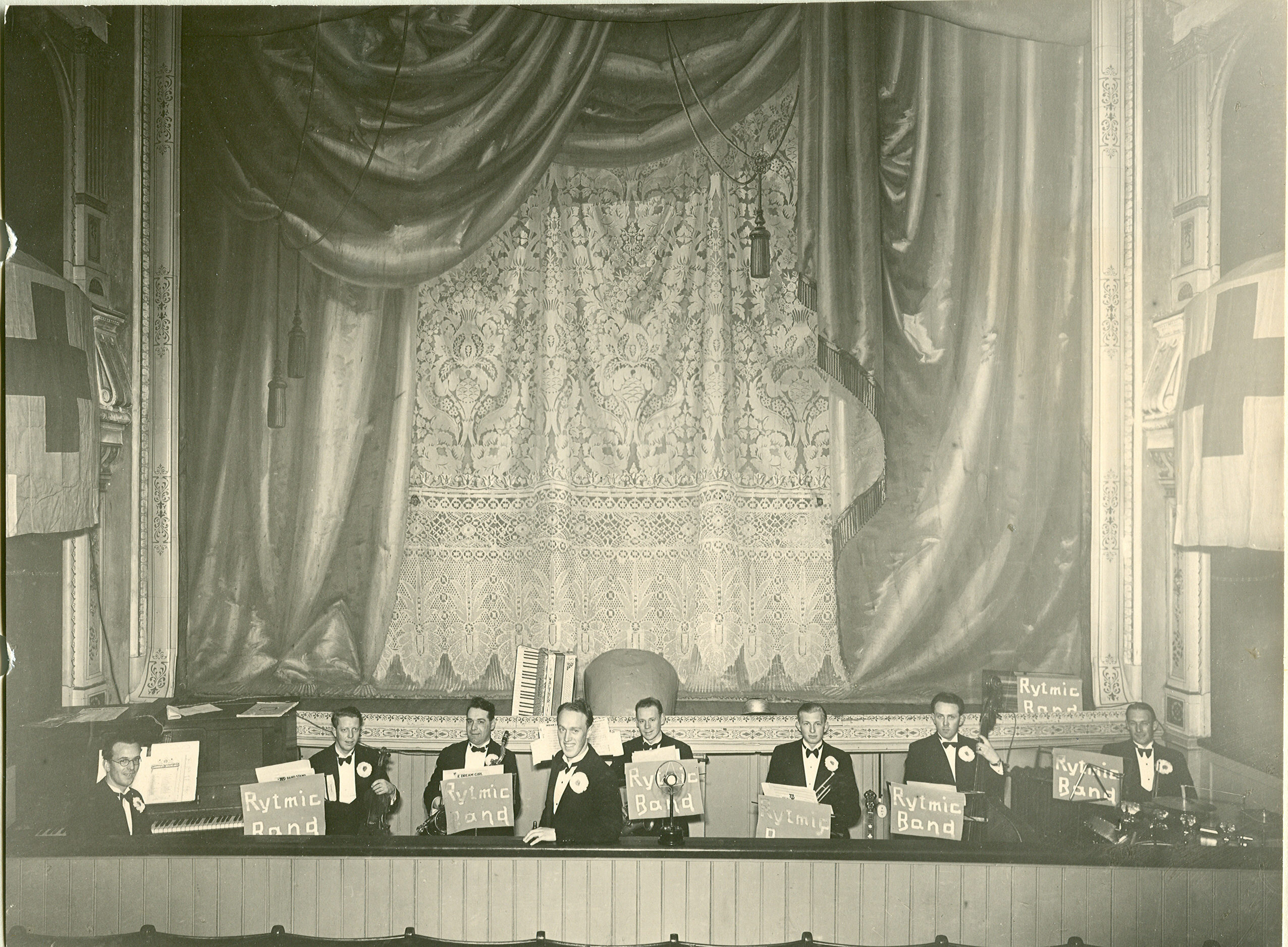
The first curtain in the old theater was not made of textile. It was painted and pulled straight up. This picture is from a Red Cross performance in 1931 when the Rhythmic Band provided the musical elements. From the left we see Rolf Rustad, Oscar Olsen, Erling Larsen, Sverre Zernichow, Sigurd Solberg, Finn Lindkvist, Kristian Jonassen and Arthur Pedersen.
Photo via Arne Gaute Pedersen
The theater was inaugurated with pomp and splendor. Christianssand's Dilettante Orchestra, led by organist Rojahn, opened with a festive march, composed for the occasion by Rojahn himself. Vilhelm Krag read his own prologue. Then actors from Christiania Theater performed Little Eyolf by Henrik Ibsen, with Ragna Wettergren in the lead role. Henrik Ibsen is said to have sent a telegram wishing all the best for the new theater.
The local press was full of praise, both for the theater and the performance. "The machinery worked quickly and safely. The decorations were beautiful. The auditorium was extremely well furnished". The city once again had a cultural center, owned and operated by Det Dramatiske Selskab.
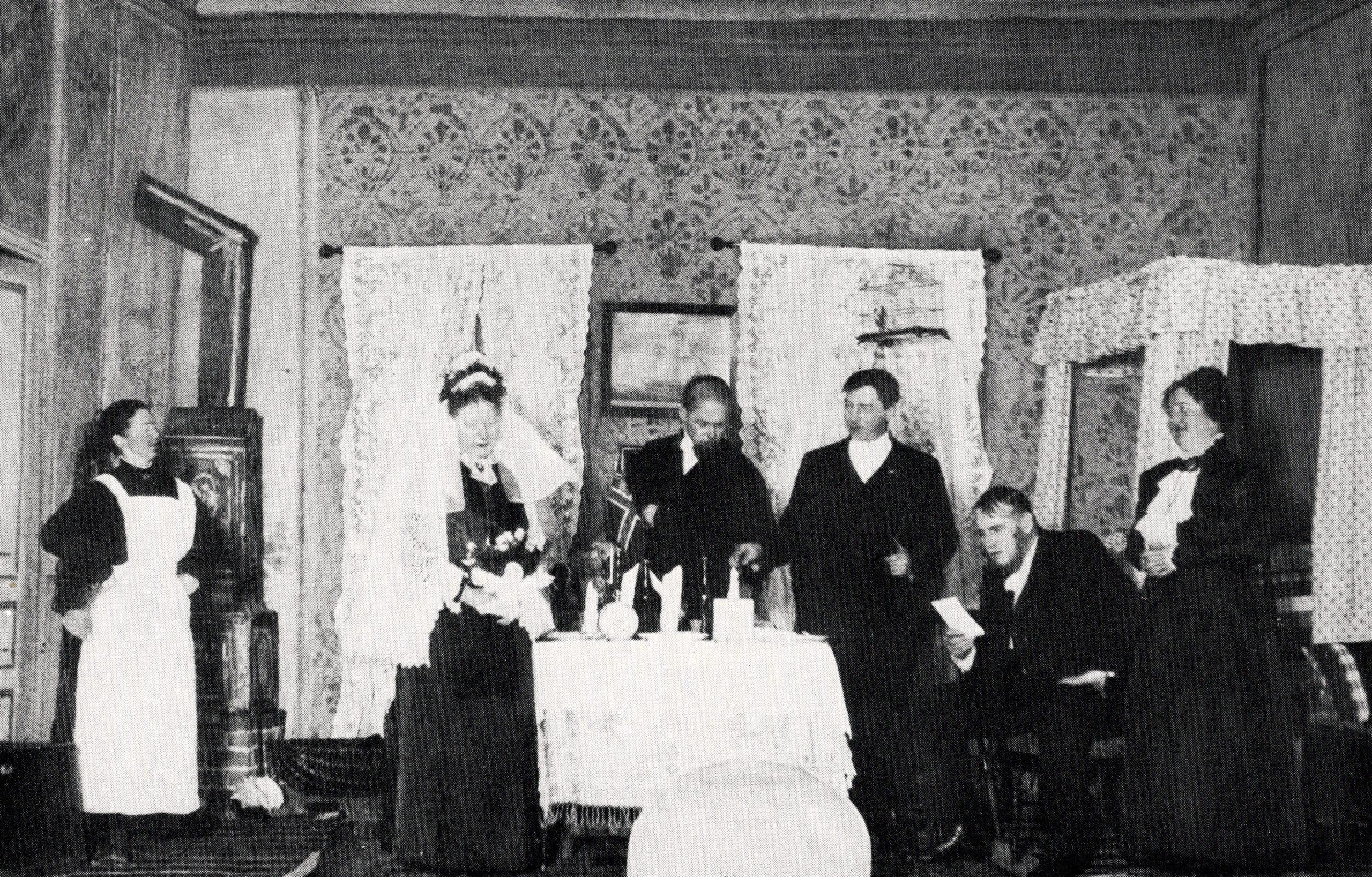
Det Dramatiske Selskab has on several occasions staged plays by writers from southern Norway. In 1925, Baldevin's Wedding by Vilhelm Krag was on the poster. From the left we see Lill Johnsen, Dix Stabel, Johan Brun Moe, Einar Keim, Emil Gundersen and Dagny Gundersen.
Photo via The Dramatic Society
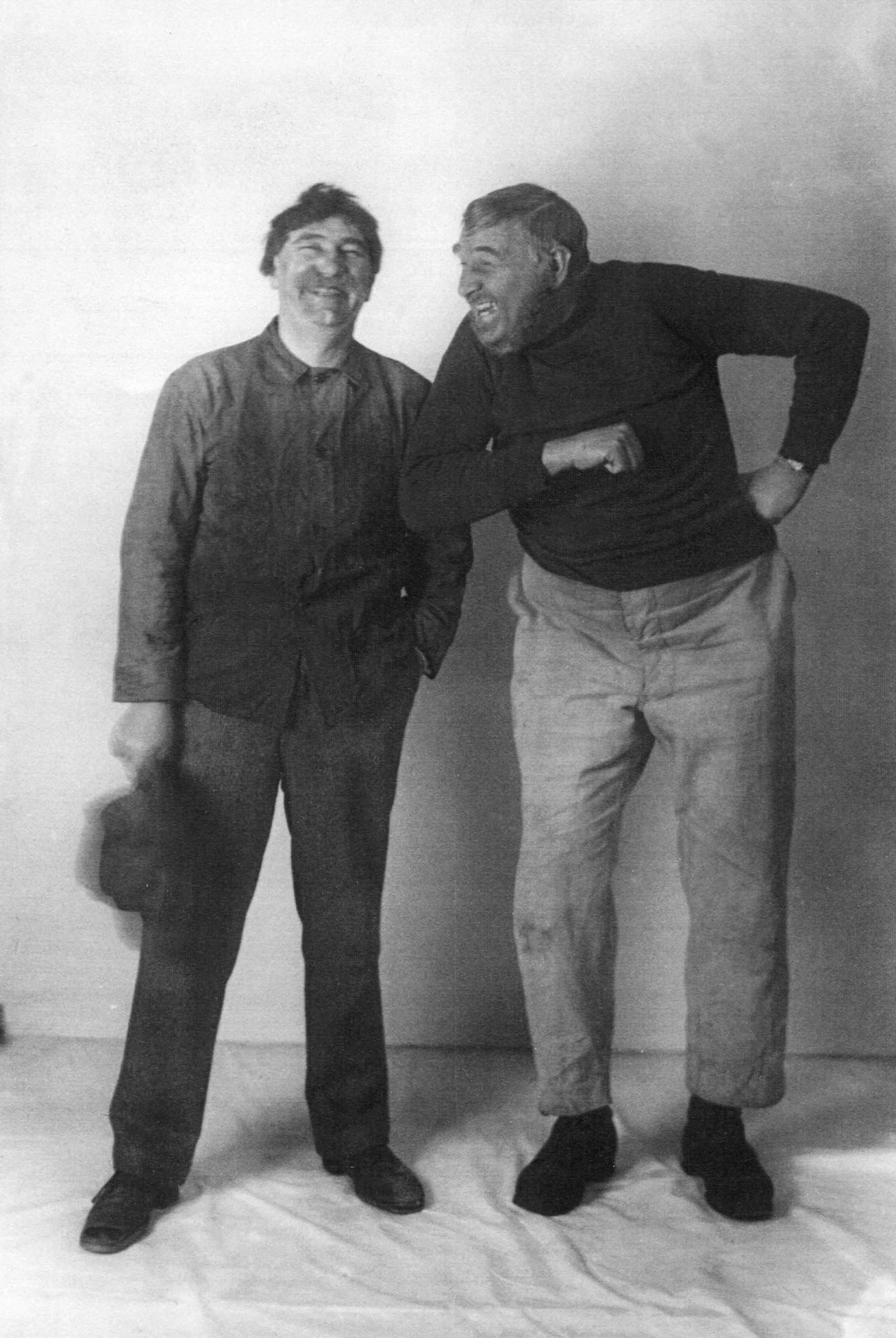
Einar Keim and Emil Gundersen were the Dramatic Society's leading figures for a lifetime. Here we see them at Baldevin's wedding in 1925, Einar Keim to the left as Baldevin Jonassen and Emil Gundersen to the right as Simen Pimpen.
Photo via Vessa Kaurin
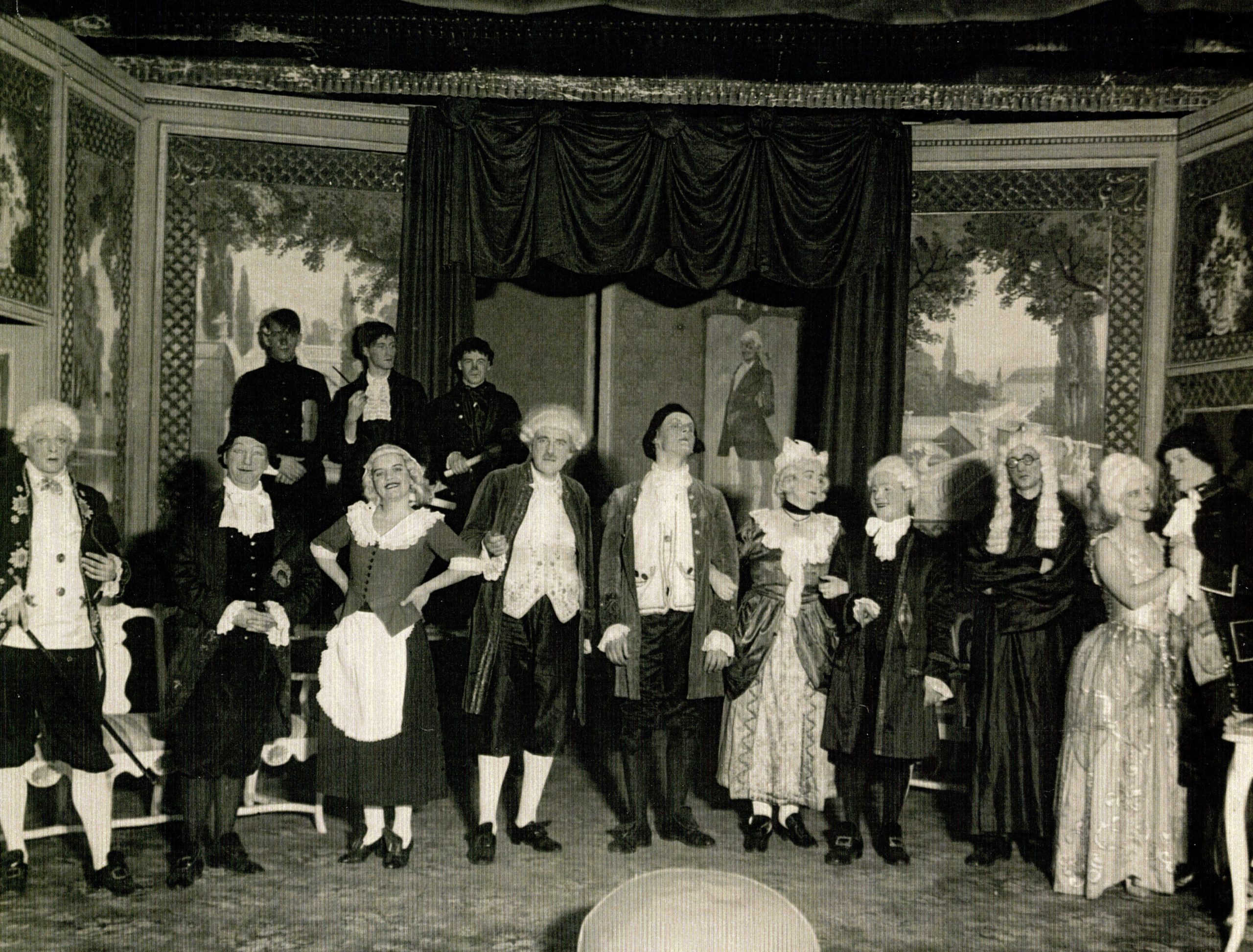
As early as 1806, the Norwegian Dramatic Society staged its first production of Den Stundesløse by Ludvig Holberg. This picture is taken from a very successful production in 1935. From the left we see unknown, Einar Keim, Aaslaug Dietrichson as Pernille, Emil Gundersen as Den Stundesløse, unknown, Dagny Gundersen, Odd Johannesen, unknown, Annemor Næser and Julius Hougen.
Photo via The Dramatic Society.
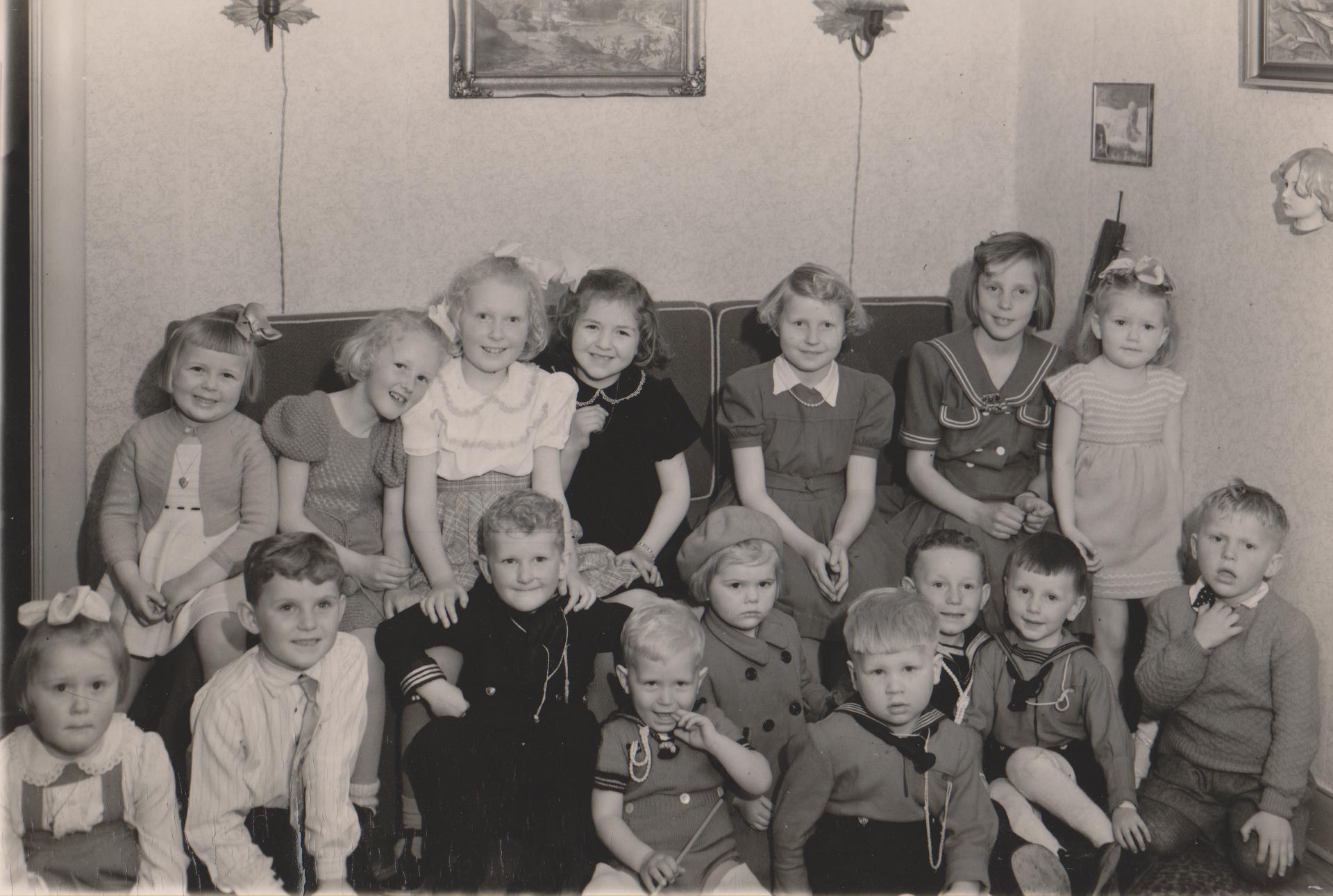
In 1943, Wencke Bohne started her small children's theater group called Tante Wenckes barneteater. The children in the picture are some of those who took their first steps on the theater stage in Kristiansand Theater under her leadership. The very first performance was a small revue, and later the young actors performed big shows such as Hansel and Gretel, Cinderella and Trollspeilet, always to full houses. For many years, "Aunt Wencke" made a significant theater effort for children in our city.
Photo via Stig Bohne
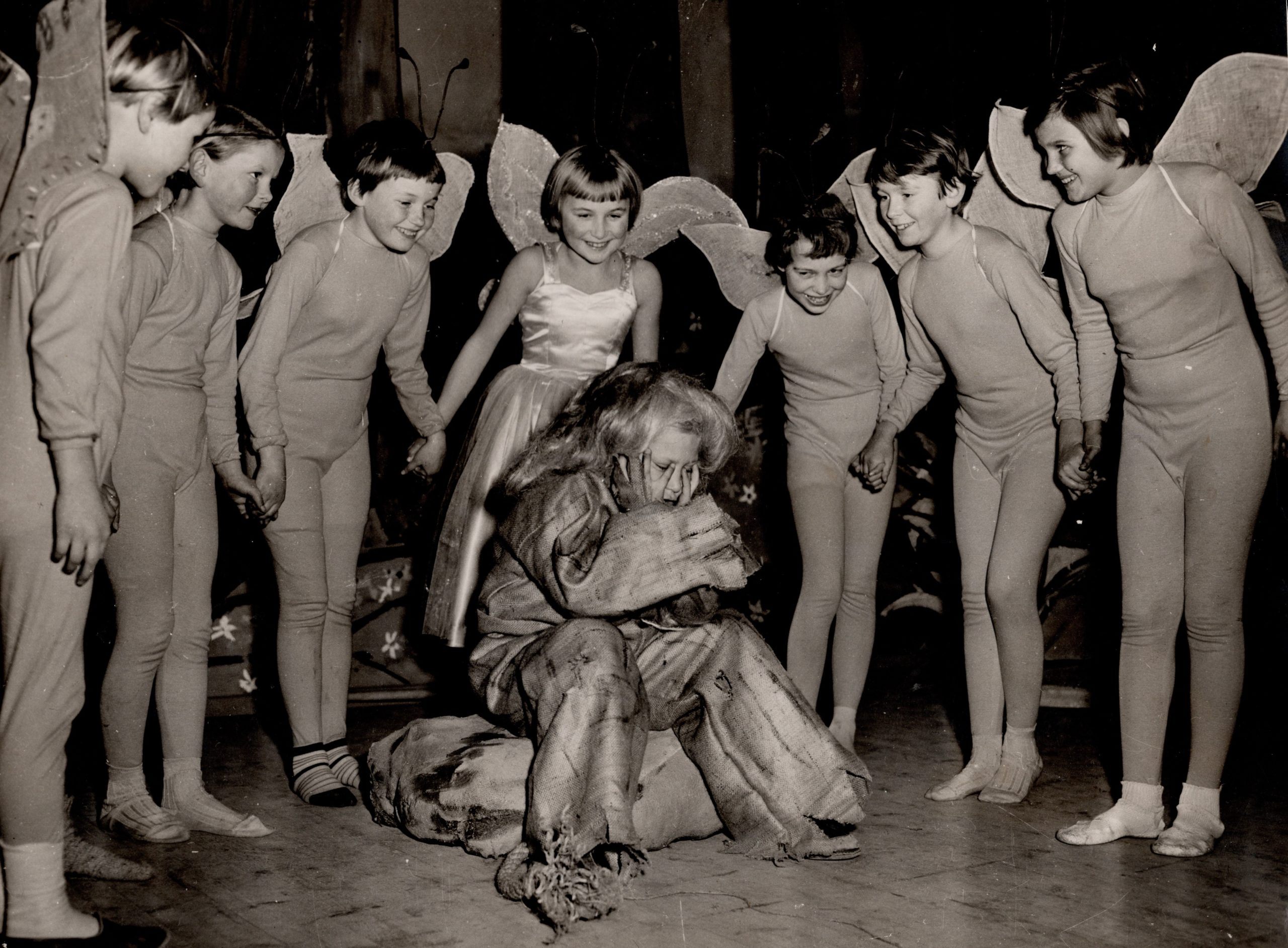
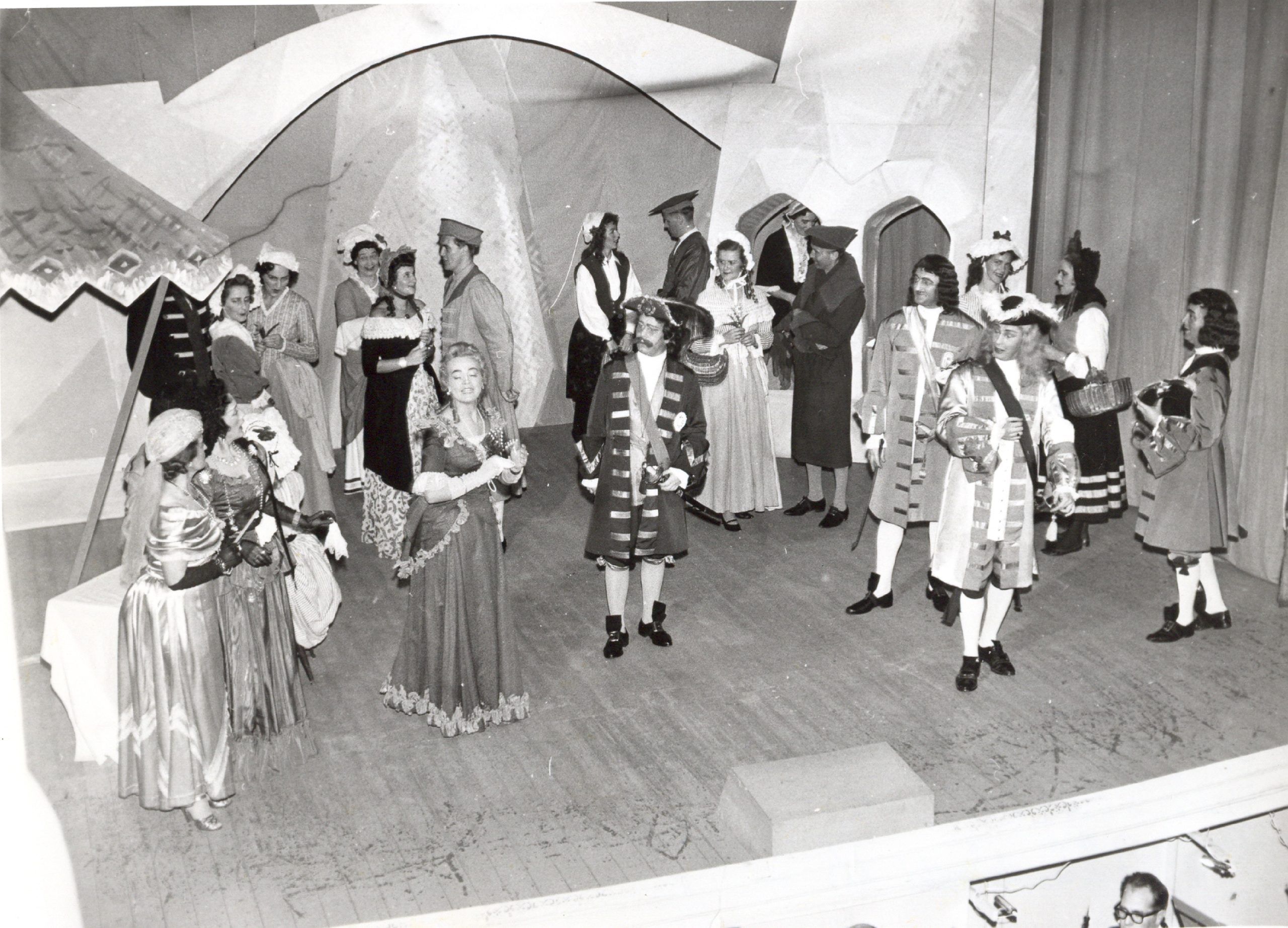
A scene from the production Trollspeilet, which was staged by Tante Wenke's children's theater in 1955.
Photo via Gry Mitchell.
It is impossible to go into detail about the inner life of the theater from the time the new building was completed in 1895 until the chandelier fell to the floor one morning in 1958. But what is certain is that activity was rich and varied. There were guest performances, concerts and operas. But the core of the business was always the performances with the city's own amateurs, Kristiansand City Orchestra, Kristiansand Opera Choir, the Dramatic Society and, for a relatively short but hectic period, the Wasp Revues.
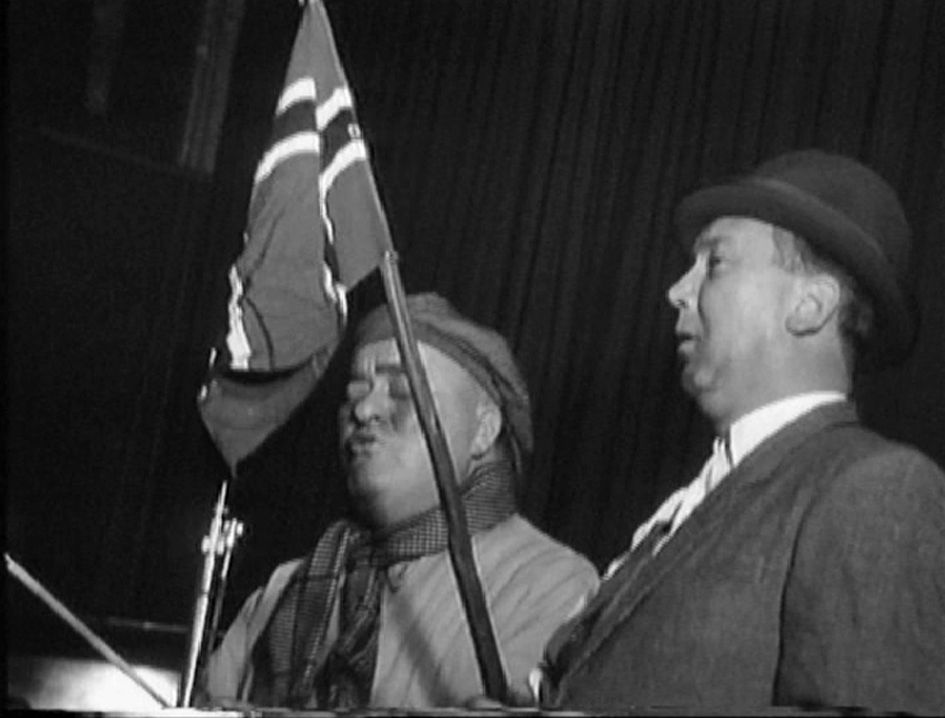
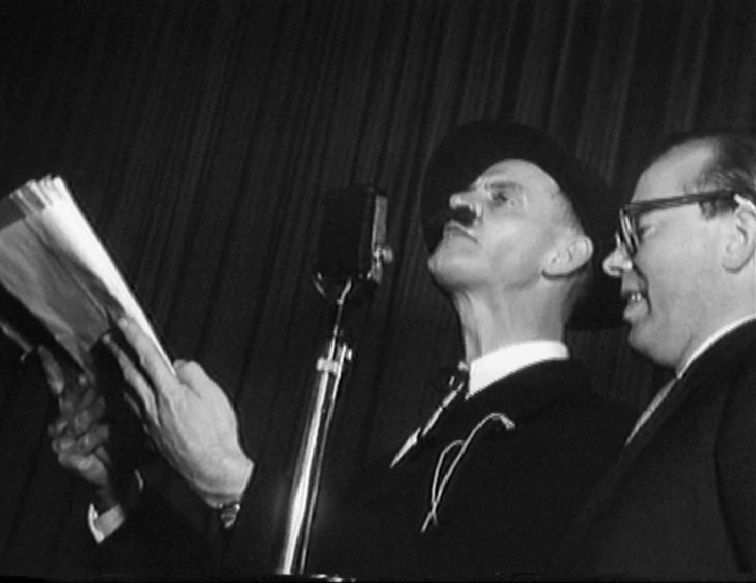
Some very special events can be mentioned. In January 1913, The Norwegian Theatre brought its very first production to Kristiansand. It was The Inheritance of Ivar Aasen with a bit of an A-team on the acting side. Edvard Drabløs, Rasmus Rasmussen, Klara Semb and Lars Tvinde all took part in the production. By the way, the excitement before the premiere had been great. A New Norwegian play in Kristiansand! But Ervingen was received with good reviews, even though a couple of the newspapers had to make some linguistic political points. It's part of the story that Det Norske Teatret also celebrated its 50th anniversary in 1963 at the theater in our city. Olav Duun's Medmenneske was performed there. The cast list shows that both Astrid Sommer, who was awarded the King's Gold Medal of Merit at the premiere, and Liv Ullmann had major roles, and both received rave reviews.
Anne Sofie Dyvåg, born Valeur in 1920, had many fond childhood memories of the old theater. She said that the entrance on the corner was flanked by two large granite pillars donated by Govert Justnes. There was a long, icy corridor in each direction inside the theater. There were pegs for outerwear. In the corridor along Kongensgate there was a staircase up to the rows of lodges. When you entered the first row of boxes, you walked down some terrible steps to the first bench. There was apparently some kind of railing along the steps, but it was easy to trip, so there were many accidents. If you had a ticket all the way at the back of the first row of boxes, it was difficult to see anything. Then you could go forward and sit on the stairs. In the second row of boxes, which was called "Heaven", only those who sat on the first bench and hung over the padded railing could see anything at all.
Downstairs in the parquet there were hard chairs with folding seats. Quite far back there was a large pillar. If you got a ticket behind this pillar, you could only hear the performance! The stage curtain was not made of fabric. It was painted yellow and pulled straight up. The side curtains were also painted backdrops that stood firm. There were several peepholes in the curtain that the actors had dug out. When the curtain went up, ice-cold air poured out over the audience in the stalls.
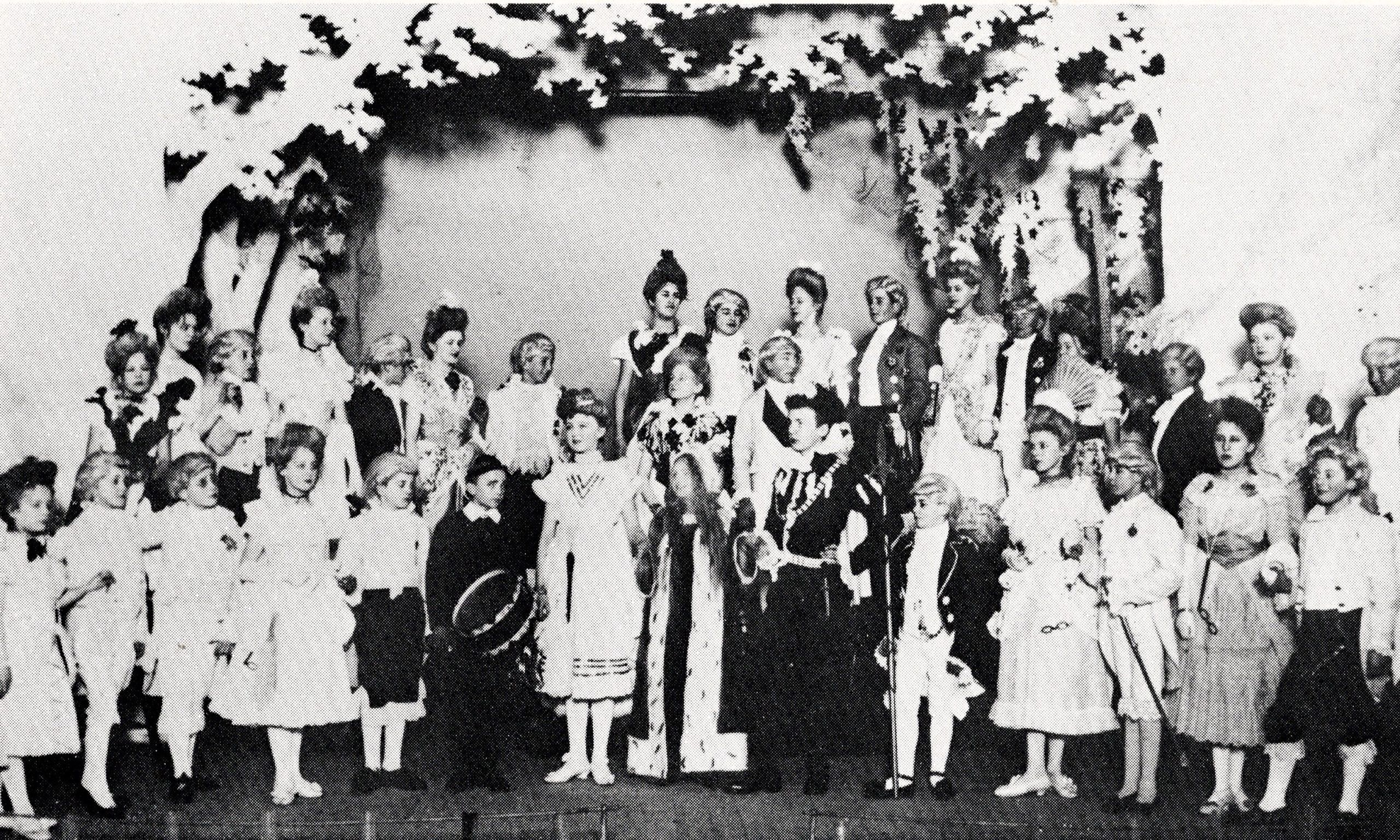
It was always exciting to see who was in the theater. The atmosphere was quite intense as you sat waiting for the curtain to rise. Everyone had dressed up, the children with patent leather shoes and white stockings. The chocolate boy was walking around selling sweets. And there was always a fireman with a helmet and shiny buttons at the back of the hall. He was assigned as a guard because the escape routes were probably quite fragile.
There were several children's performances in the theater, including The Snow Queen, Journey to the Christmas Star and Cinderella. There were often performances in the theater on 17 May. These were often organized by the Idun high school community. The red bus sat in the first row of boxes and the blue bus in the second. The rest of the audience had to make do with the tickets that were left over, because on this day it was the coaches who ruled the roost. There was a lot of noise and commotion. Among other things, they exchanged Russian songs, and it must always have been exciting to be there.
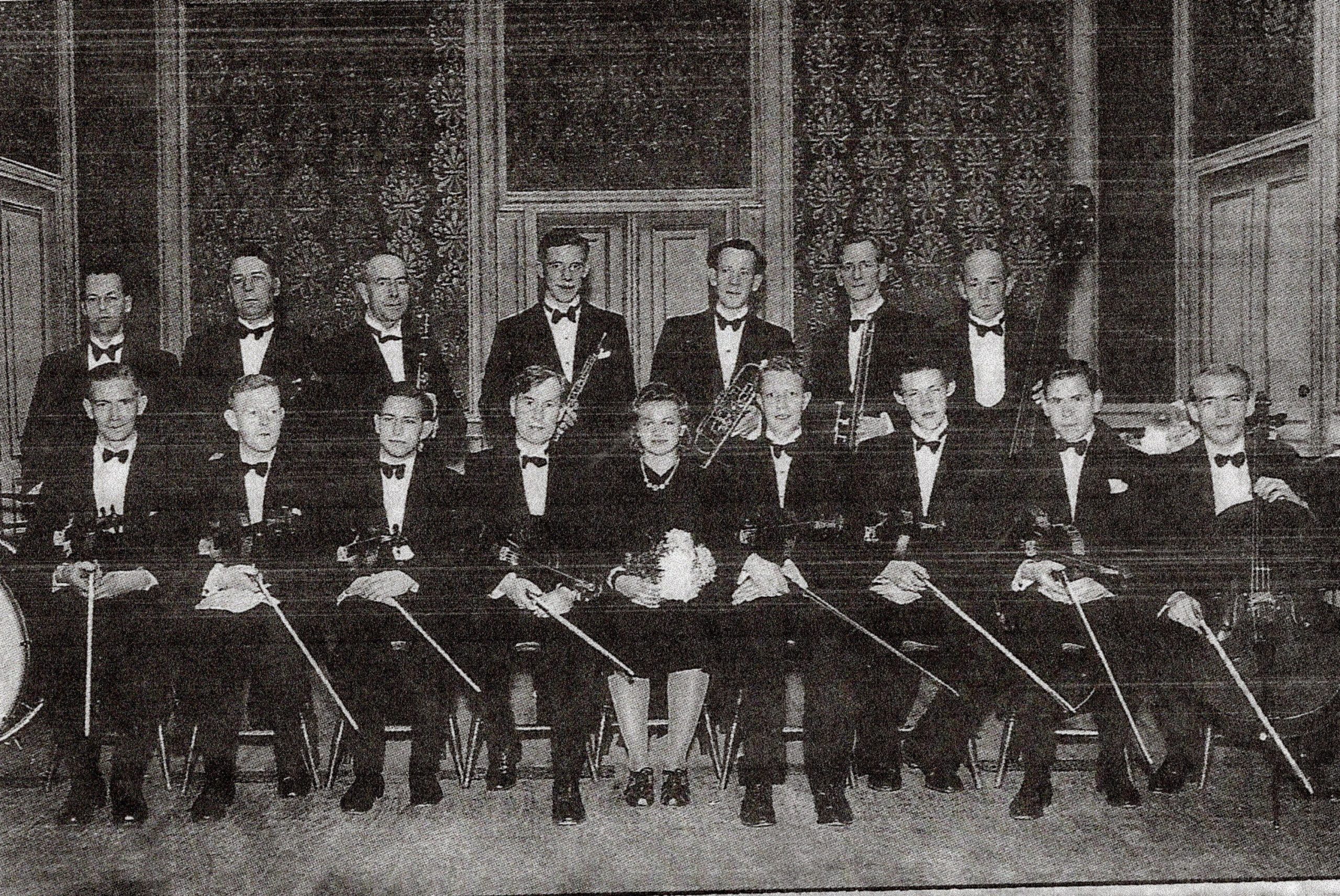
World War II was a difficult time for theater life in our city. The theater directorate wanted to have a hand in everything that was to be performed on stage. The Dramatic Society therefore refrained from staging its own plays, apart from a few cabaret performances for charity. In other words, the company largely operated as a pure rental theater. But it was not without its problems. It was almost impossible to obtain coke for heating, and there were also constant air raids and air raids. But incredibly, the theater was still used extensively, both by local performers and by tours.
When the war was over, Det Dramatiske Selskab was left with a handsome profit, even though the company had made sure to donate substantial amounts to the needy every Christmas throughout the war. The profit was used for a thorough renovation of the theater building. New chairs were installed in the parquet floor. The old stage curtain was replaced. The lighting system was modernized, and exit lights were put in place. But best of all, a new oil-fired heating system was installed.
But unfortunately, there was not enough money to meet all the requirements set by the fire service and others. As early as 1955, a committee was set up to assess the theater's future and come up with proposals for rebuilding or possibly building a completely new theater.
An eerie premonition that all was not well in the theater building came on October 6, 1958, when the beautiful old chandelier fell into the parquet and broke several chairs. Fortunately, this happened in the morning, so there were no injuries. But of course, this led to the entire building being carefully examined. Some preliminary and necessary repairs were carried out, while at the same time work was in full swing on the rebuilding plans.
But then one day it came to light that the old brick building had developed a fungus. At the time, there was no way to get rid of the fungus. At the general meeting of the Dramatic Society in 1963, it was announced that the building council had imposed a ban on using the theater for performances.
This was a new, hard blow for the company. But within a short space of time, the company began working with the municipal administration to find alternative venues for concerts and tours. They also considered whether it might be possible to get the old theater building in such a condition that it could be operated for another decade. Inspections were carried out, and the meetings were many and long. Finally, it was decided that the theater had to be demolished and that a modern and contemporary theater would be built on the site. Demolition began on February 15, and on May 7, 1966, the old, beautiful theater building was razed to the ground.
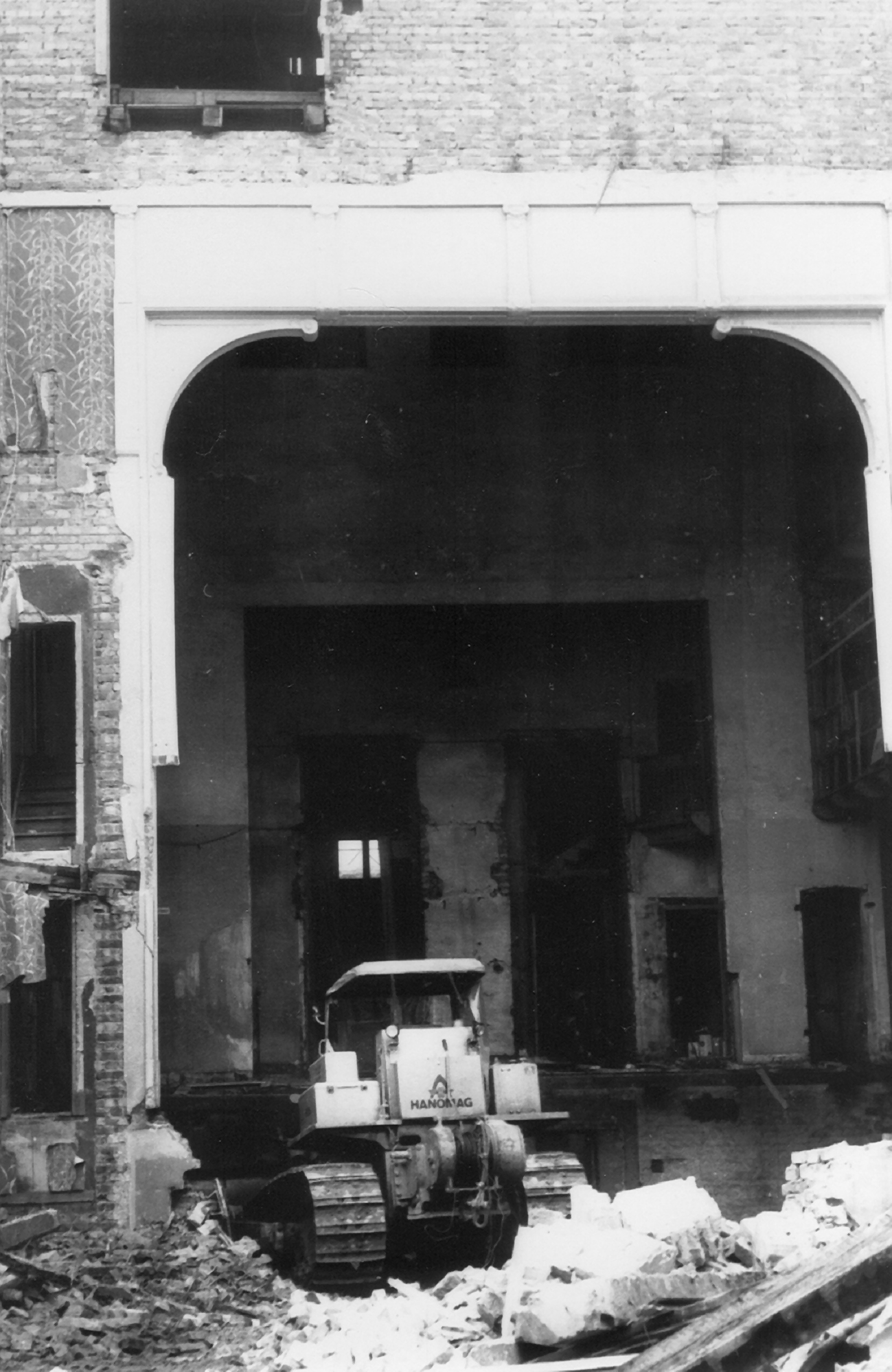
A dramatic picture, in two senses. The old theater is demolished in 1966.
Photo: Øystein Daatland
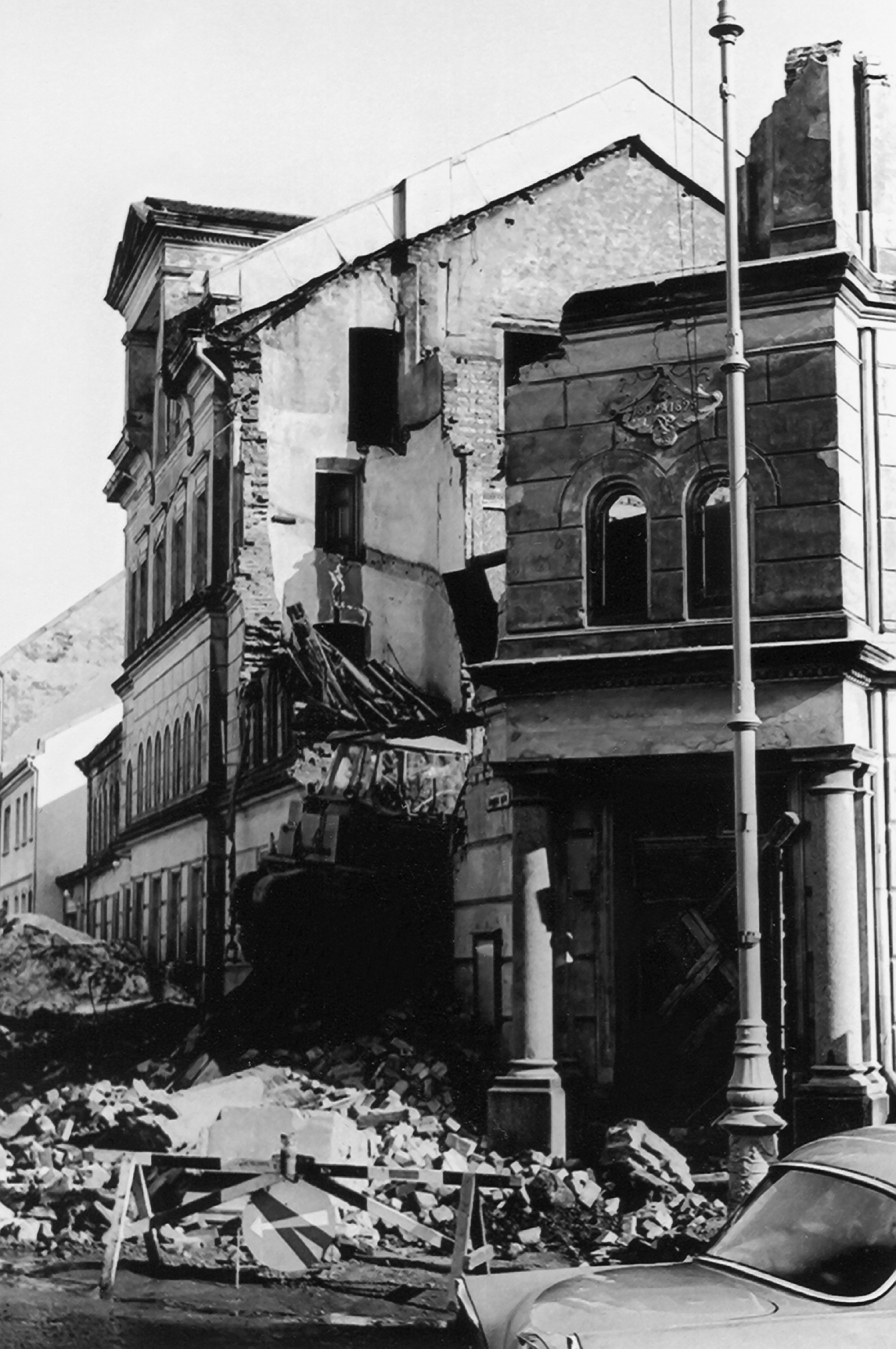
Many people in Kristiansand were genuinely sad when the old theater building had to be demolished in 1966.
Photo: Øystein Daatland.
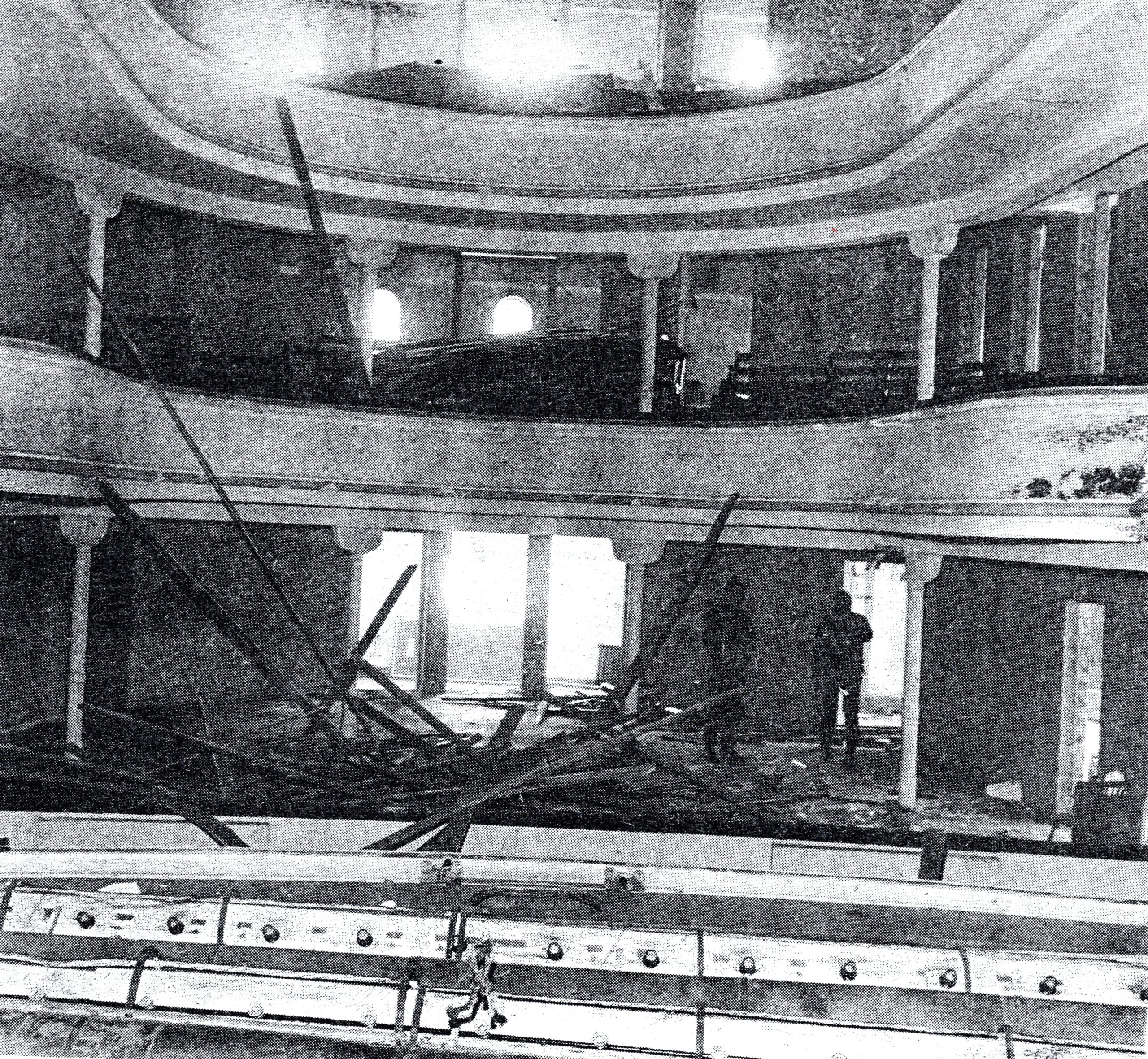
This newspaper photo from 1966 was taken from the stage and clearly shows that the old theater is falling apart.
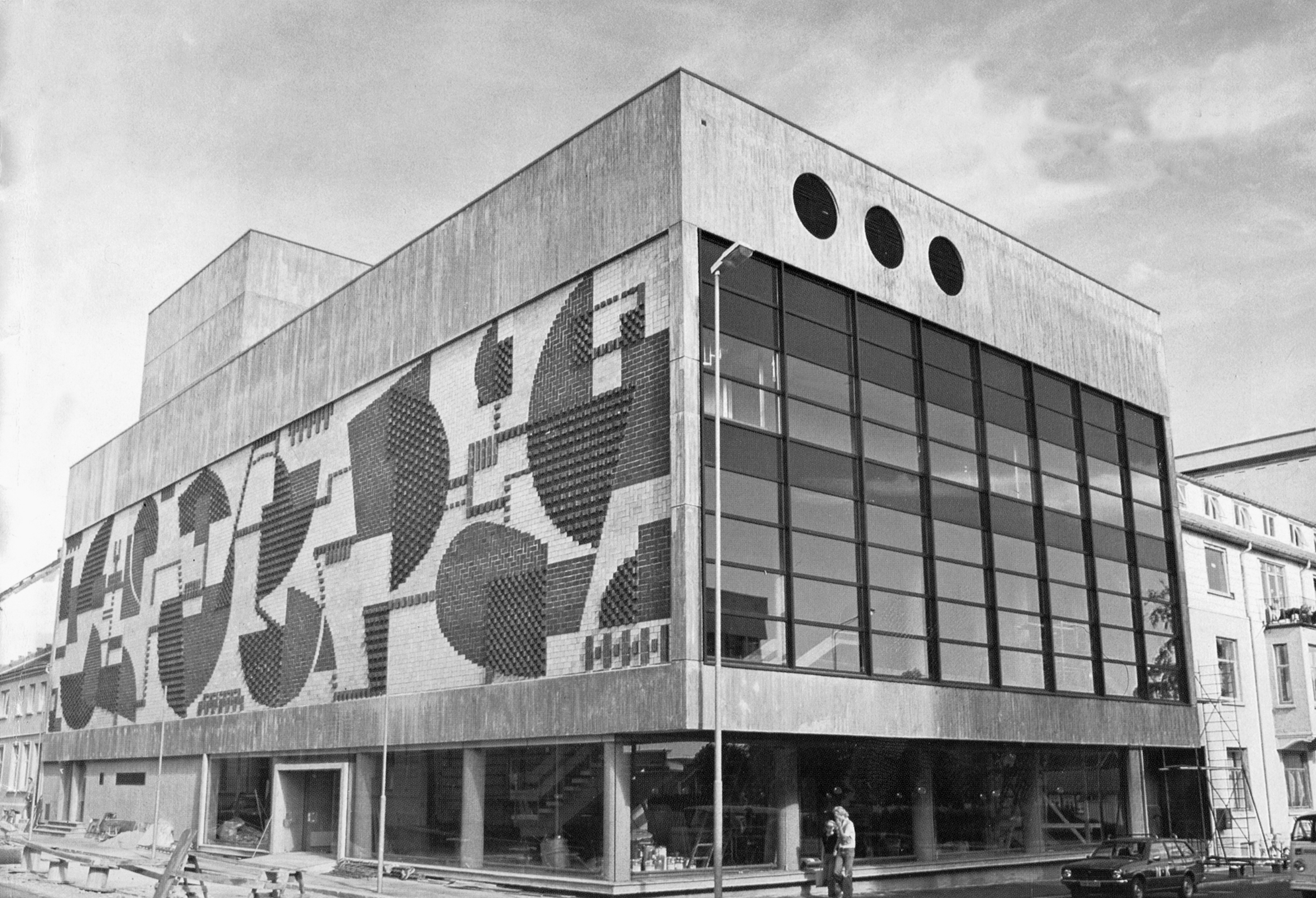
The city's third theater building was completed in 1976, after the theater site had been a parking lot from 1966. The massive façade wall facing Kongensgate was adorned with a beautiful mosaic work by artist Henrik Finne.
Photo via The Dramatic Society.
THE CITY'S THIRD THEATER BUILDING
Kongensgate 2
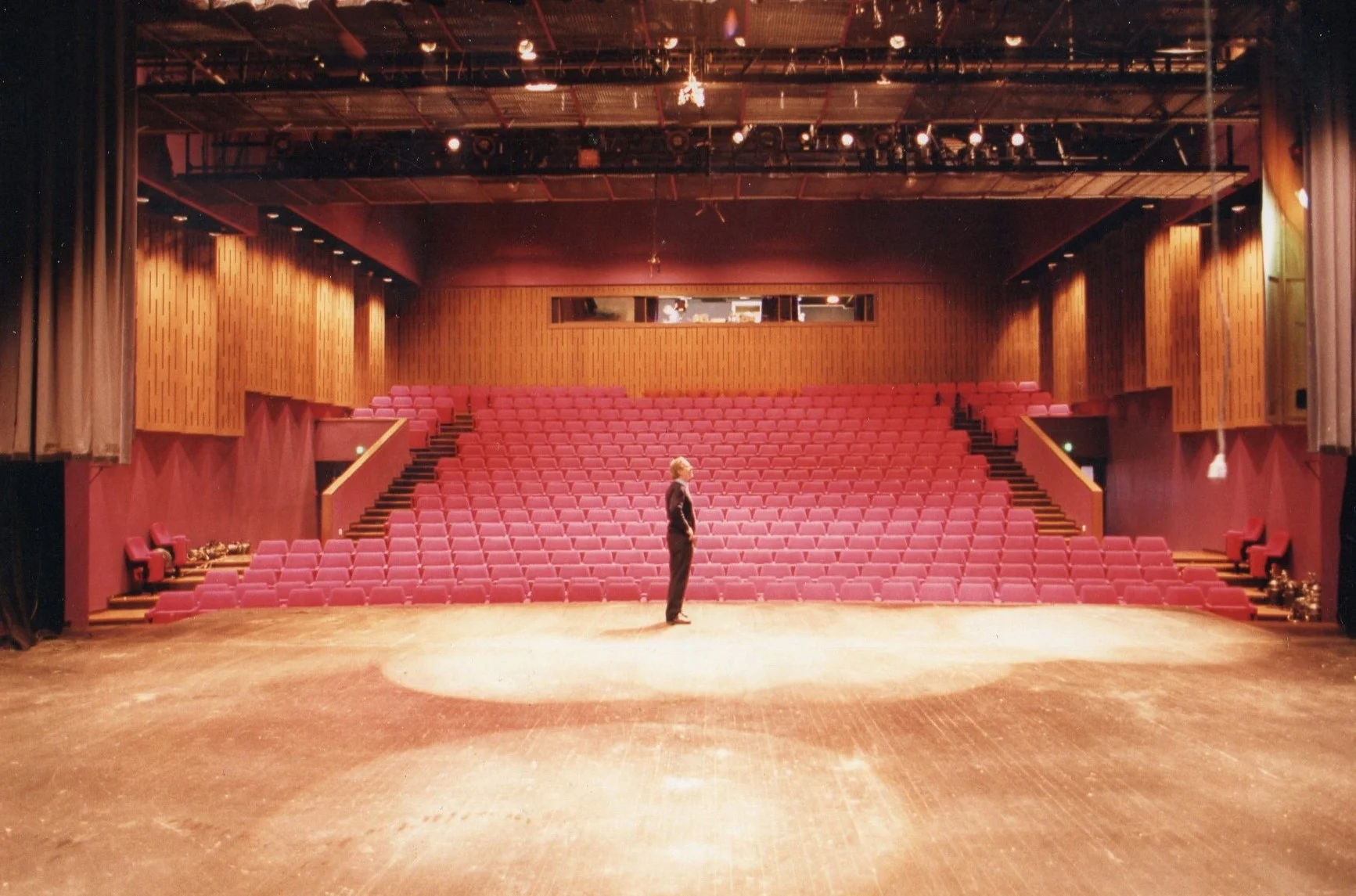
When the brick building on the corner of Vestre Strandgate and Kongensgate was destroyed in 1966, it gradually became clear that Det Dramatiske Selskab no longer had the capacity to own and operate a third theater in Kristiansand. Therefore, the company entered into a close collaboration with the municipality on the construction of a modern theater building. Det Dramatiske Selskab made the site available, and the limited company Kristiansand Teater A/S, with the municipality as the main shareholder, was established. Det Dramatiske Selskab was given representation on the board of directors, a meeting room in the theater building and the right to eight performance days a year without rent. This was done to ensure that the old amateur theater company, which had provided the city with theater since 1807, would be able to continue its activities in much the same way as before.
After a period of in-depth discussions, the building committee, headed by city court judge Arnfinn Gullestad, approved the theater design prepared by the architectural firm Ugland and Thorne from Arendal. The cost estimate was close to NOK 4 million, including the site. The theater would have three stages of different sizes, with room for around 450 spectators in the main hall. The facade facing Kongensgate was to be designed by artist Henrik Finne.
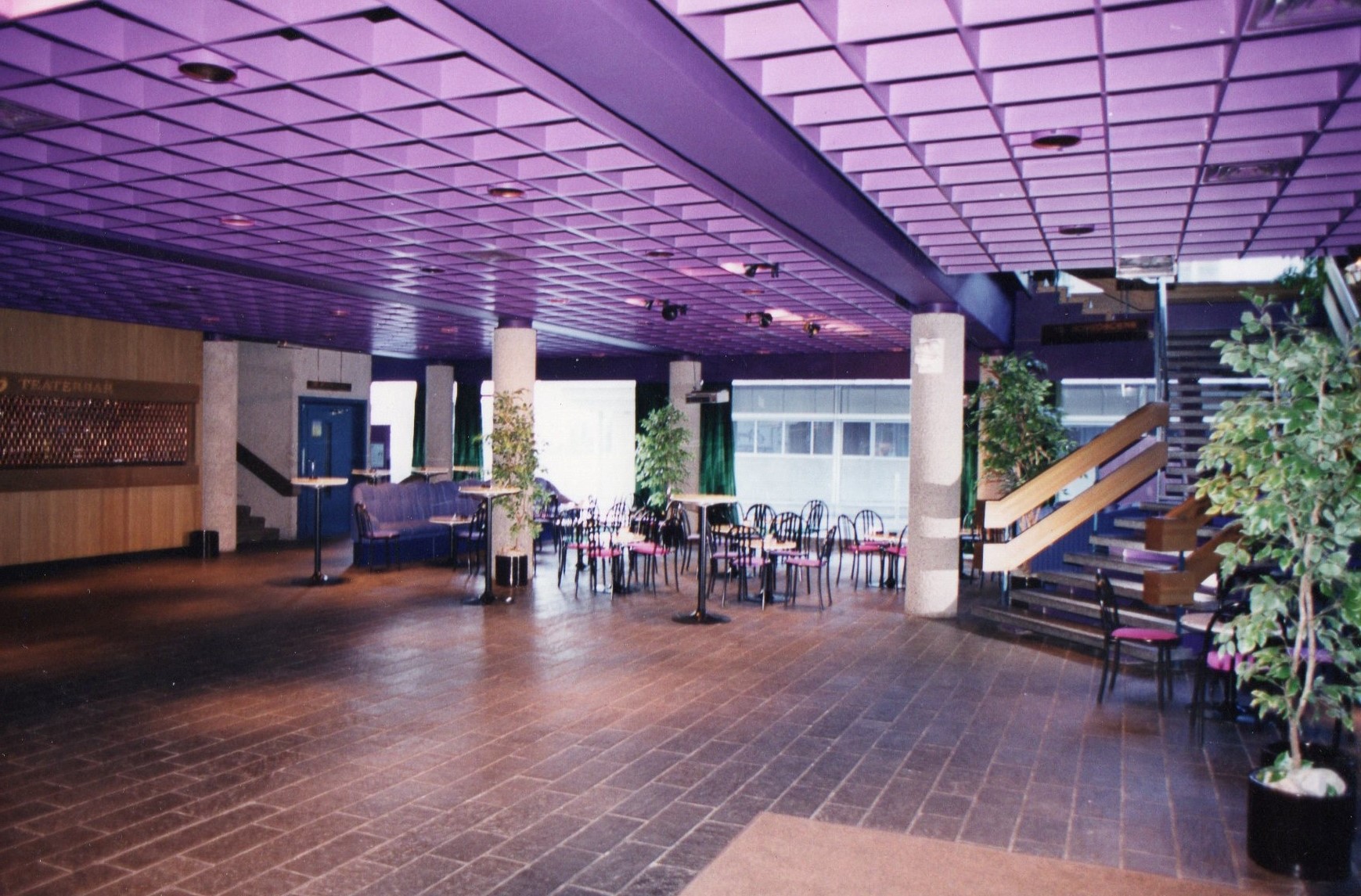
The lobby of the newly built Kristiansand Theater in 1976.
Photo courtesy of Agder Theater.
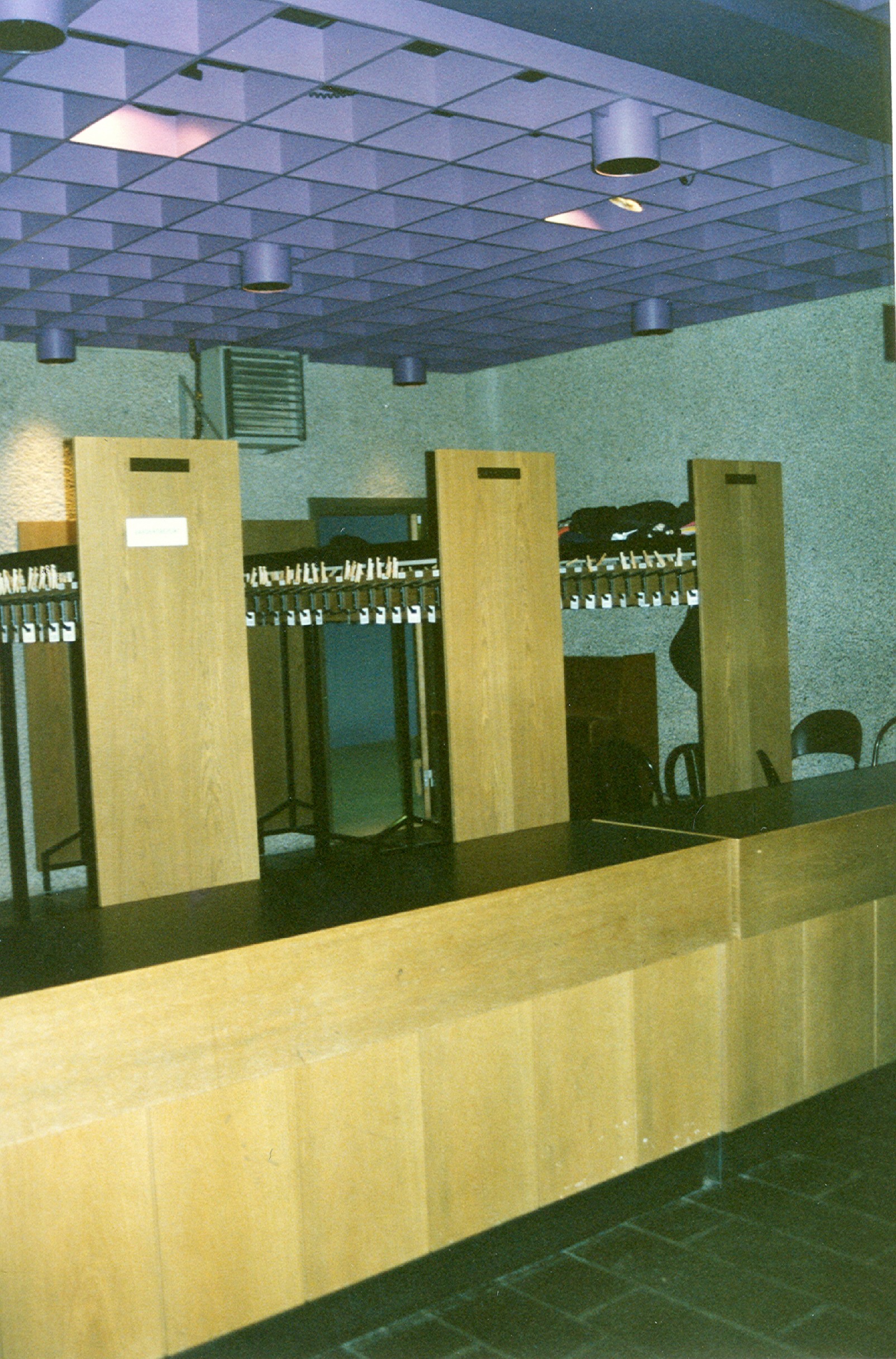
The costume department at Kristiansand Theater in 1976.
Photo courtesy of Agder Theater.
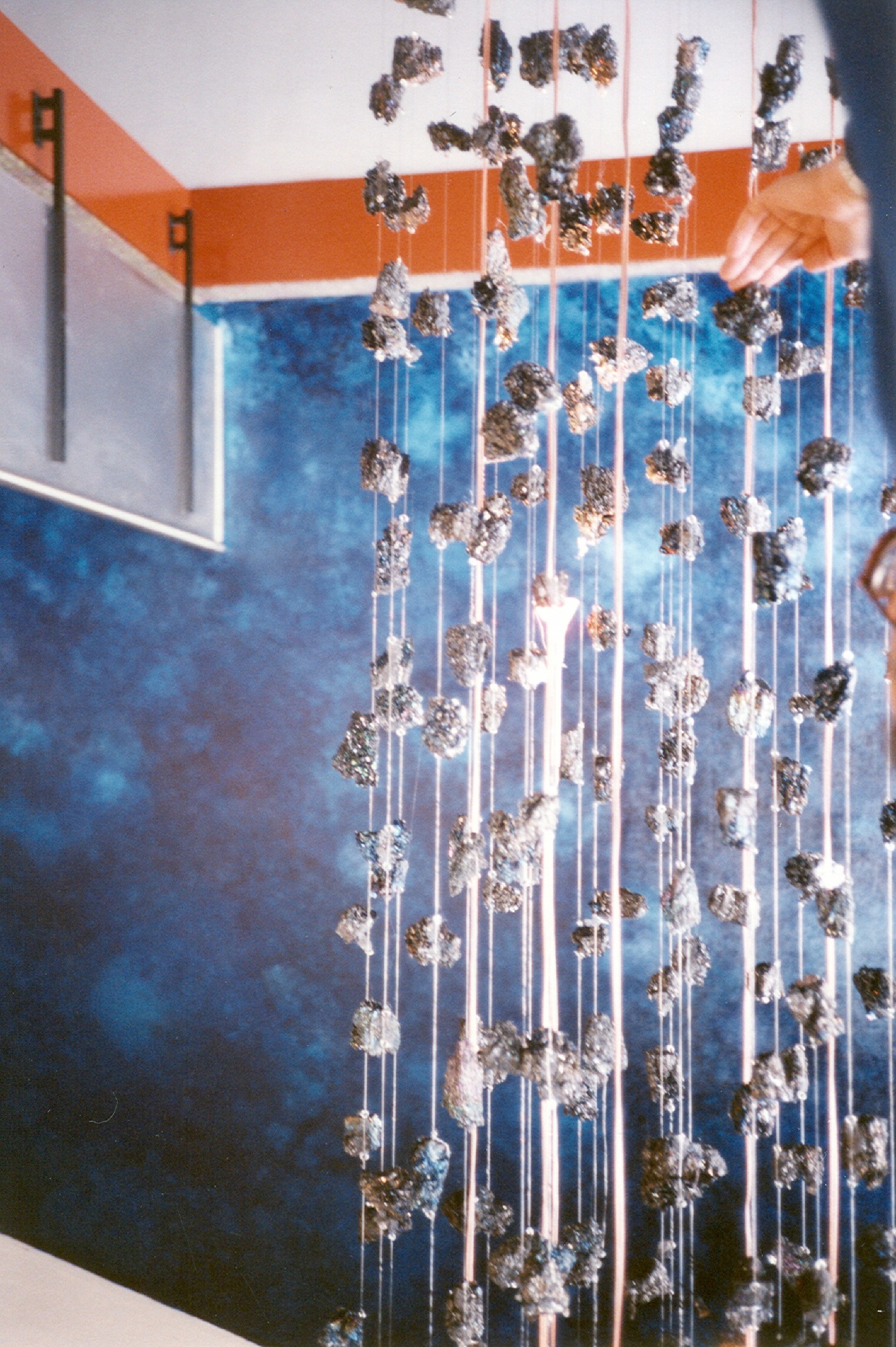
Part of the decor in the audience area of the new Kristiansand Theater following its renovation in 1991.
Photo courtesy of Agder Theater.
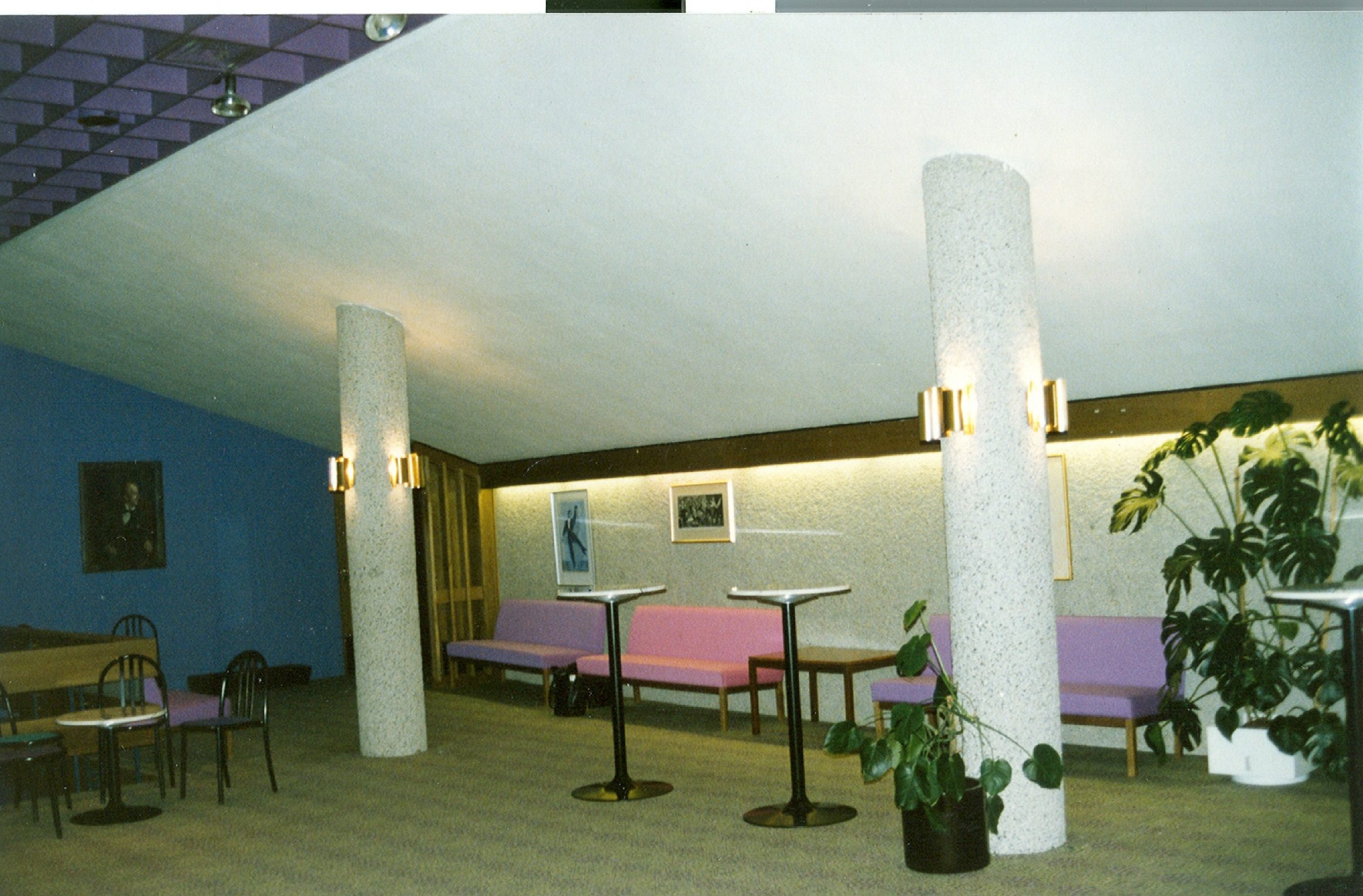
This is what the second-floor foyer looked like when Kristiansand Theater opened its doors in 1976.
Photo courtesy of Agder Theater.
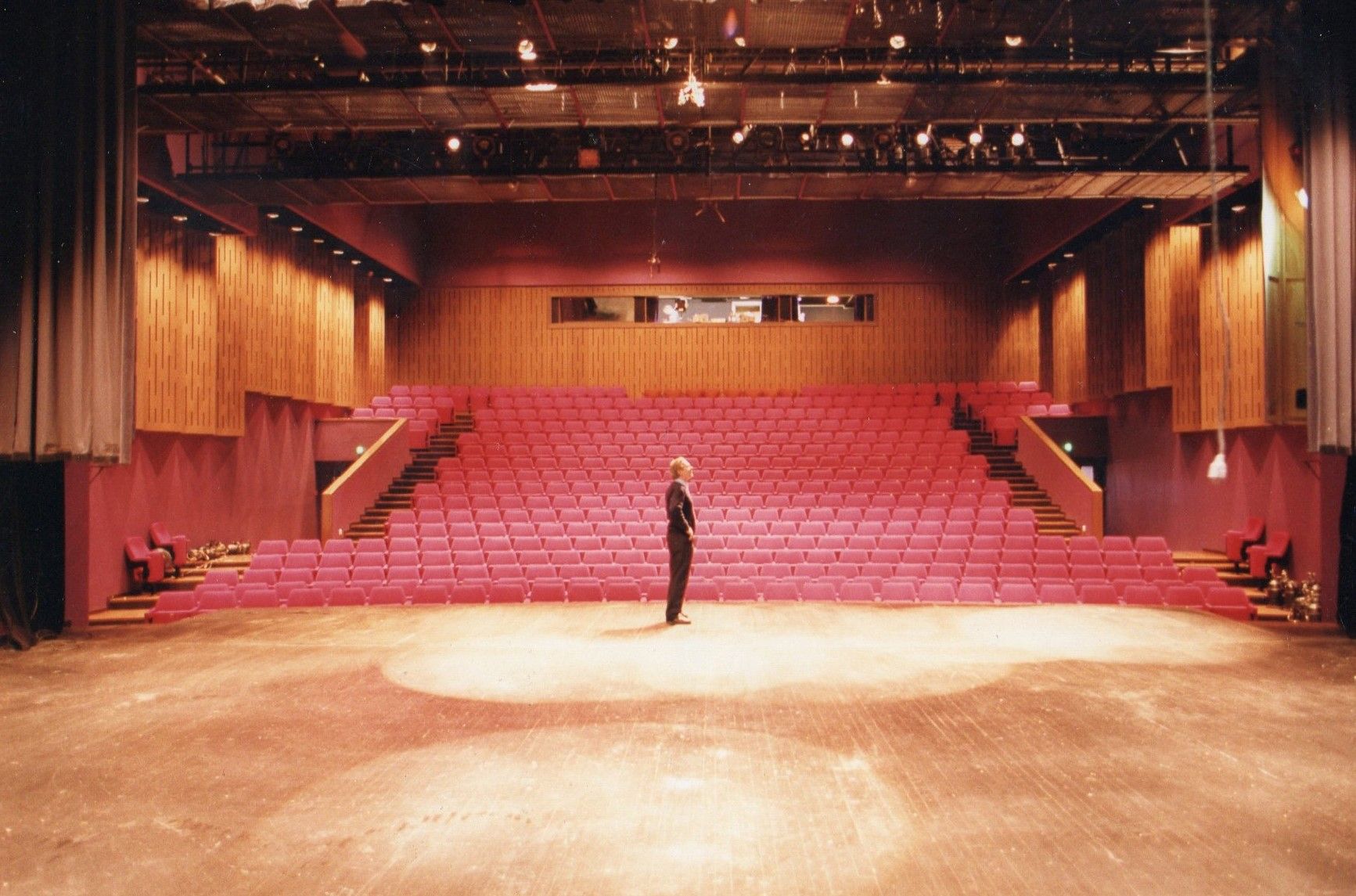
In October 1974, construction work began with M. K. Kaarigstad as the main contractor. And in just under two years, a new theater building was erected on the site that had been a parking lot since 1966. The theater was built as a combined guest theater and cultural building.
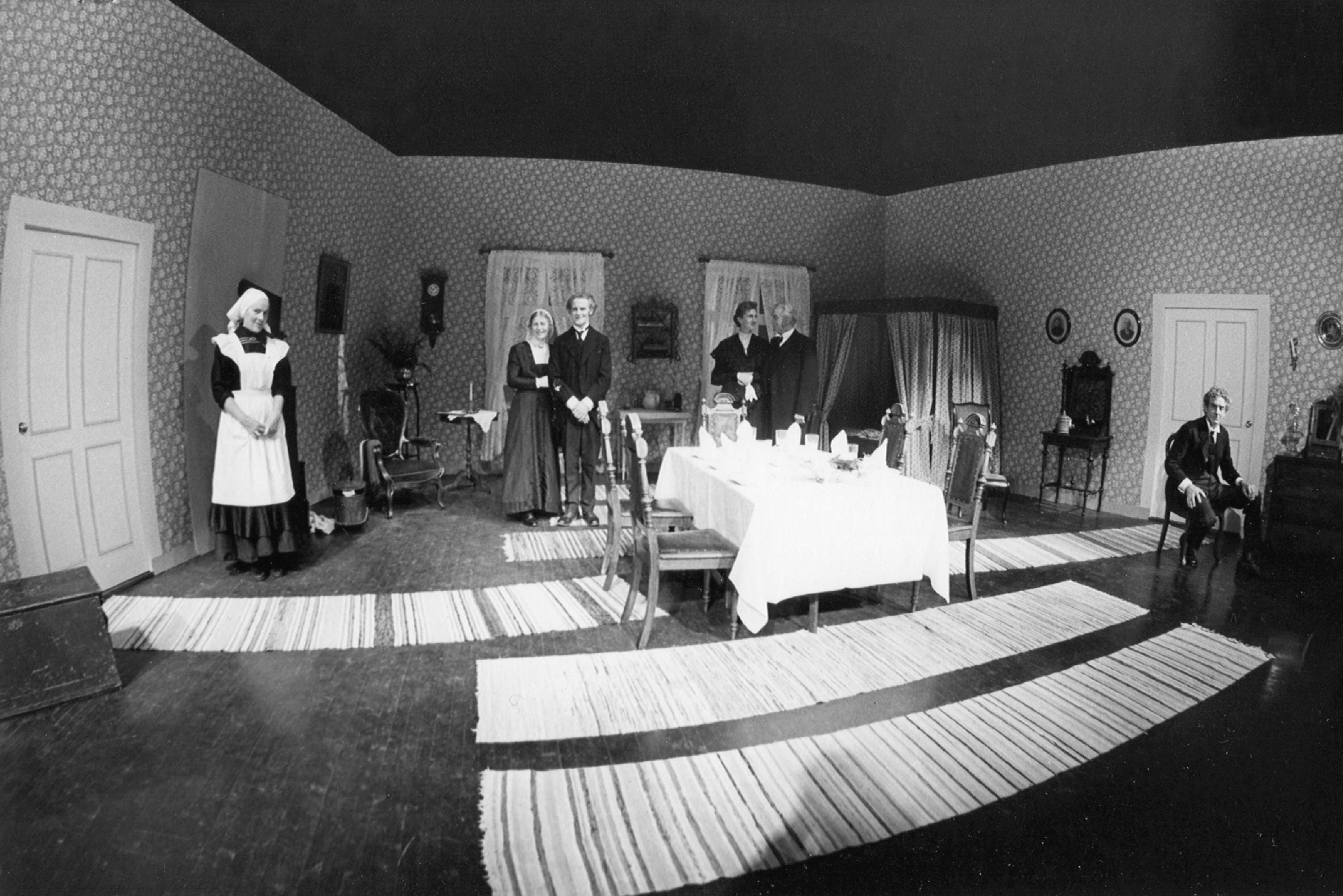
It goes without saying that it was the Dramatic Society that had the honor of opening the new theater with a new production of Baldevin's Wedding directed by Julius Hougen. This was the beginning of a long series of performances of dramatic, newly written material, revues, comedies and thought-provoking performances all rolled into one.
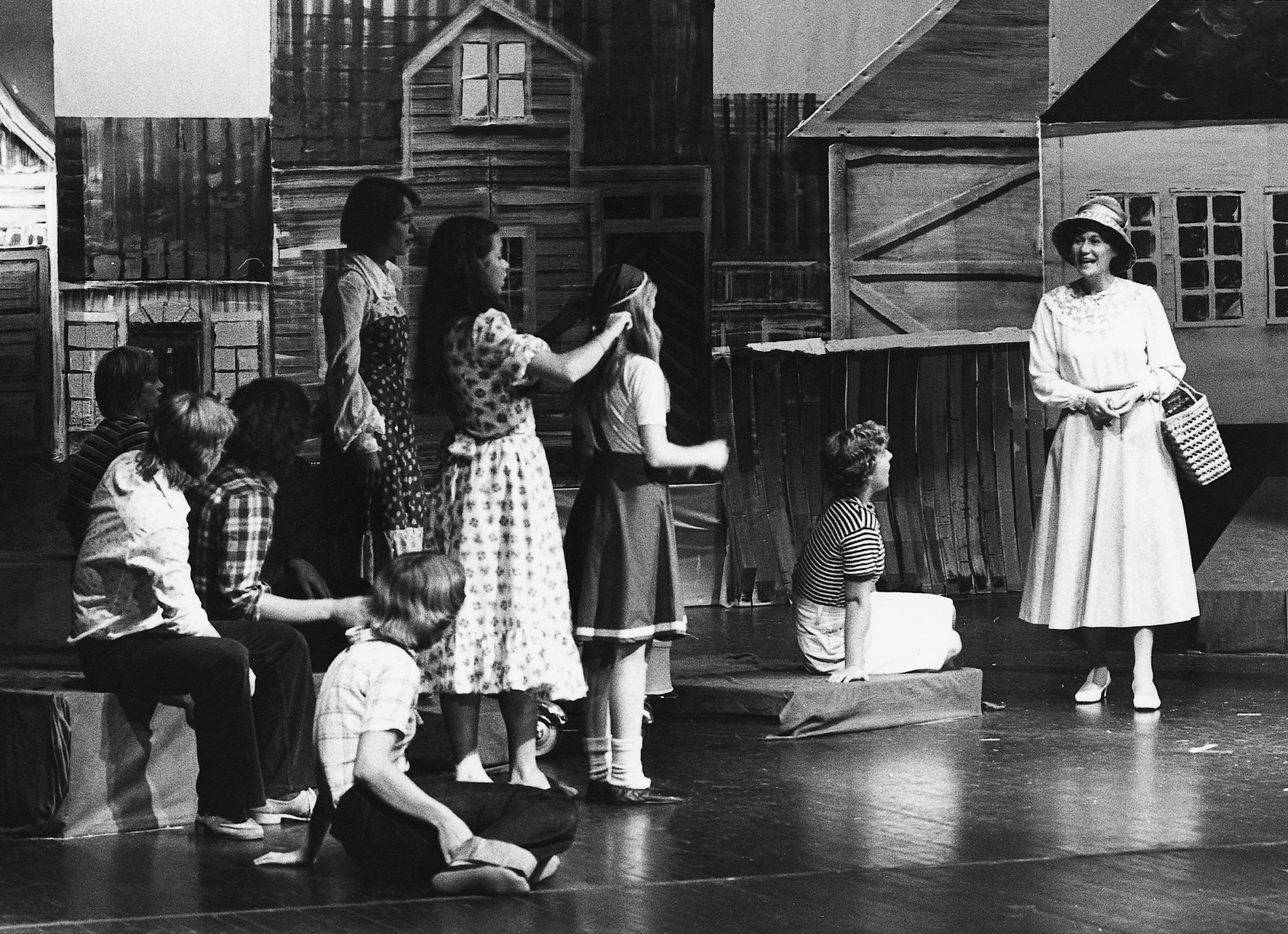
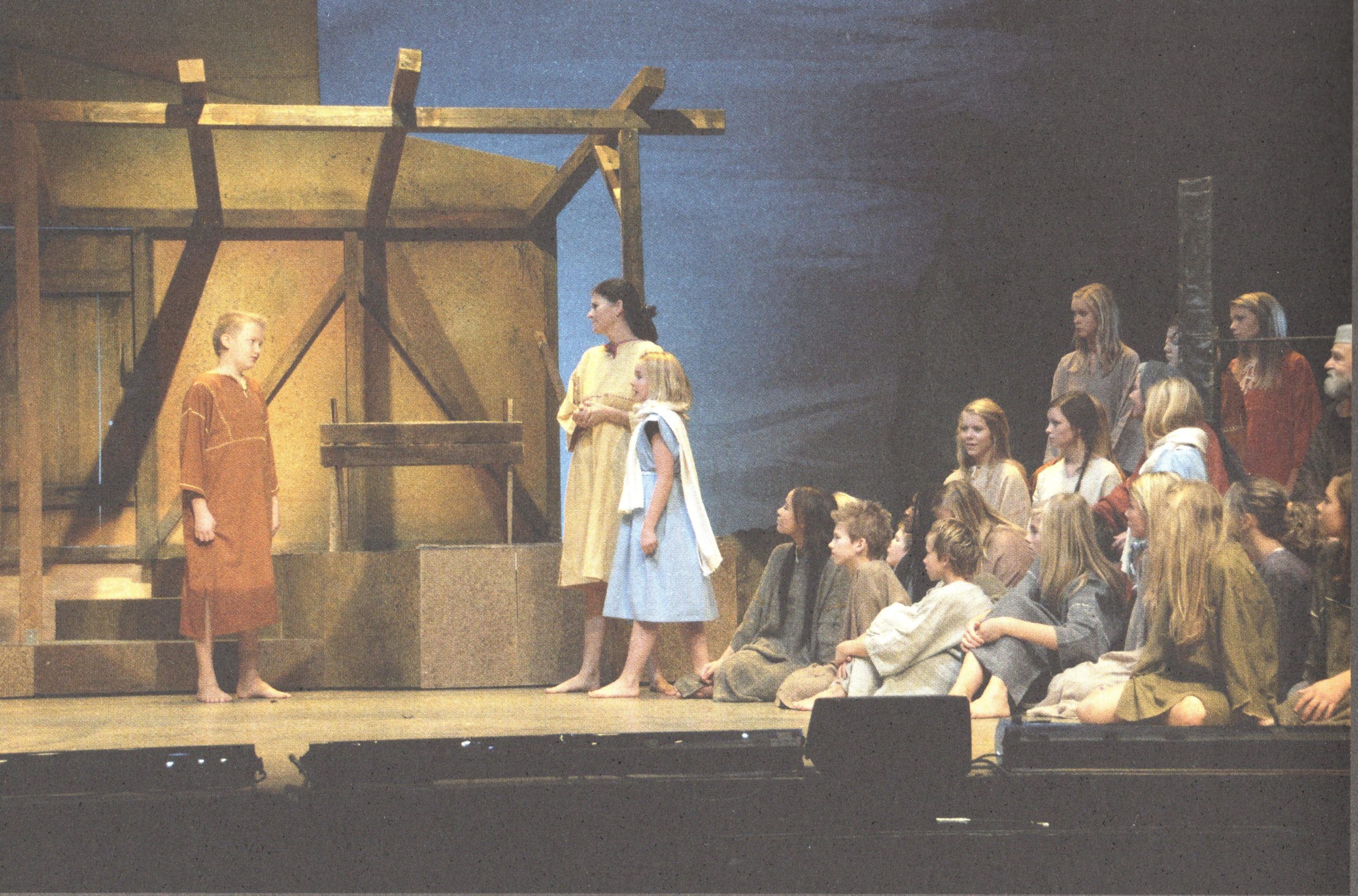
Another project that has used the main stage at Agder Teater as its arena is Asbjørn Arntsen's fantastic Christmas musical . . . straight to Bethlehem. Hundreds of children and young people have been involved in the many Christmas performances since 1985. They have made memories for life, and Asbjørn Arntsen's great songs and melodies are still sung in kindergartens and schools in December.
In 1991, Agder Teater A/S was established in our city. In the beginning, the new Agder Teater only rented the premises from Kristiansand Teater. In other words, there were those who were to run the theater business, and those who were just landlords. This situation changed in 2002 when the municipality redeemed Det Dramatiske Selskab's rights and the limited company Kristiansand Teater A/S was dissolved. Agder Teater then became the master of its own house. Four years later, Agder Teater was given the status of regional theater for the Agder counties.
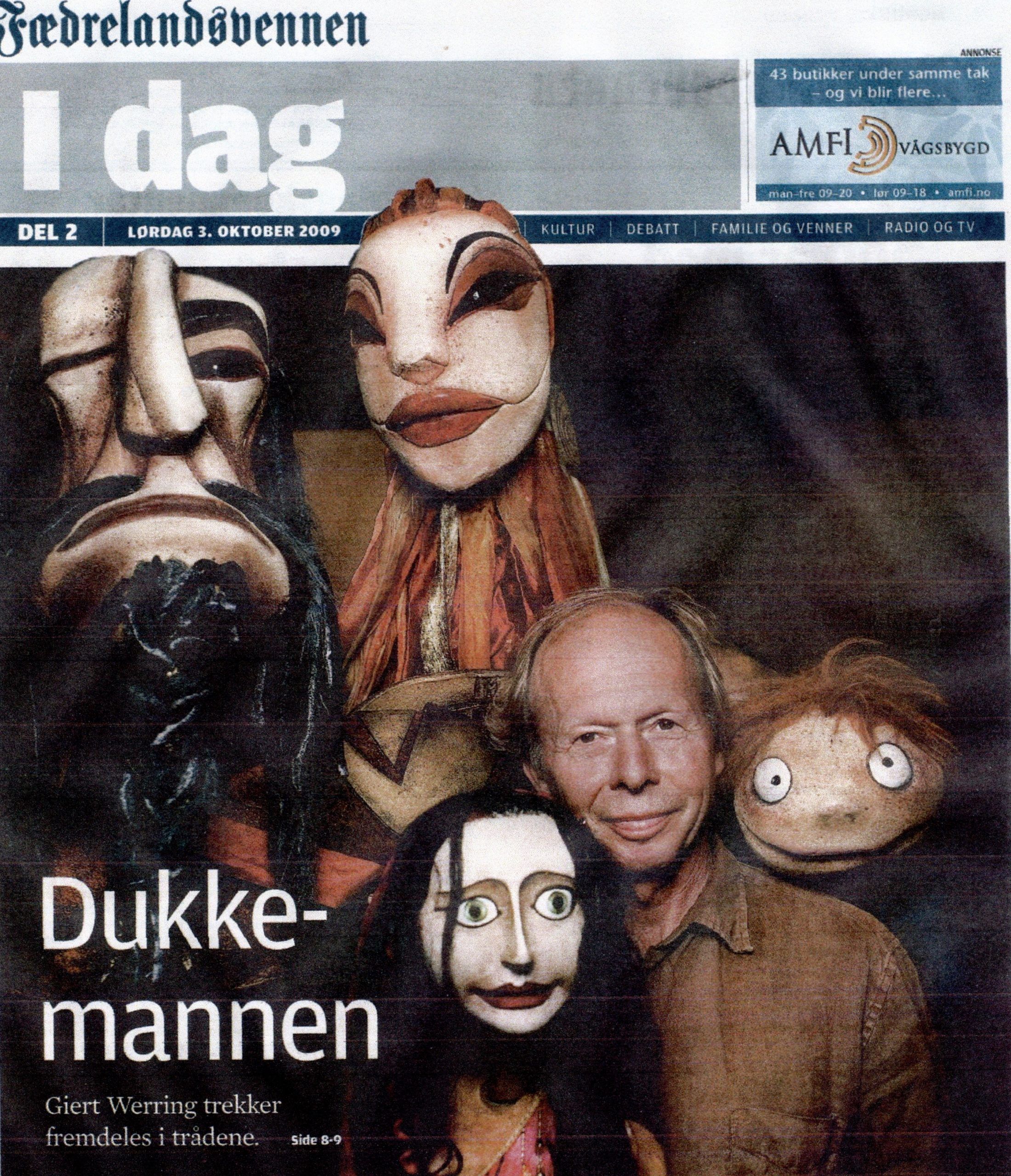
When Agder Teater was established, its purpose was to produce and present professional theater at the highest possible artistic level. And over the years, the theater itself, or in collaboration with others, has produced both drama theater, puppet theater, children's performances, musical theater and opera, often of very high quality.
One of the projects that Agder Teater was behind attracted international attention. It was the International Puppetry Festival. It was set up in 1992 with Giert Werring as the tireless driving force. The purpose of the festival was primarily to increase interest in puppetry in Norway by presenting the very best in Norwegian and international puppetry. The festival was a success and attracted audiences of all ages.
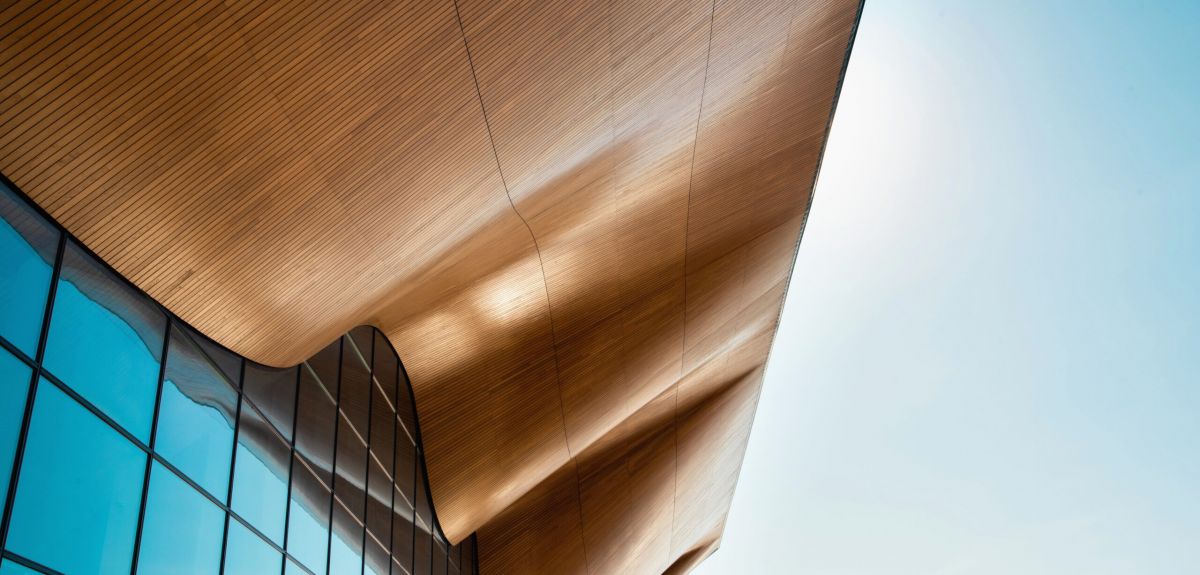
After many years of cramped and partly run-down premises, the road to Kilden began. In 2002, an exciting co-location between Agder Teater, Opera Sør and Kristiansand Symphony Orchestra was decided. The site at Silokaia was chosen, and young Finnish architects from ALA Architects won the architectural competition with their design TUTU, which is the name of the ballet dancer's tutu. As early as the summer of 2011, the public could be invited to take a peek under the billowing skirt.
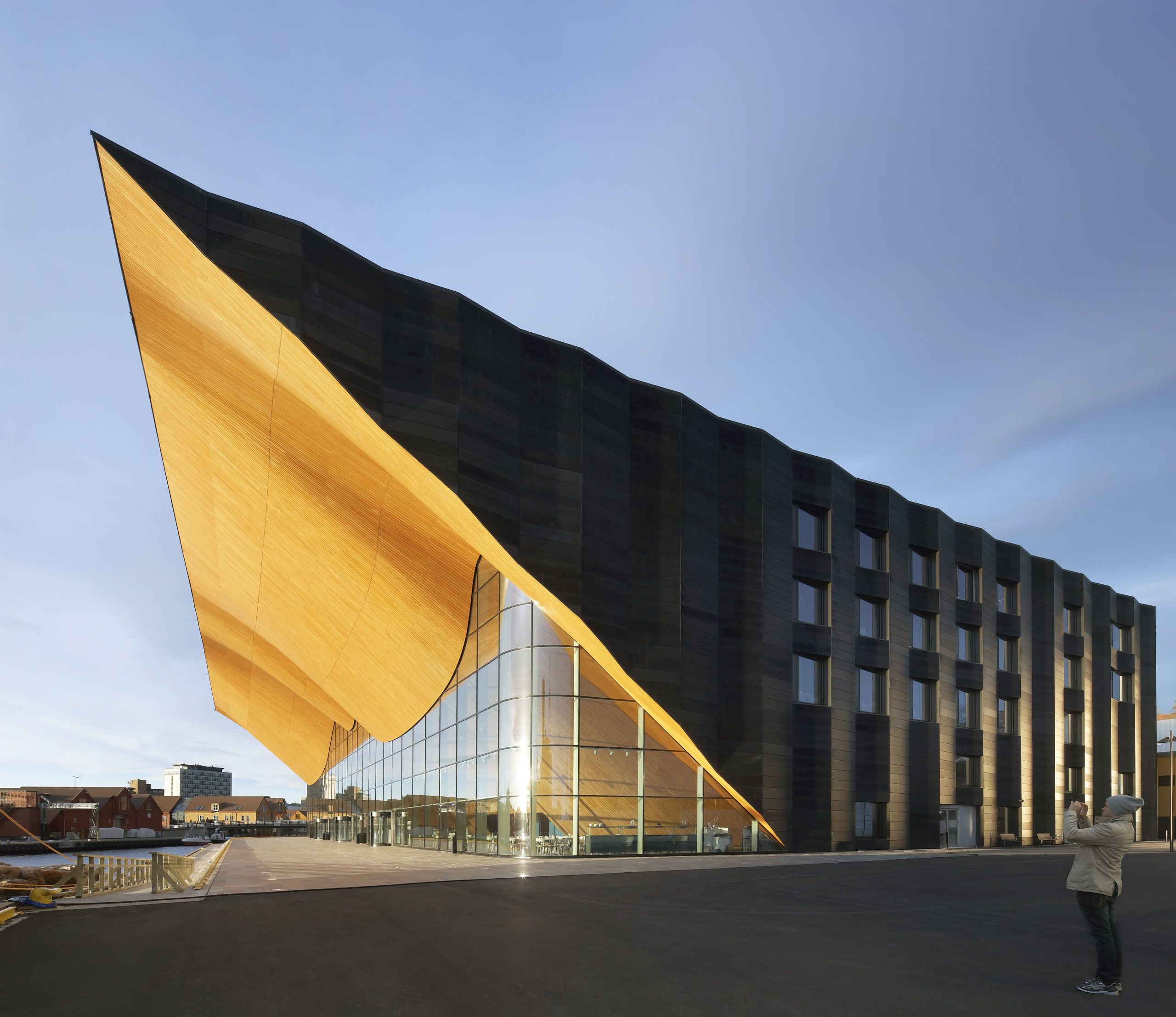
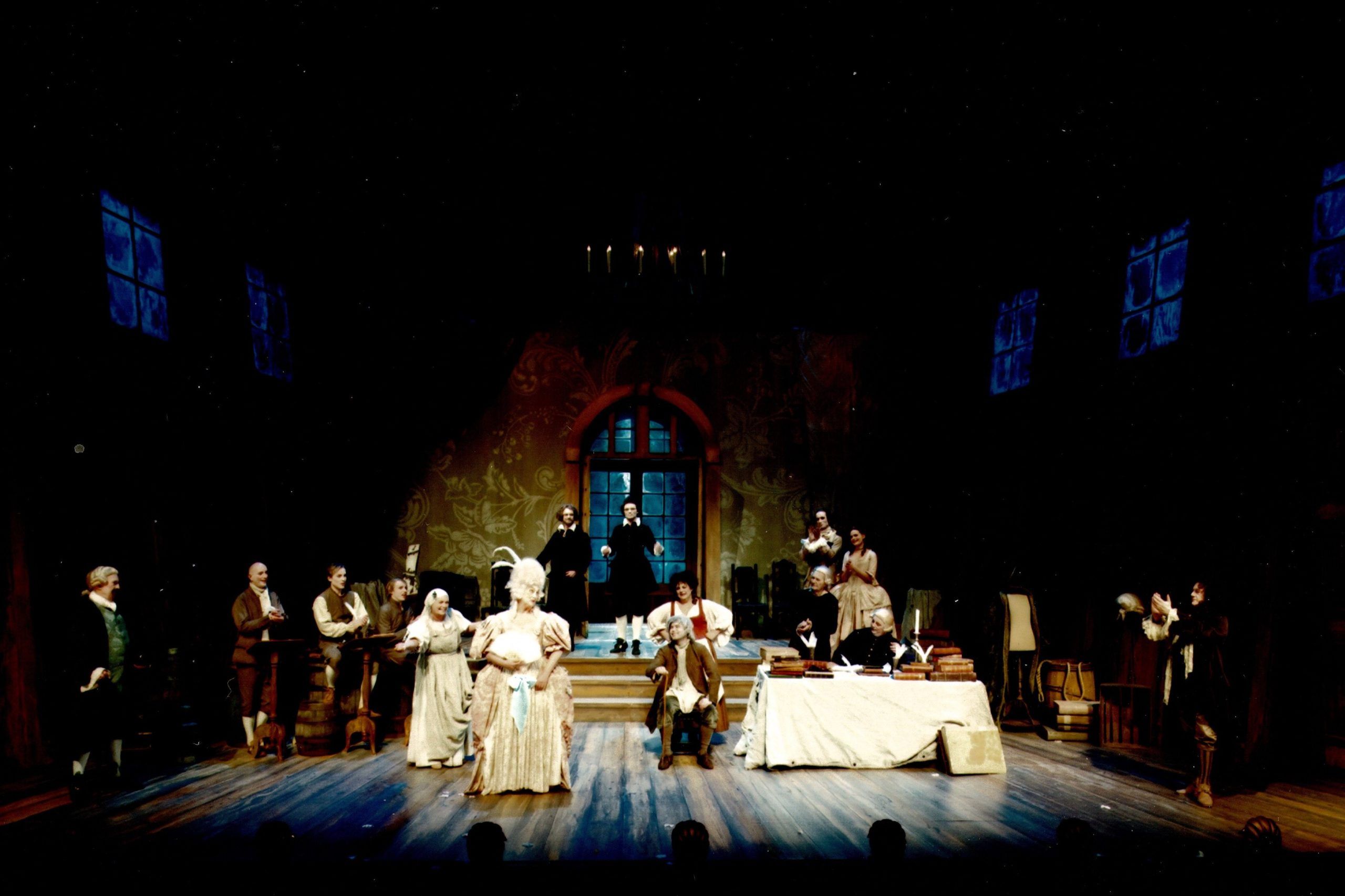
For the Norwegian Dramatic Society, which had its space rights transferred to Kilden, things came full circle when Bentein Baardson staged Holberg's comedy Den Stundesløse as the opening performance at Kilden in early 2013. At the time, several members of the Dramatic Society were on stage together with a fully professional theater ensemble. Coincidentally, a copy of Appel's curtain from the company's very first theater building was used as a curtain when Den Stundesløse was performed in Kilden.